Celeriac – characteristics, juice, recipes... Leaves of celery

Emilia Szymańska
2026-03-24
6 min. read

1 / 1
1 zdjęcie
48
Celery is one of the oldest vegetables consumed by humans, currently cultivated in numerous regions around the world, finding applications in the food and cosmetic industries... It is a superb source of vitamins, phenolic compounds, essential oils, and other nutrients that possess numerous medicinal properties, including the ability to decrease blood glucose and serum lipid levels.
Celeriac: Cultivation and culinary applications of the bulbous root variety
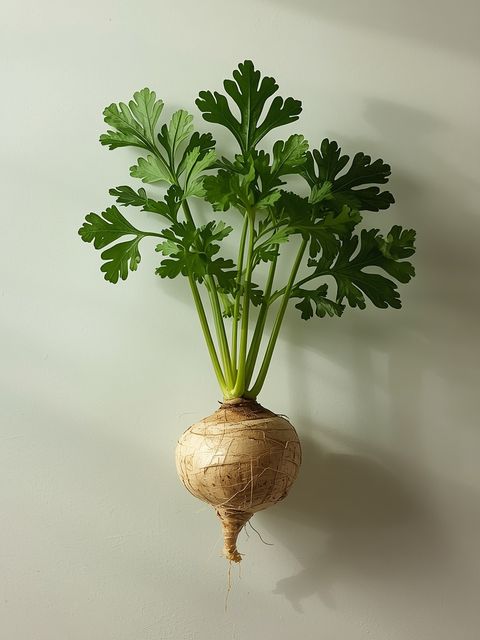
Celeriac, scientifically designated as *Apium graveolens* var. *rapaceum*, constitutes a botanical variant of common leaf celery, distinguished primarily by its edible, swollen root system. This biennial plant—though typically cultivated as an annual for culinary purposes—produces a distinctive globular tuber characterized by a rough, earth-toned exterior and a creamy-white, succulent interior. For centuries, it has served as a staple ingredient in Central and Eastern European as well as Scandinavian winter cuisines, featuring prominently in flavorful soups, hearty stews, and velvety purées while providing a rich source of dietary fiber, B-complex vitamins, and essential minerals such as potassium and phosphorus. Optimal growing conditions include full-sun exposure and nutrient-dense, consistently moist (yet well-drained) soil with a neutral to slightly alkaline pH; prolonged drought may result in woody root texture and diminished palatability.
You have started reading a PRO article
You can preview the first chapter. To read the complete article and unlock all content, upgrade to a PRO account.