How to Start the Weight Loss Process Effectively? Practical Advice for Beginners

Alicja Kowalska
✓
Diets Premium Expert • 23.03.2026
✓
Scientifically reviewed by a clinical dietitian:
This article has been peer-reviewed for adherence to IŻŻ, WHO, and PTGiP clinical nutritional standards.
| Diets Premium Expert Alicja Kowalska | min read 6 min | Scientifically reviewed by a clinical dietitian 23.03.2026 |

Smart Voice
•Listen to the article content live
0:00
/
0:00
Key Takeaways
Weight loss is a process that requires not just physical exertion, but also proper mental planning and preparation. Many people wonder where to start on this journey. In today's world full of wonder diets and promises of quick results, it's easy to get lost. However, true weight loss success requires a solid foundation and realistic goals. Whether you want to improve your health, gain more energy, or simply feel better in your body, we'll show you how to start the weight loss process effectively and sustainably. These fundamental steps will help you achieve your goals and make lasting changes in your lifestyle.
Meal Plan
Want to apply these guidelines in your daily diet?
Our smart diet generator creates a tailored meal plan in 3 minutes based on the recommendations in this article.
PRO Content
PRO
This article is professional premium content (PRO) provided in its entirety.
Why maintaining proper body weight is essential
Maintaining proper body weight plays a crucial role in maintaining health and well-being. It primarily reduces the risk of developing chronic diseases such as heart disease or type 2 diabetes, and is associated with a lower risk of premature death. Maintaining proper body weight also improves physical fitness and mobility, reduces joint strain and increases overall mobility. Additionally, it has a positive impact on mental health - it increases self-esteem, improves well-being, and reduces symptoms of depression and anxiety (C. A. Silva et al. 2020).
How to initiate the weight loss journey
It is highly critical to establish distinct and realistic goals prior to commencing the weight loss journey. If they are accurately formulated, they will aid in maintaining motivation and focusing on long-term results. The optimal approach is to determine goals according to the SMART principle, which implies that they should be specific, measurable, achievable, relevant, and time-bound. Instead of general goals such as 'weight loss', it is preferable to set more precise goals such as 'losing 5 kg in 3 months'. It is also crucial to categorize goals into short-term and long-term. Short-term goals, such as a 30-minute daily walk, will enable continuous monitoring of progress and maintaining motivation. Long-term goals, such as 'running 10 km in a year', will assist in better comprehending the direction in a longer perspective. It is beneficial to consider health goals alongside aesthetic ones, as focusing exclusively on appearance can result in disappointment if outcomes are not immediately noticeable. Health goals, such as lowering cholesterol levels or enhancing fitness, will offer additional motivation and satisfaction (N. D. White et al., 2020).
Ascertain the calorie requirement
In order to ascertain the calorie requirement, one can make use of the patterns and calculators available on the internet. The value of PPM depends on age, gender, body weight, and height. To find out how many calories the body needs to maintain body weight, it is only necessary to multiply PPM by the coefficient of physical activity (PAL). If the goal is to reduce body weight by itself, it should be taken as a starting point. The key to successful weight loss lies not only in controlling the number of calories consumed, but above all in a lasting change in eating habits. Healthy habits allow the achieved body weight to be maintained longer and improve overall well-being.
Try equilibrium in meals
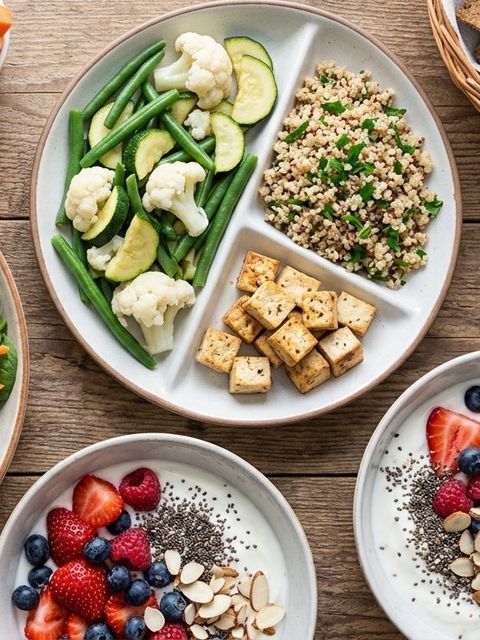
Maintaining balance in diet is a crucial aspect of healthy weight loss and maintaining good health, as it provides the body with all the necessary nutrients. Each consumed meal should include a source of protein, fat, carbohydrates, and fiber. Protein is essential for building and regenerating tissues and controlling hunger. Protein can be sourced from lean meats, fish, tofu, or seeds from leguminous plants. Complex carbohydrates, which are mainly found in whole grain products, provide energy and support digestion due to their high fiber content. Unsaturated fats that are present in plant oils, avocado, nuts, and seeds, are essential for proper brain function and hormone production. Vegetables and fruits, which are rich in vitamins, minerals, and antioxidants, support health in various ways (C. Paixão et al. 2020).
Maintain regularity in meal consumption
Adhering to a consistent meal schedule plays a crucial role in the weight loss journey. Regular food consumption aids in maintaining a stable glucose level and consequently energy throughout the day, preventing sudden hunger attacks and overeating. As a result, one achieves improved well-being, higher productivity, and more effective weight management (C. Paixão et al., 2020).
Limit processed products
Foodstuffs that have been subjected to processing may contain large amounts of sugar, salt, saturated fats, and artificial additives that can negatively impact health and hinder weight loss. Instead, choose natural, unprocessed foods rich in essential nutrients. Fresh fruits and vegetables, whole grains, lean protein sources, and unsaturated fats should constitute the majority of your diet. Nevertheless, bear in mind that an occasional indulgence is permissible, provided it is done in moderation (K. D. Hall et al., 2019).
Do not underestimate hydration
Adequate, daily water consumption is essential for proper bodily functions and further supports metabolism and food intake control. Therefore, it is advisable to drink at least 8 glasses of water daily, which is roughly equivalent to 2 liters. However, it is important to avoid beverages such as juices, carbonated drinks, and alcohol, which often contain large amounts of sugar and provide unnecessary kilocalories (J. C. Peters et al., 2016).
Make sure sleeping is sufficient
Ensuring the appropriate amount and quality of sleep aids in managing the levels of hormones responsible for appetite Sleep deprivation can lead to an increase in the levels of ghrelin, the appetite-stimulating hormone, and a decrease in the levels of leptin, the satiety hormone. As a result, more intense hunger and difficulty in controlling weight may occur. Improving sleep quality also improves the ability to make better food choices because fatigue often leads us to choose processed products with high caloric content that provide us with energy quickly (E. Papatriantafyllou and co. 2022).
Initiate physical activity
Besides proper nourishment, physical activity also plays a pivotal role in the weight loss process. It is best to select a type of exercise that is enjoyable and that can be sustained in the long run. Regular exercise not only assists in calorie burning, but also has a positive impact on well-being and overall fitness. Regardless of preferences such as walking, cycling, swimming, dancing or fitness, the most crucial aspect is that the activity is pleasurable. This makes it easier to incorporate it permanently into the schedule. It is not advisable to set excessively ambitious goals at the outset. Commence with small steps and gradually increase the intensity and duration of workouts (J. M. Oppert, C. Ciangura, A. Bellicha 2023).
Stick to the goal
Remember that weight loss is a challenge that requires time, patience and perseverance. There can be periods where progress seems very small or even unnoticeable, and one may not always be able to adhere to the entire plan. It's perfectly normal, so don't be discouraged. Motivation can sometimes decline, especially when you don't see quick results. At times like these, remind yourself why you embarked on this journey and the benefits of achieving it. Here's the support of loved ones who can encourage and support you in difficult times. Remember that everyone has their own pace and personal challenges. The key is systematicity and constant endeavors to reach the goal, even in small steps. Look at weight loss as a long-term lifestyle change that brings lasting health benefits and improves well-being. Stick to the goal, and it turns out that the effort pays off!
Tags

Alicja Kowalska
✓Diets Premium Expert
Diets Premium team expert. Specializes in nutrition plans, strength sports, and training plans.
View Profile →