PRO
CLINICAL KNOWLEDGE MAGAZINE
6 min read
Shape a Figure During Work!

Felix Weber
✓
Diets Premium Medical Expert • 16.03.2026
✓
Scientifically reviewed by a clinical dietitian:
This article has been peer-reviewed for adherence to IŻŻ, WHO, and PTGiP clinical nutritional standards.
| CLINICAL KNOWLEDGE MAGAZINE CLINICAL KNOWLEDGE MAGAZINE | min read 6 min |
| Diets Premium Medical Expert Felix Weber | Scientifically reviewed by a clinical dietitian 16.03.2026 |

Smart Voice
•Listen to the article content live
0:00
/
0:00
Key Takeaways
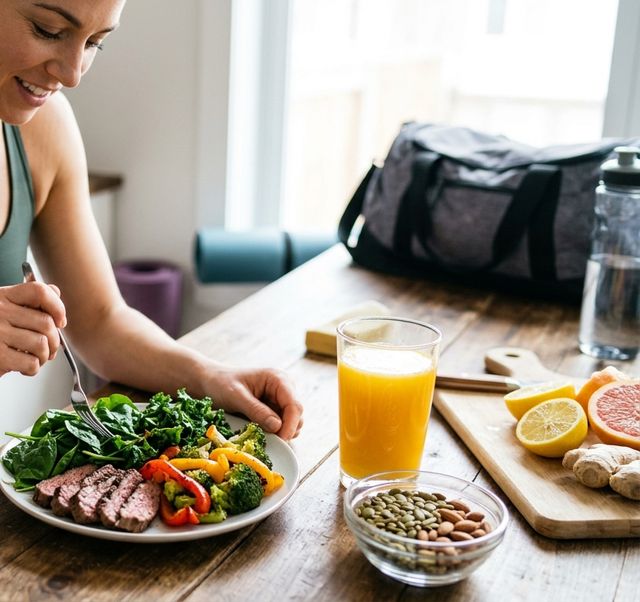
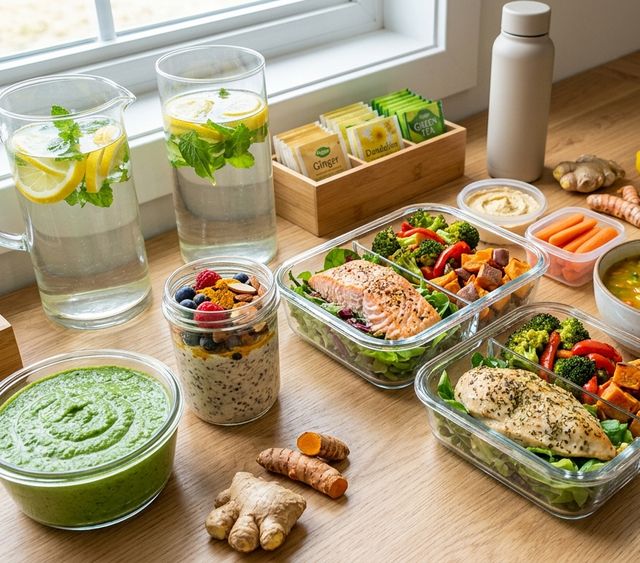
We spend almost the entire day outside our home, where we must consume meals -- leaving the house without breakfast, and then nervously waiting for the opportunity to eat something in the city, which often ends in overeating, is a fundamental error detrimental to our health and maintaining an attractive appearance -- regular, balanced meals are the key to achieving success! It is worth investing a little evening moment and preparing food for the next day.
Meal Plan
Want to apply these guidelines in your daily diet?
Our smart diet generator creates a tailored meal plan in 3 minutes based on the recommendations in this article.
PRO Content
PRO
This article is professional premium content (PRO) provided in its entirety.
Uncomplicatedness forms the foundation
There is no uncertainty that roasting a duck or preparing a new, refined dish will consume a considerable amount of time in the evening. For that reason, choose simpler dishes such as one-pot meals or tried-and-true, which you can prepare quickly. Depending on the amount of time spent away from home, prepare more than one portion. You can take along a larger quantity of lunch or make a simple lunch. If you prefer a sweet taste, instead of a pre-made baton, a food product that is naturally sweet is a good choice for a second breakfast.
A balanced meal
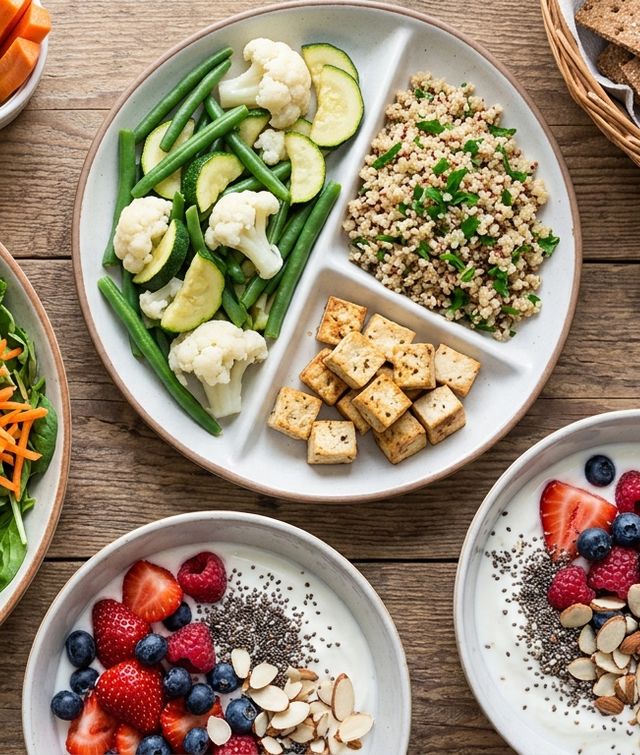
Grant yourself a respite from bakery products and quick bites. To satisfy hunger for a longer duration, you require high-quality proteins and complex carbohydrates, supplemented with healthy, mono- and polyunsaturated fats. You won't find this in fast food available everywhere. Store small portions of chicken, turkey or beef in the freezer. In the vegan version, you can soak beans or chickpeas, or cook lentils. Basic components should also include grains such as buckwheat, oats, rice, flour for pancakes, whole grain or gluten-free pasta, and vegetables - fresh in season and frozen in winter. In situations without time, you can cook grains, season meat and sauté with vegetables on olive oil. You can also prepare pasta with spinach and fresh tomatoes, which takes 10 minutes.
Daily nutrition schedule
This may seem unnecessary, but we are less likely to make nutritional mistakes when we plan our meals in advance. Keep in mind that after a night's rest, glycogen levels should be at an average of 3 to 4 hours. Breakfast in the morning is the basics. If you don't have time to prepare your favorite meal in the mornings, do it in the evenings. It should be a meal that is based on various products that provide all necessary nutrients. Remember that after a night of rest, liver glycogen levels are low (around 20 g), which, in comparison to the standard level (around 100 g), is a significant difference. Therefore, breakfast should not be based solely on proteins and fats, but also on carbohydrates. Such low and unbalanced levels of stored glucose can lead to a significant decrease in performance, especially in the morning. It is also worth reaching for an additional snack between breakfast and lunch, the so-called second breakfast. This is a meal that should be significantly smaller in terms of volume and calories than breakfast, but consuming it will protect us from snacking and help maintain the right distance between meals. Remember that too long intervals between meals have a negative impact on metabolism, leading to a decrease in concentration, fatigue, exhaustion, weakness, and an increase in the feeling of hunger. These conditions are associated with a decrease in blood glucose levels and are particularly pronounced in people who train. The next meal will be lunch and depending on how many meals you eat daily, a snack and dinner are already waiting for you at home. The distribution of meals also varies depending on the shift system and training time. It is important to provide high-quality proteins and a good source of carbohydrates after training.
Succumbing to Temptations at Work
Unfortunately, it sometimes turns out that most of the calories consumed at work do not come from full-fledged meals, but from snacks like a little coffee with Mc Donald's milk, which averages 50 calories, plus two tablespoons of sugar (less than 10 g) 35 calories, and a large Prince Polo chocolate bar (50 g) with 265 calories. The total comes to about 350 calories. Repeating this set twice already amounts to 700 calories. Not everyone likes a small black, but this version is the healthiest and provides the fewest calories. Coffee or tea sweetened with two teaspoons of sugar adds an additional 45 calories. These drinks should be limited or invested in sweeteners such as xylitol, erythritol, stevia, and black tea replaced with green tea without sugar. This way, we can reduce our caloric intake. When the desire for something sweet arises, instead of chocolate bars, have nuts, dried fruits, homemade whole-grain cookies, or protein bars on hand. Rice wafers with nut butter also satisfy many gourmets. However, moderation is the most important. Do not snack out of boredom or stress.
Here are straightforward and swift recipes for bars
Grain slurries (recipe for 10 servings): - solid coconut oil - 20 g (1 × spoon) - dried cranberries - 50 g (4,17 × spoon) - bee honey - 48 g (2 × spoons) - coconut flakes - 70 g (11,67 × spoons) - chia seeds - 20 g (4 × spoon) - dried apricots - 32 g (4 × pieces) - sunflower seeds - 50 g (5 × spoon) - orkish flakes - 200 g (25 × spoon) - whole chicken eggs - 112 g (2 × pieces) - bananas - 240 g (2 × pieces). Preparation time: 40 minutes. 1. Preheat oven to 180°C without thermo protection. 2. Flocks and sunflower seeds toast for 3 minutes on the pan. Allow to cool. 3. Blend bananas with coconut oil using a blender. 4. Finely chop apricots. 5. Mix all ingredients and pour into a baking paper-lined mold (24 × 28). Press down lightly. 6. Bake for 25 minutes. Then remove and allow to cool. 7. Cut into bars when they are cold (there should be 10). Store in the refrigerator for up to 5 days. Nutritional values per serving: calories - 254 kcal, protein - 6.4 g, fat - 11.1 g, carbohydrates - 29.2 g, fiber - 5.9 g. Fruit rods (recipe for 5 servings): - pumpkin seeds, hulled - 60 g (6 × spoon) - sunflower seeds, hulled - 60 g (6 × spoon) - coconut oil (solid) - 20 g (1 × spoon) - dried apricots - 88 g (11 × pieces) - dried plums, pitted - 70 g (10 × pieces) - dried dates - 90 g (18 × pieces). Preparation time: 15 minutes. 1. Melt oil and mix with fruits. Puree to obtain a fruit paste with small pieces of fruit. 2. Add seeds to the blender. Puree to obtain a paste with small pieces. 3. Pour into a mold and press firmly. Cover with baking paper and weigh down with something heavy to make it firm. 4. Divide into 5 rods. Store in the refrigerator.
Felix Weber
Diets Premium Medical Expert
Member of the Diets Premium clinical editorial board. Specializes in medical diet therapy, metabolic health, and nutritional planning.
View Profile →