



Filters
Symptoms 0
196
Juniper berries (used as spice) may trigger allergic reactions in sensitive individuals, often linked to cross-reactivity with other *Cupressaceae* family plants (e.g., cypress, thuja). Symptoms inclu...
Butter contains trace lactose (~0.6g/100g). While most lactose-intolerant individuals tolerate butter due to low content, highly sensitive individuals may experience bloating, gas, or diarrhea. Not a ...
Dill (common in Ukrainian borscht) may cause contact urticaria or oral allergy syndrome due to profilin or LTP proteins. Cross-reactivity with celery, carrot, or mugwort pollen reported in sensitive i...
Bromelain, a pineapple enzyme, can act as an allergen or irritant, causing contact dermatitis, respiratory symptoms, or digestive upset in exposed workers or consumers. Rare in food allergy but notabl...
Pears can cause Birch Pollen-Related Oral Allergy Syndrome (OAS) via Bet v 1 homologues, or less commonly, primary food allergy. Symptoms: oral itching, mild swelling; anaphylaxis is rare. Often linke...
Ajvar may contain eggplant (Solanum melongena), a rare but documented allergen. Reactions are usually mild (oral allergy syndrome) and linked to cross-reactivity with latex or pollen (e.g., birch). Se...
Food-grade sodium hydroxide (E524) is a processing aid; residual traces may irritate sensitive individuals (non-IgE). Symptoms: mucosal burns or GI upset if ingested in high amounts. Not a true allerg...
Buttermilk contains residual milk proteins (casein, whey), triggering reactions identical to milk allergy: urticaria, GI symptoms, or anaphylaxis. Often overlooked as a dairy derivative; cross-contami...
Mung beans (Vigna radiata) can cause IgE-mediated allergies, especially in legume-sensitive individuals. Symptoms: urticaria, gastrointestinal distress, or anaphylaxis. Present as Mungobohnensprossen ...
Contains **animal rennet (tierisches Lab)**, an enzyme complex from calf stomachs. Rare allergic potential to chymosin/pepsin proteins; symptoms: digestive upset, urticaria (typically mild). Not a top...
Contains preservatives potassium nitrite (E249) and sodium nitrite (E250). Rarely, nitrites may trigger allergic-like reactions (e.g., headaches, flushing) or worsen asthma in sensitive individuals; n...
Butter contains milk proteins (casein, whey) and fat. Allergic reactions mirror milk allergy symptoms; severe cases may involve anaphylaxis. Common in dairy-sensitive individuals....
Artificial dye (Blue 1 Lake) may rarely trigger hypersensitivity reactions, including hives or asthma, especially in individuals sensitive to azo dyes. Not a classic IgE-mediated allergen but included...
Emulsifier derived from sorbitol and fatty acids; rare allergic potential via residual sorbitol or fatty acid compounds. Symptoms typically mild (e.g., contact dermatitis, digestive upset) in sensitiz...
Potassium sorbate (E202) is a preservative rarely linked to allergic contact dermatitis or delayed hypersensitivity in sensitive individuals. Symptoms include skin redness or eczema. Not a priority al...
Preservative rarely triggers allergic reactions; more commonly causes non-allergic intolerance (e.g., migraines, GI upset). Derived from propionic acid, which occurs naturally in dairy. Not a recogniz...
Polysorbate 60 (emulsifier) may contain trace soy or corn allergens from processing. Rarely triggers reactions in sensitive individuals; derived from fatty acids and sorbitol....
L-Cysteine, often derived from duck feathers or human hair, can trigger IgE-mediated allergy in sensitive individuals. Symptoms include urticaria, angioedema, or asthma. Rare but documented in occupat...
Monosodium glutamate (MSG) is *not* a true allergen but may trigger non-allergic hypersensitivity in some individuals, causing symptoms like flushing, headaches, or asthma-like reactions. Not IgE-medi...
Gellan gum (E418) is a microbial polysaccharide generally considered non-allergenic. No documented IgE-mediated reactions; rare hypersensitivity cases (e.g., digestive discomfort) are not classified a...
Ascorbic acid (E300) is synthetically produced and generally non-allergenic. Rare cases of hypersensitivity (e.g., contact dermatitis) exist but are not IgE-mediated. No cross-reactivity with food all...
Calcium lactate, derived from lactic acid fermentation (often dairy-based), may contain trace milk proteins. Risk for individuals with severe milk allergy; reactions range from hives to anaphylaxis. V...
Stevia (Stevia rebaudiana) may rarely cause IgE-mediated allergies, particularly in individuals sensitized to Asteraceae family plants (e.g., ragweed, chrysanthemum). Symptoms include urticaria or gas...
Pomegranate may trigger oral allergy syndrome (OAS) in birch pollen-allergic individuals due to cross-reactivity with Bet v 1-like proteins. Symptoms typically mild (itching, swelling of mouth/throat)...
Aloe vera may trigger allergic reactions due to anthraquinone glycosides and polysaccharides. Symptoms include contact dermatitis, urticaria, or rarely anaphylaxis. Cross-reactivity with garlic, onion...
Ascorbic acid (vitamin C) is synthetically derived and rarely allergenic. Hypersensitivity may occur in individuals with pre-existing sensitivities to its natural sources (e.g., citrus) or additives. ...
MSG (monosodium glutamate) is typically corn/beet-derived and may pose a risk for individuals with severe corn allergy due to residual proteins. While MSG itself is not a primary allergen, cross-conta...
Hibiscus (Hibiscus sabdariffa) may rarely cause IgE-mediated allergy, with symptoms like urticaria or anaphylaxis. Cross-reactivity with other Malvaceae family plants (e.g., okra) is possible; reactio...
Canola (rapeseed) oil is a Brassica-derived allergen, rarely triggering reactions via seed storage proteins (e.g., 2S albumins). Symptoms: urticaria, GI distress, or anaphylaxis. Cross-reactivity with...
Lemongrass (Cymbopogon citratus) may trigger oral allergy syndrome (OAS) in grass-pollen allergic individuals due to profilin cross-reactivity. Symptoms include itching/swelling of mouth; rare systemi...
Page 1 of 7
...
Idź do strony:
FAQ: Frequently Asked Questions
What is a milk allergy?
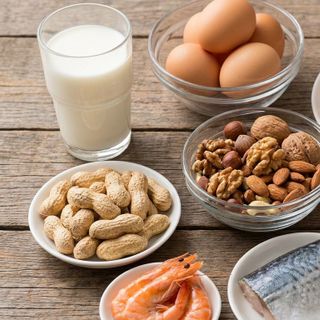
A milk allergy is an abnormal immune response to milk and products containing milk, commonly cow's milk.
What is a tomato allergy?
Tomato allergy is a rare hypersensitivity to proteins in tomatoes.
What is a fish allergy?
Fish allergy is an abnormal immune response to finned fish like salmon or tuna.
What is a scallop allergy?
Scallop allergy involves an immune response to eating scallops.
What is an egg allergy?
Egg allergy is an immune hypersensitivity to proteins found in chicken eggs, and possibly other types of eggs.
What is a peanut allergy?
A peanut allergy is a type of food allergy to peanuts. It is different from tree nut allergies.
What is a wheat allergy?
A wheat allergy is an allergic reaction to foods containing wheat. Allergic reactions can be triggered by eating wheat.
What is a salmon allergy?
Salmon allergy is a specific type of fish allergy targeting salmon proteins.
What is a crab allergy?
Crab allergy is a reaction to crustacean shellfish proteins.
What is a sesame allergy?
Sesame allergy is a hypersensitivity to dietary substances from sesame seeds, which can cause severe reactions.