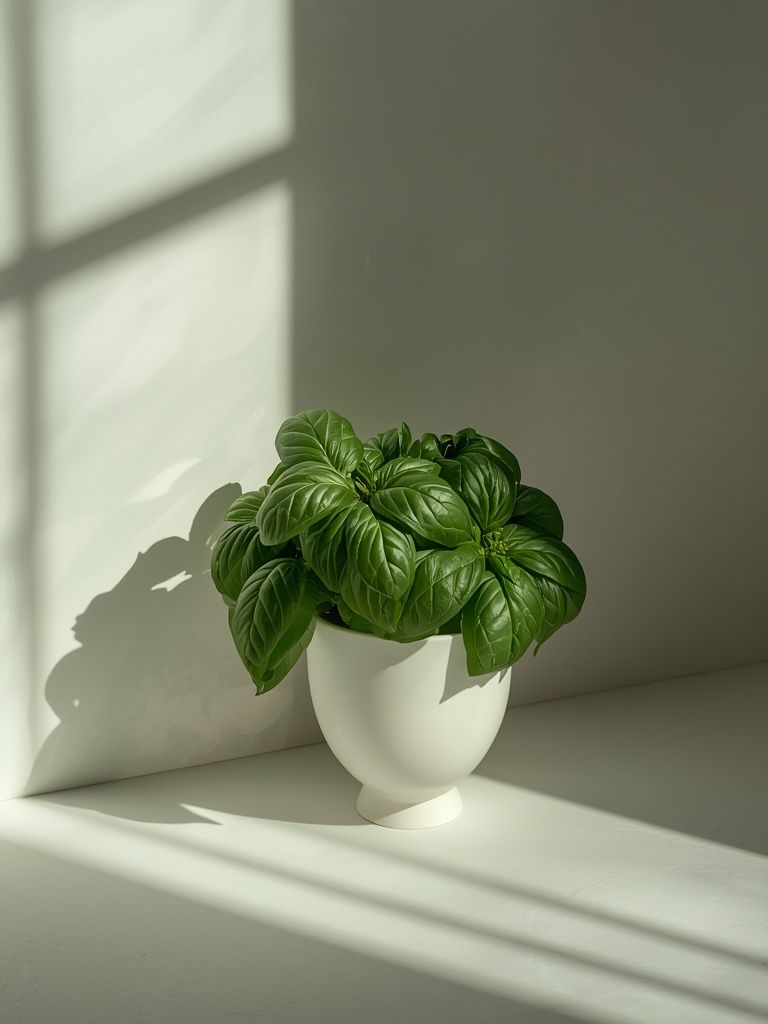
A comprehensive nutritional profile of basil – essential vitamins, trace minerals, and their systemic health benefits
Basil distinguishes itself as a nutrient-dense herb with a remarkably high concentration of iron and manganese, positioning it as a valuable dietary component for preventing deficiencies in these essential trace elements. Furthermore, it serves as an abundant source of copper and zinc—micronutrients critical for immune system integrity and metabolic regulation. Its exceptionally high provitamin A (beta-carotene) content exerts a protective effect on ocular health by inhibiting age-related macular degeneration (AMD) and significantly reducing the risk of nyctalopia (commonly referred to as "night blindness"), a condition marked by impaired vision in low-light conditions.
This aromatic herb also demonstrates substantial benefits for gastrointestinal function: by stimulating the secretion of digestive enzymes and hydrochloric acid in the stomach, it enhances intestinal peristalsis while concurrently increasing appetite. Consequently, basil may be employed as an adjunctive remedy for dyspepsia, flatulence, and nausea—including pregnancy-related or chemotherapy-induced symptoms.
Basil further exhibits well-documented neuroprotective properties: its bioactive compounds (such as eugenol and linalool) possess anxiolytic effects, alleviating nervous tension and facilitating sleep onset. Additionally, owing to its essential oil content with antipyretic properties, it contributes to the reduction of elevated body temperatures while simultaneously inducing a peripheral warming effect.
In the context of the musculoskeletal system, basil exerts anti-inflammatory and anti-edematous actions—regular consumption may mitigate rheumatic discomfort, attenuate joint pain, and accelerate the resolution of inflammatory exudates. Unlike nonsteroidal anti-inflammatory drugs (NSAIDs), however, it does not compromise gastric mucosa integrity nor does it provoke adverse effects such as heartburn or gastroesophageal reflux.
Does basil even contribute meaningful calories? A precise nutritional breakdown of 100 grams of fresh basil
One hundred grams of fragrant, freshly harvested basil leaves contains a mere 23 kilocalories, positioning it among the lowest-energy culinary herbs available. Given that culinary applications typically involve only a few leaves—rarely exceeding a few grams in total—its contribution to daily caloric intake remains negligible, even for individuals adhering to highly restrictive low-calorie diets. Beyond its minimal caloric content, this aromatic herb also provides 3.15 grams of complete plant-based protein, 2.65 grams of readily digestible carbohydrates (including trace amounts of simple sugars), and 1.6 grams of dietary fiber, which supports optimal digestive system function.
Culinary and practical applications of basil
Basil is most commonly celebrated as an aromatic culinary herb, serving as a cornerstone of Mediterranean gastronomy. It forms the foundation of classic pesto alla Genovese and pairs exceptionally well with tomatoes, garlic, and extra virgin olive oil in salads and warm dishes. Rich in volatile essential oils, basil imparts a distinctively vibrant aroma and also functions as a natural insect repellent. In addition, basil essential oil is widely utilized in aromatherapy to relieve nervous exhaustion and in botanical skincare to clarify the complexion.