CLINICAL KNOWLEDGE MAGAZINE
5 min read
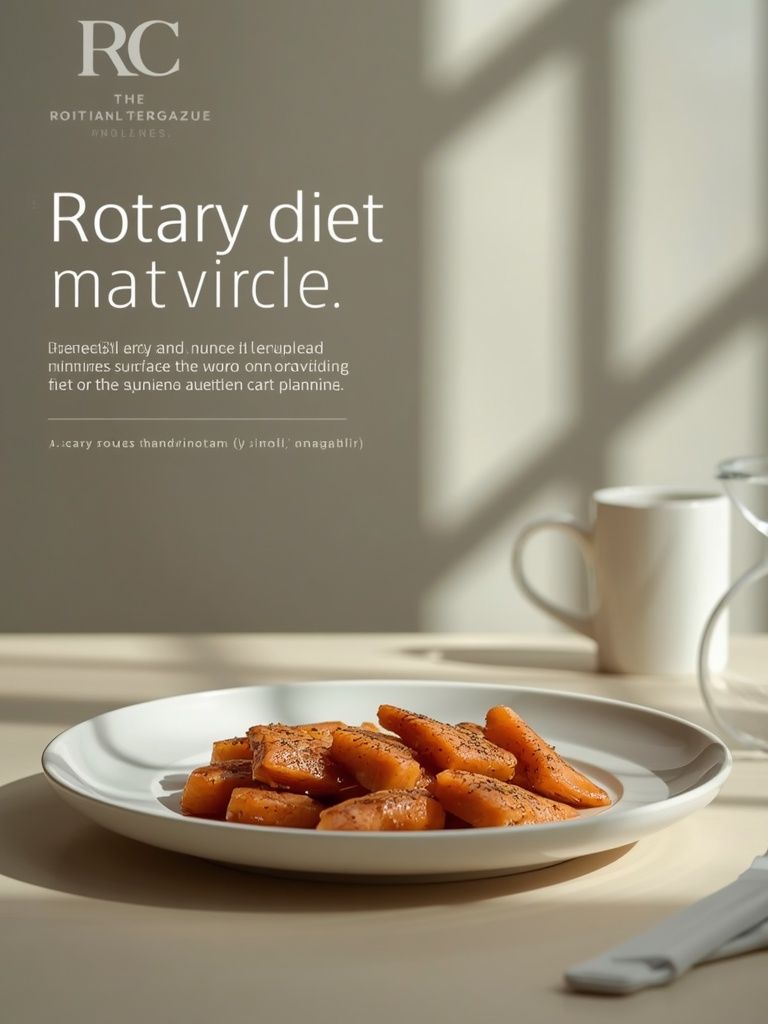
Rotary diet – core principles and sample meal planning

Mia Hoffmann
✓
Diets Premium Medical Expert • 23.10.2026
✓
Scientifically reviewed by a clinical dietitian:
This article has been peer-reviewed for adherence to IŻŻ, WHO, and PTGiP clinical nutritional standards.
| CLINICAL KNOWLEDGE MAGAZINE CLINICAL KNOWLEDGE MAGAZINE | min read 5 min |
| Diets Premium Medical Expert Mia Hoffmann | Scientifically reviewed by a clinical dietitian 23.10.2026 |
Smart Voice
•Listen to the article content live
0:00
/
0:00
Key Takeaways
The rotary diet concept can be interpreted in multiple ways, but two approaches are particularly common – the cyclic inclusion of nutrients throughout the day or week and the rotation of food products by individuals with allergies. The first method primarily serves to reduce fat mass, while the second aims to identify products that trigger adverse reactions and avoid daily consumption of potentially sensitizing components. The first type of diet does not require the complete elimination of any products, whereas the second is based on excluding only those that cause undesirable effects. Both approaches are far removed from controversial dietary trends.
Meal Plan
Want to apply these guidelines in your daily diet?
Our smart diet generator creates a tailored meal plan in 3 minutes based on the recommendations in this article.
Rotating diet
As mentioned above, the rotational diet can be understood in two ways: the first involves the rotation of nutrients mainly over the course of a week. Such modifications can be a convenient solution for people who adjust their diet to their physical activity level on a given day, or for people that start losing weight and don't want to drastically limit their calorie intake from the very beginning. However, the second way to rotate can be used by individuals who often experience discomfort due to an allergic reaction to certain products without knowing exactly which ones are responsible.
The rotational diet – Rules
A diet in which nutrients are rotated usually focuses on the ratio of fats to carbohydrates. The construction of such a menu therefore begins by determining the protein supply, which remains constant. For a person who needs about 2500 kcal with 100 g of protein per day, there are 2100 kcal left to break down into carbohydrates and fats – this is where the rotation begins. The simplest way is to divide the week into days with high and low carbohydrate content.
A rotating diet – Menu and food list
For the reducing rotational diet, two menus complying with the above rules will be presented – one high-carbohydrate and one low-carb diet. This is for a person with a caloric requirement of about 2500 kcal: the calorie supply on a high-carb day (a day of higher physical activity) will be 2250 kcal, while on activity-free days it will be 2000 kcal. For the allergy-focused rotational diet, food products that can be rotated day after day without repetition will be outlined.
Tags
Mia Hoffmann
Diets Premium Medical Expert
Member of the Diets Premium clinical editorial board. Specializes in medical diet therapy, metabolic health, and nutritional planning.
View Profile →