Olives - nutrient composition, characteristics, calories, recipes

| Diets Premium Expert Felix Weber | min read 3 min | Scientifically reviewed by a clinical dietitian 23.10.2026 |
Smart Voice
•Listen to the article content live
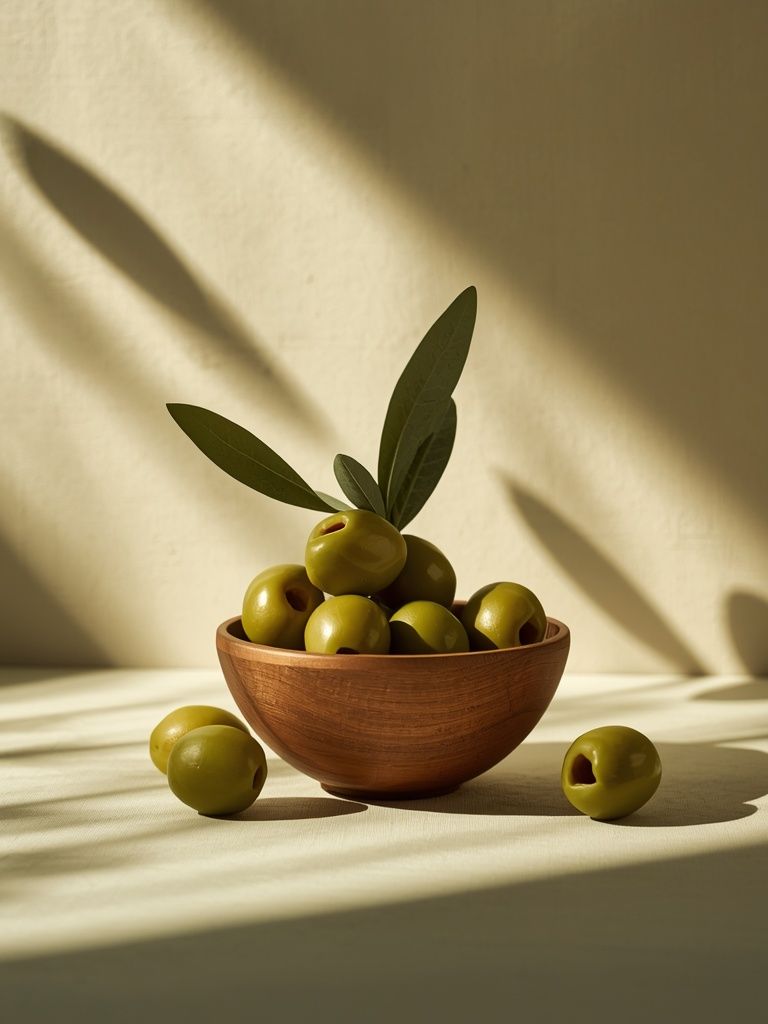
Olives are a key food product in the Mediterranean diet — they aid digestion, are low in calories, contain healthy fats, and have ample vitamins and minerals. What pairs best with them? How do green olives differ from black olives? What exactly is their nutrient composition?
Want to apply these guidelines in your daily diet?
Our smart diet generator creates a tailored meal plan in 3 minutes based on the recommendations in this article.
Olives – Botanical Origin, Cultivation, and Harvest Stages
Olives are the stone fruits (drupes) of the European olive tree (Olea europaea), an iconic and remarkably long-lived species belonging to the family Oleaceae. While commercial cultivation has historically been concentrated across the Mediterranean basin—most notably in Spain, Italy, Greece, and Turkey—thriving olive groves are now established in the Canary Islands, California, South America, South Africa, Australia, and parts of East Asia.
A key botanical fact is that green and black olives do not come from different tree species; rather, they represent distinct ripening stages of the exact same fruit. Green olives are harvested in early autumn once they have reached full size but before physiological ripening begins. Conversely, black (or deep purple-brown) olives remain on the branches until late autumn or winter, accumulating anthocyanin pigments, developing a mellower flavor profile, and reaching a higher lipid concentration. Raw olives picked directly from the tree are intensely bitter due to high concentrations of the phenolic glycoside oleuropein and must undergo curing—via water soaking, alkaline brining, or natural lactic acid fermentation—to become palatable.
Caloric Density and Macronutrient Profile of Olives
Compared to other lipid-rich plant foods such as tree nuts or oilseeds, table olives exhibit a remarkably moderate caloric density. A 100-gram serving of cured olives provides on average between 115 and 150 kcal (green olives typically supply around 125–140 kcal, whereas fully ripened black olives reach up to 150 kcal due to higher oil accumulation). Consequently, a single medium-sized olive (weighing 3–4 g) contains only about 4 to 5 kcal.
The macronutrient composition per 100 g is highly advantageous from a clinical nutrition perspective:
- Total Fat (11–15 g): Over 70–75% of the lipid fraction consists of monounsaturated oleic acid (omega-9), accompanied by essential linoleic acid (omega-6) and alpha-linolenic acid (omega-3).
- Dietary Fiber (approx. 3.0–3.5 g): Enhances gastrointestinal motility, prolongs postprandial satiety, and supports beneficial gut bacteria.
- Carbohydrates (approx. 1–4 g) and Protein (approx. 0.8–1.2 g): Because simple sugars are virtually fermented away during curing, olives possess an exceptionally low glycemic index (GI = 15), making them ideal for low-carbohydrate, ketogenic, and diabetic meal plans.
Health-Promoting Properties and Bioactive Polyphenols
The therapeutic value of olives stems from the synergistic action of monounsaturated fatty acids, fat-soluble vitamins (vitamin E and provitamin A), essential minerals (iron, copper, calcium, magnesium), and potent phytochemicals. Among the most significant bioactive polyphenols are oleuropein, hydroxytyrosol, tyrosol, and oleocanthal. These compounds exert powerful antioxidant and anti-inflammatory effects by inhibiting cyclooxygenase enzymes and preventing the oxidative modification of circulating LDL cholesterol particles.
Furthermore, traditionally cured table olives undergo natural lactic acid fermentation driven by strains such as Lactobacillus plantarum and Lactobacillus pentosus. Unpasteurized brined olives therefore supply beneficial probiotic microorganisms and organic lactic acid that reinforce intestinal barrier integrity, modulate immune responses, and alleviate digestive discomfort. Epidemiological and clinical data confirm that regular olive consumption supports blood pressure regulation, vascular elasticity, and neuroprotection.
Green vs. Black Olives – Which Variety Is Healthier?
From a nutritional standpoint, both green and naturally tree-ripened black olives offer exceptional health benefits, though their biochemical profiles differ slightly. Green olives generally retain higher concentrations of oleuropein and slightly fewer calories, whereas naturally ripened dark olives contain higher levels of hydroxytyrosol, anthocyanin pigments, and monounsaturated oil.
Crucial consumer guidance when selecting black olives: Many inexpensive black olives sold in supermarkets are actually unripe green olives that have been artificially oxidized in alkaline solutions and stabilized with ferrous gluconate (E579) or ferrous lactate (E585) to achieve a uniform jet-black appearance. Authentic tree-ripened dark olives (such as Greek Kalamata olives) are never uniformly pitch-black; instead, they display natural hues ranging from deep violet and burgundy to mahogany brown. Consumers should always inspect the ingredient label and choose naturally cured olives containing only olives, water, sea salt, and natural herbs or lactic acid.
Culinary Applications of Olives in Mediterranean Cuisine
Olives possess a sophisticated flavor profile that harmonizes savory, tangy, fruity, and subtly bitter umami notes. They are commercially available whole with pits (which best preserves their firm texture and aromatic complexity), pitted, sliced, or stuffed with pimento pepper, blanched almonds, garlic cloves, capers, or feta cheese.
In everyday healthy cooking, olives offer remarkable versatility:
- Salads and Cold Appetizers: As a signature component of classic Greek salad (Horiatiki), Mediterranean antipasti platters, grain bowls, and vegetable carpaccio.
- Spreads and Tapenade: Finely blended with capers, garlic, fresh herbs, and extra virgin olive oil, they form Provençal tapenade—a nutrient-dense, heart-healthy alternative to butter on whole-grain bread.
- Warm Dishes and Braises: Simmered into rich tomato sauces (such as Pasta alla puttanesca), baked with white marine fish, added to Moroccan poultry tagines, or baked into artisanal sourdough bread and focaccia.
Recipe: Mediterranean Herb-Marinated Olive and Tomato Appetizer
This vibrant, easy-to-prepare Mediterranean appetizer combines the powerful antioxidants of tomatoes (lycopene) and olives (hydroxytyrosol and oleuropein) with heart-healthy monounsaturated fats.
Ingredients (serves 2–3):
- 100 g green olives and 100 g naturally ripened black olives (pitted and briefly rinsed)
- 200 g ripe cherry tomatoes (halved)
- 60 g traditional feta or aged sheep cheese (cubed)
- 1 small red onion (thinly sliced) and 1 clove garlic (finely minced)
- 2 tbsp extra virgin olive oil, 1 tbsp freshly squeezed lemon juice
- Fresh basil leaves, dried oregano, and freshly cracked black pepper
Preparation: Combine the olives, halved cherry tomatoes, red onion slices, and minced garlic in a serving bowl. Whisk together the extra virgin olive oil, lemon juice, oregano, and black pepper, then drizzle over the mixture. Gently fold in the cubed feta cheese and torn fresh basil leaves. Allow the dish to marinate for 15 minutes before serving so the flavors meld harmoniously.
Tags

mgr Felix Weber
✓Diets Premium Expert
Diets Premium team expert. Specializes in nutrition plans, strength sports, and training plans.
View Profile →