Ginger essential oil - properties, application, price, usage method

| CLINICAL KNOWLEDGE MAGAZINE CLINICAL KNOWLEDGE MAGAZINE | min read 3 min |
| Diets Premium Medical Expert Felix Weber | Scientifically reviewed by a clinical dietitian 23.10.2026 |
Smart Voice
•Listen to the article content live
Natural treatments are becoming increasingly popular and recognized, mainly due to the fact that the majority of them do not result in serious side effects. One of the beneficial plants for humans since ancient times is ginger.
Want to apply these guidelines in your daily diet?
Our smart diet generator creates a tailored meal plan in 3 minutes based on the recommendations in this article.
Ginger – botanical origin and bioactive compounds
Ginger (Zingiber officinale) is a perennial reed-like plant belonging to the Zingiberaceae family, cultivated for millennia across Southeast Asia, China, and India as both a culinary staple and a foundational therapeutic herb. Ginger essential oil is obtained through steam distillation of the unpeeled, dried rhizomes, yielding a golden, warm, and spicy aromatic essence. The oil is concentrated with over 50 identified bioactive constituents, most notably sesquiterpene hydrocarbons such as zingiberene, ar-curcumene, beta-bisabolene, along with monoterpenes like camphene, borneol, and citral, all responsible for its warming and immunostimulatory characteristics.
Therapeutic effects and applications of ginger oil
Ginger essential oil possesses remarkable analgesic, anti-inflammatory, and spasmolytic properties. Biochemical evaluations demonstrate that gingerols and related terpenes inhibit cyclooxygenase (COX-2) and lipoxygenase (5-LOX) enzymes, achieving pain relief and anti-inflammatory actions comparable to non-steroidal anti-inflammatory agents. In clinical aromatherapeutic protocols, ginger oil is effectively employed to ease osteoarthritic knee stiffness, soothe acute muscular spasms, alleviate digestive colic, and reduce peripheral edema. Furthermore, its potent rubefacient and circulation-boosting effects make it a premier active ingredient in slimming body oils and cellulite reduction therapies.
Pricing and quality criteria for pure ginger oil
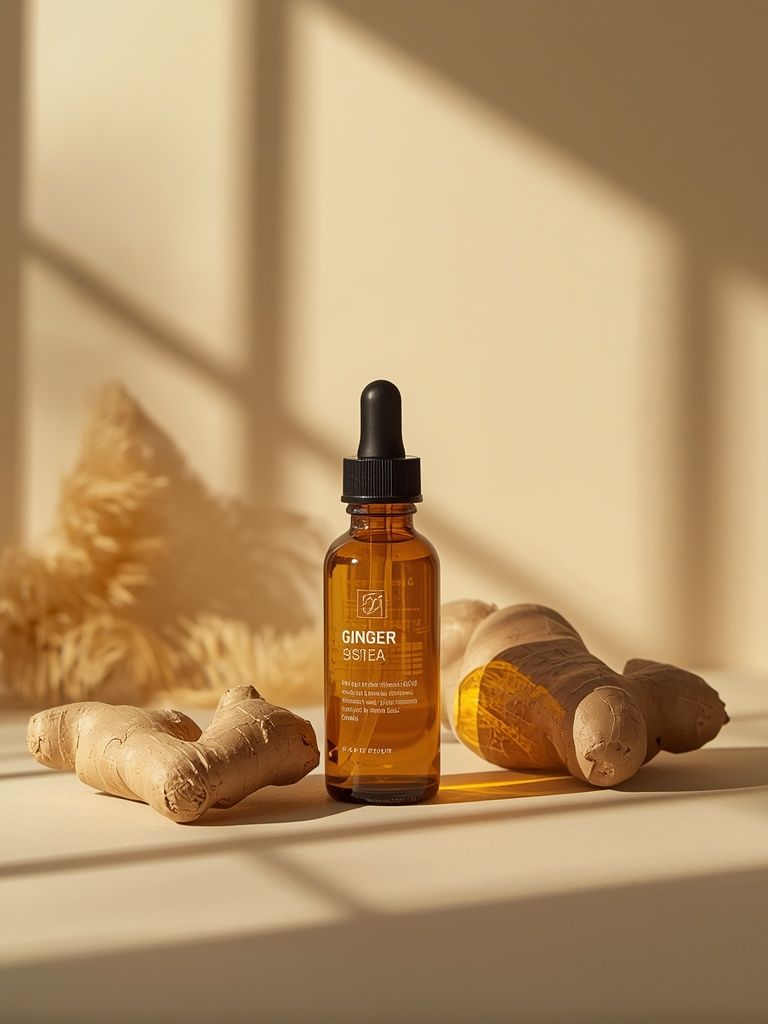
The market price of genuine 100% pure ginger essential oil ranges typically from 20 to 60 PLN (or approximately 5 to 15 EUR) per 10–12 ml bottle, reflecting the substantial volume of raw rhizomes required for steam extraction. When purchasing, consumers must carefully distinguish between genuine 100% steam-distilled pure essential oil and synthetic fragrance oils or diluted carrier blends. Quality indicators include dark amber glass packaging, clear botanical labeling specifying Zingiber officinale, GC/MS batch certification, and procurement from reputable pharmacies or certified herbal dispensaries.
How to safely use ginger essential oil
Prior to any topical application, performing a 24-hour skin patch test is essential to rule out individual hypersensitivity. Pure ginger essential oil must never be applied undiluted directly to mucous membranes or damaged skin. For therapeutic massages, dilute 3–5 drops of ginger oil in 15–20 ml of a nourishing carrier oil such as sweet almond or jojoba oil. For a restorative bath, emulsify 4–6 drops in a tablespoon of honey or whole milk before adding to warm water. For motion sickness or nausea, add 2 drops to a cotton handkerchief or diffuse 3–4 drops in an ultrasonic diffuser to quickly restore equilibrium.
Tags
Felix Weber
Diets Premium Medical Expert
Member of the Diets Premium clinical editorial board. Specializes in medical diet therapy, metabolic health, and nutritional planning.
View Profile →