Processed canned tomatoes: manufacturing methods and product variations

Smart Voice
Listen to the article content live
| CLINICAL KNOWLEDGE MAGAZINE CLINICAL KNOWLEDGE MAGAZINE | min read 3 min |
| Diets Premium Medical Expert Olivia Davis | Scientifically reviewed by a clinical dietitian 19.05.2026 |
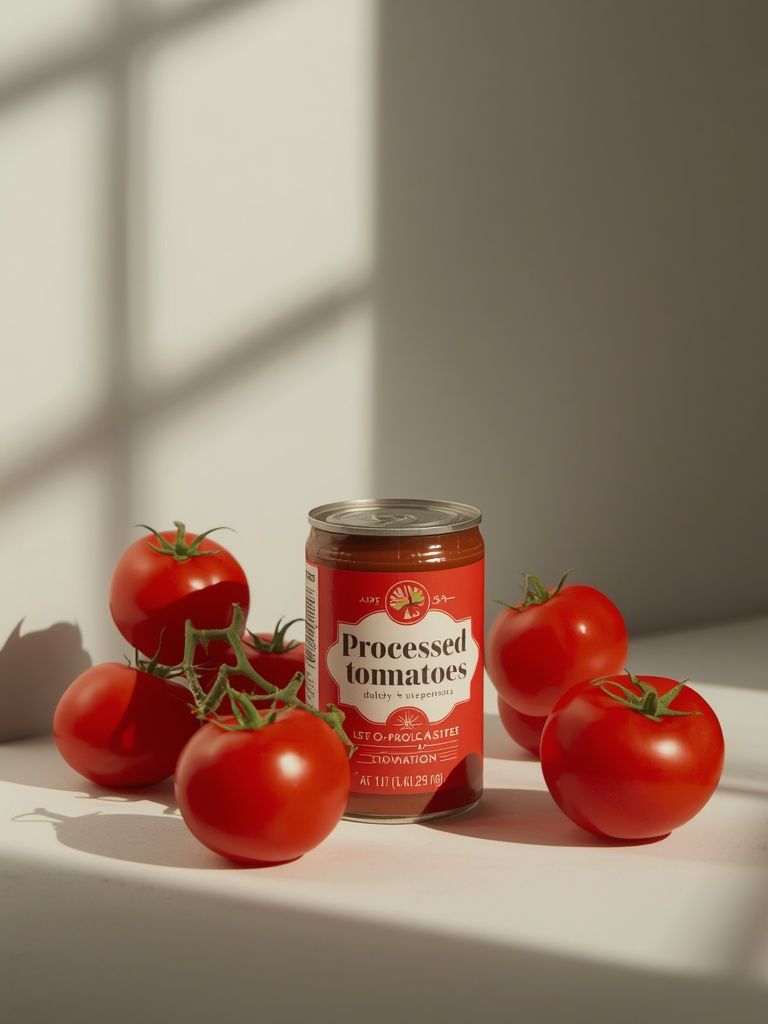
The manufacturing process for canned tomatoes involves a series of meticulously controlled stages: initially, the outer peel of the fruit is removed, followed by mechanical pulverization of the pulp to achieve the desired texture—whether whole, sliced, or as a smooth purée. The subsequent critical phase involves subjecting the contents of hermetically sealed containers to pasteurization, a method wherein the temperature is precisely maintained between a minimum of 72°C and a maximum of 100°C for a specified duration. This thermal treatment effectively neutralizes potentially harmful microorganisms, thereby ensuring both the shelf stability and microbiological safety of the final food product—eliminating any necessity for artificial preservatives. The market offers a diverse array of product variants: from traditional whole tomatoes to diced or sliced versions, as well as enhanced editions incorporating natural flavorings such as dried Provençal herbs, basil, oregano, or fresh garlic.
Want to apply these guidelines in your daily diet?
Our smart diet generator creates a tailored meal plan in 3 minutes based on the recommendations in this article.
Properties of canned tomatoes vitamins and minerals
Is it even calories? How many calories do tomatoes have in a can?
Canned tomatoes Use
Olivia Davis
Diets Premium Medical Expert
Member of the Diets Premium clinical editorial board. Specializes in medical diet therapy, metabolic health, and nutritional planning.
View Profile →