Cheese | Diets Premium Skip to main content
CLINICAL KNOWLEDGE MAGAZINE 2 min read

Cheese – varieties, nutritional value, manufacture, intake

Isabella Taylor
Isabella Taylor ✓
Diets Premium Medical Expert • 24.09.2026

Smart Voice

Listen to the article content live

✓
Scientifically reviewed by a clinical dietitian: This article has been peer-reviewed for adherence to IŻŻ, WHO, and PTGiP clinical nutritional standards.
CLINICAL KNOWLEDGE MAGAZINE CLINICAL KNOWLEDGE MAGAZINE min read 2 min
Diets Premium Medical Expert Isabella Taylor Scientifically reviewed by a clinical dietitian 24.09.2026
Cheese – varieties, nutritional value, manufacture, intake
Key Takeaways
Cheese is a food product derived from milk. Due to its distinctive taste and aroma, it is a raw material particularly enjoyed or even rejected by consumers. What varieties of cheese can we differentiate? Is it worth consuming them and which ones are the best to choose?
Meal Plan

Want to apply these guidelines in your daily diet?

Our smart diet generator creates a tailored meal plan in 3 minutes based on the recommendations in this article.

Cheese Varieties: Tradition, Diversity, and Culinary Applications

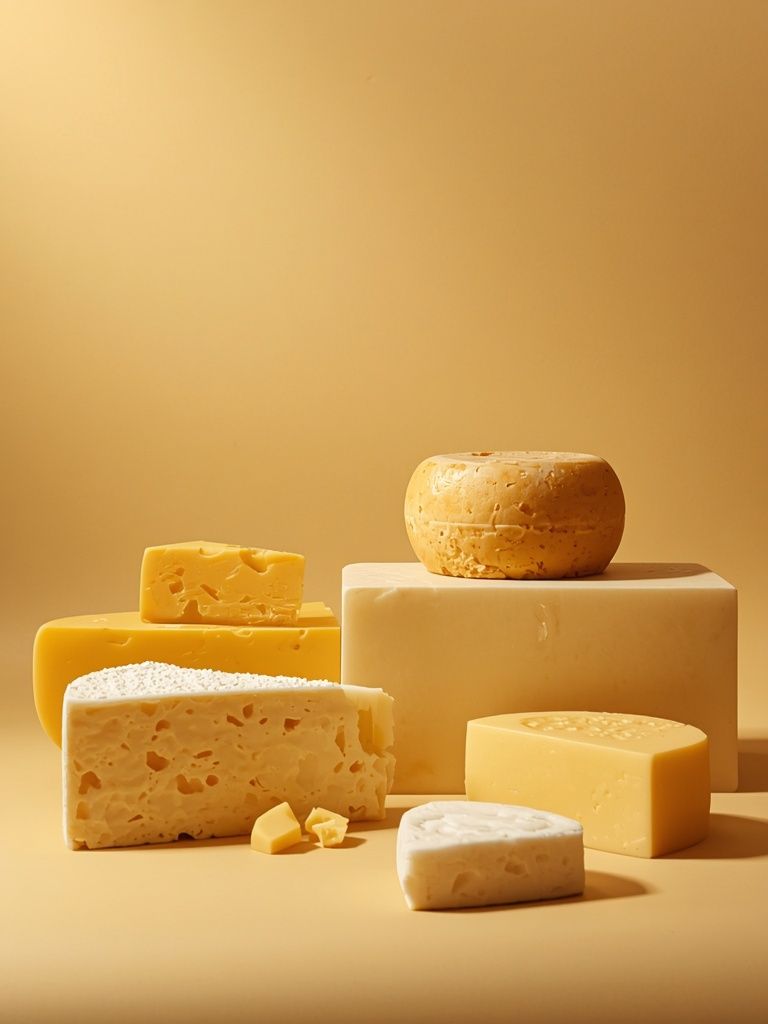
Cheese products constitute a category of food items derived from the coagulation of milk proteins and the emulsification of fats, resulting in the formation of a distinct curdled mass. Globally, nearly four thousand unique cheese varieties have been identified, whereas Poland produces a comparatively modest ninety distinct types. The classification of cheeses may be based on multiple criteria, including the type of milk utilized (cow, goat, or sheep), the duration of aging, the percentage of fat content, the geographic region of origin, and specific manufacturing techniques. An undeniable hallmark of cheeses is their pronounced flavor and aromatic profile, which can range from subtly nuanced to exceptionally robust. Furthermore, cheeses exhibit remarkable versatility in culinary applications—spanning from classic sandwich fillings and salads to intricate main courses and even sophisticated desserts. The foremost global leaders in cheese production include Italy, France, the Netherlands, and Switzerland—nations whose cheesemaking traditions span centuries and enjoy worldwide acclaim.

Comprehensive categorization and diversity of cheeses based on raw materials and production methods

The systematic classification of cheeses is grounded in multiple criteria, with the primary distinction being the type of milk utilized as the foundational raw material. Cheese production predominantly relies on milk sourced from three primary dairy animals: cows, sheep, and goats. Among cow's milk cheeses, the most renowned varieties include Gouda, celebrated for its mild flavor and supple texture; Ementaler, distinguished by its characteristic holes; pungent Gorgonzola with its blue veining; robust Cheddar; delicate Edam encased in red paraffin; the sharp, granular Parmesan; and an extensive range of quark cheeses with varying fat content. Sheep's milk, in contrast, serves as the basis for traditional regional cheeses such as the smoked Oscypek from the Podhale region, the bold Bryndza with its sharp taste profile, fresh Bundz with its subtle aroma, salty Halloumi ideal for grilling, and creamy Roquefort with its distinctive green-blue veins. Goat's milk, meanwhile, underpins specialty cheeses like the aromatic Cabrion, the French Tignard, classic Fromage de Chèvre with its soft consistency, and the fragrant Montrachet. The Polish market is dominated by cow's milk cheeses, a trend influenced by both culinary traditions and the widespread availability of the raw material. Despite their organoleptic and nutritional advantages, goat's milk cheeses remain a niche product, primarily due to higher production costs that are reflected in the retail price for consumers.

Nutritional composition and caloric value of diverse cheese varieties: a dietary and health-oriented analysis

A comprehensive evaluation of cheese nutritional profiles reveals that their composition varies significantly depending on the specific variety, yet they uniformly serve as an exceptional source of complete protein, diverse fatty acids, trace minerals, and fat-soluble vitamins. For instance, low-fat cottage cheese provides a modest 70 kilocalories per 100 grams, whereas blue-veined cheeses may deliver up to 370 kilocalories in an equivalent serving. This variability extends to fat content as well: fresh cheeses contain substantially fewer saturated fatty acids compared to aged varieties. Notably, rennet-coagulated cheeses exhibit elevated zinc concentrations—a mineral that enhances circulation, supports skin and hair health, and accelerates metabolic processes. Within the framework of low-calorie dietary regimens, the consumption of non-fat or reduced-fat fresh cheeses is advised due to their minimal energy density. Individuals with lactose intolerance, by contrast, should opt for hard cheeses, which—unlike their fresh counterparts—contain only negligible amounts of lactose. Aged cheeses represent a rich source of calcium and phosphorus, rendering them particularly beneficial for those managing osteoporosis or rickets, though their high sodium content necessitates moderation among hypertensive patients. All matured cheese varieties abound in fat-soluble vitamins and milk-derived minerals but simultaneously contain significant quantities of saturated fats, the intake of which should be monitored. Fresh cheeses, characterized by higher water content, consequently exhibit reduced levels of minerals, vitamins, fat, and calories. Importantly, all cheese types serve as an abundant source of tyrosine—an amino acid that favorably influences mood elevation, energy levels, stress resilience, and appetite suppression.

The production of cheese

Certain cultures of bacteria added to milk produce CO2, resulting in holes in the cheese. Further stages of production are different depending on the type of cheese produced. The next stage in the production of cheese is pasteurization, followed by the addition of bacteria characteristic of the cheese, which are used to process lactose into lactic acid. Then the bacteria are crushed into cereal grains, and the cereal is extracted from the seeds, which is the result of the fermentation process.
Isabella Taylor

Isabella Taylor

Diets Premium Medical Expert

Member of the Diets Premium clinical editorial board. Specializes in medical diet therapy, metabolic health, and nutritional planning.

View Profile →

Recommended articles in this category

Related Articles

Discover similar publications and expert insights.

Effects, dosing, contraindications and side effects of kudzu root
Food & Ingredients
Effects, dosing, contraindications and side effects of kudzu root
⏱ 3 min czytania 📚 Food & Ingredients
#Raw #Liver
Potatoes – a Treasure Chest of Flavor and Nutritional Value
Nutrition
Potatoes – a Treasure Chest of Flavor and Nutritional Value
⏱ 7 min czytania 📚 Nutrition
#Nutrition #Nutritional Value
Low-histamine diet - implementation rules and affected individuals
Dietetics
Low-histamine diet - implementation rules and affected individuals
⏱ 8 min czytania 📚 Dietetics
Menopause – How to Manage This Phase?
Genetic Disorders
Menopause – How to Manage This Phase?
⏱ 7 min czytania
#Genetic Disorders #Weight Gain
Post-threshing wheat residues – husk-derived byproducts of milling operations
Food & Ingredients
Post-threshing wheat residues – husk-derived byproducts of milling operations
⏱ 3 min czytania 📚 Food & Ingredients
#Seeds #Fasting
Potato Juice - Medical Properties... Potato Juice for Ulcers, for Hair
Juice
Potato Juice - Medical Properties... Potato Juice for Ulcers, for Hair
⏱ 3 min czytania
#Juice
Chlorella Algae - outcomes, accessibility, cost, potential adverse effects
Vitamin C
Chlorella Algae - outcomes, accessibility, cost, potential adverse effects
⏱ 4 min czytania
#Vitamin C #Vitamin K2
Reducing a child's weight - Adjusting their dietary patterns
Healthy
Reducing a child's weight - Adjusting their dietary patterns
⏱ 6 min czytania
#Healthy #Dietary Patterns
Discover how the synergistic blend of natural honey and cinnamon may accelerate healthy and sustainable weight reduction!
Weight Management
Discover how the synergistic blend of natural honey and cinnamon may accelerate healthy and sustainable weight reduction!
⏱ 1 min czytania 📚 Weight Management
#Honey #Healthy
A comprehensive examination of the detrimental effects of sweetened juices and beverages on human health
Cola
A comprehensive examination of the detrimental effects of sweetened juices and beverages on human health
⏱ 2 min czytania
#Cola #Syrup
Chili Pepper – Botanical Characteristics, Varietal Diversity, Culinary Applications, and a Step-by-Step Guide to Crafting an Exceptionally Fiery Sauce of Unmatched Potency
Food & Ingredients
Chili Pepper – Botanical Characteristics, Varietal Diversity, Culinary Applications, and a Step-by-Step Guide to Crafting an Exceptionally Fiery Sauce of Unmatched Potency
⏱ 3 min czytania 📚 Food & Ingredients
#Vitamins #Crafting
Cornflakes – Nutritional Composition and Health Value Analysis. Are They Genuinely Beneficial for the Body?
Breakfast
Cornflakes – Nutritional Composition and Health Value Analysis. Are They Genuinely Beneficial for the Body?
⏱ 2 min czytania
#Breakfast #Cornflakes
Cucumber Cabbage - Nutritional Components, Therapeutic Properties, Recipes
Nutrition
Cucumber Cabbage - Nutritional Components, Therapeutic Properties, Recipes
⏱ 5 min czytania 📚 Nutrition
Endometriosis – Causes, Symptoms, and Treatment Methods
Nutrition
Endometriosis – Causes, Symptoms, and Treatment Methods
⏱ 5 min czytania 📚 Nutrition
#Endometriosis
As in Heaven, So on Earth: Achieving Goals
Mind-Body
As in Heaven, So on Earth: Achieving Goals
⏱ 7 min czytania
#Mind-body #Power
Knee Joint Stability Disorders
Stability
Knee Joint Stability Disorders
⏱ 2 min czytania
#Stability
"Lazy Person's Diet" – optimal results with minimal effort"
Health Conditions
"Lazy Person's Diet" – optimal results with minimal effort"
⏱ 5 min czytania 📚 Health Conditions
#Healthy #Healthy Eating
"Refreshing snacks" perfect for hot days
Cooking
"Refreshing snacks" perfect for hot days
⏱ 4 min czytania
#Cooking #Appetizers
Mesomorphic, endomorphic or ectomorphic type, i.e. a diet consistent with body type
Nutrition Plans
Mesomorphic, endomorphic or ectomorphic type, i.e. a diet consistent with body type
⏱ 4 min czytania 📚 Nutrition Plans
#Healthy #Metabolic
Chronic gastric mucosal inflammation induced by mechanical compression – distinctive symptomatology, etiologic factors, and contemporary therapeutic approaches
Inflammation
Chronic gastric mucosal inflammation induced by mechanical compression – distinctive symptomatology, etiologic factors, and contemporary therapeutic approaches
⏱ 3 min czytania
#Inflammation
A comprehensive guide to effective countermeasures against motion sickness – dietary approaches, symptomatology and underlying mechanisms
Nutrition
A comprehensive guide to effective countermeasures against motion sickness – dietary approaches, symptomatology and underlying mechanisms
⏱ 5 min czytania
#Nutrition #Transportation
Omega-9 fatty acid (oleic acid) – biochemical profile, dietary sources, and functional roles in human physiology
Omega Fatty Acids
Omega-9 fatty acid (oleic acid) – biochemical profile, dietary sources, and functional roles in human physiology
⏱ 4 min czytania
#Omega Fatty Acids #Omega-6 Fatty Acids
The High-Fat Regimen vs. The High-Carbohydrate Regimen
Marine
The High-Fat Regimen vs. The High-Carbohydrate Regimen
⏱ 4 min czytania 📚 Marine
Influence of Diet on Fertility in Women and Men
Nutrition
Influence of Diet on Fertility in Women and Men
⏱ 8 min czytania
#Nutrition
Protein Bars – Homemade Recipe. When Is the Best Time to Eat Protein Bars?
Protein
Protein Bars – Homemade Recipe. When Is the Best Time to Eat Protein Bars?
⏱ 4 min czytania
#Protein #Protein Bar
Bioavailable silicon – key properties, dietary sources, and benefits for hair and skin integrity
Collagen
Bioavailable silicon – key properties, dietary sources, and benefits for hair and skin integrity
⏱ 4 min czytania
#Collagen #Recovery
Lithuanian culinary art: defining features, heritage, and time-honored recipes
Cabbage
Lithuanian culinary art: defining features, heritage, and time-honored recipes
⏱ 7 min czytania
#Cabbage #Potatoes
Quercetin: Mechanisms of Action, Supplementation Guidelines, Adverse Reactions, and Market Pricing
Nutritional Science
Quercetin: Mechanisms of Action, Supplementation Guidelines, Adverse Reactions, and Market Pricing
⏱ 4 min czytania 📚 Nutritional Science
#Apples #Berries
The kidneys: etiologic factors, clinical manifestations, and dietary guidelines in renal pathologies
Dietary Guidelines
The kidneys: etiologic factors, clinical manifestations, and dietary guidelines in renal pathologies
⏱ 3 min czytania
#Dietary Guidelines #Dietary Recommendations
Restoring hepatic vitality: evidence-based nutritional approaches, herbal remedies, and natural strategies for enhancing liver cell regeneration
Performance
Restoring hepatic vitality: evidence-based nutritional approaches, herbal remedies, and natural strategies for enhancing liver cell regeneration
⏱ 5 min czytania
#Performance #Liver Health

Share