
PRO
6 min read
Buckwheat – Raw or Roasted? Properties and Recipes

David Janitzek
✓
Diets Premium Expert • 25.09.2026
✓
Scientifically reviewed by a clinical dietitian:
This article has been peer-reviewed for adherence to IŻŻ, WHO, and PTGiP clinical nutritional standards.
| Diets Premium Expert David Janitzek | min read 6 min | Scientifically reviewed by a clinical dietitian 25.09.2026 |
Smart Voice
•Listen to the article content live
0:00
/
0:00
Key Takeaways
Buckwheat regains popularity among all who care about their health and physical condition. It is not only a source of nutrients, vitamins, and minerals, but also low in calories and delicious. This grain can be used as an ingredient in main dishes, salads, and even sweet snacks.
Meal Plan
Want to apply these guidelines in your daily diet?
Our smart diet generator creates a tailored meal plan in 3 minutes based on the recommendations in this article.
PRO Content
PRO
This article is professional premium content (PRO) provided in its entirety.
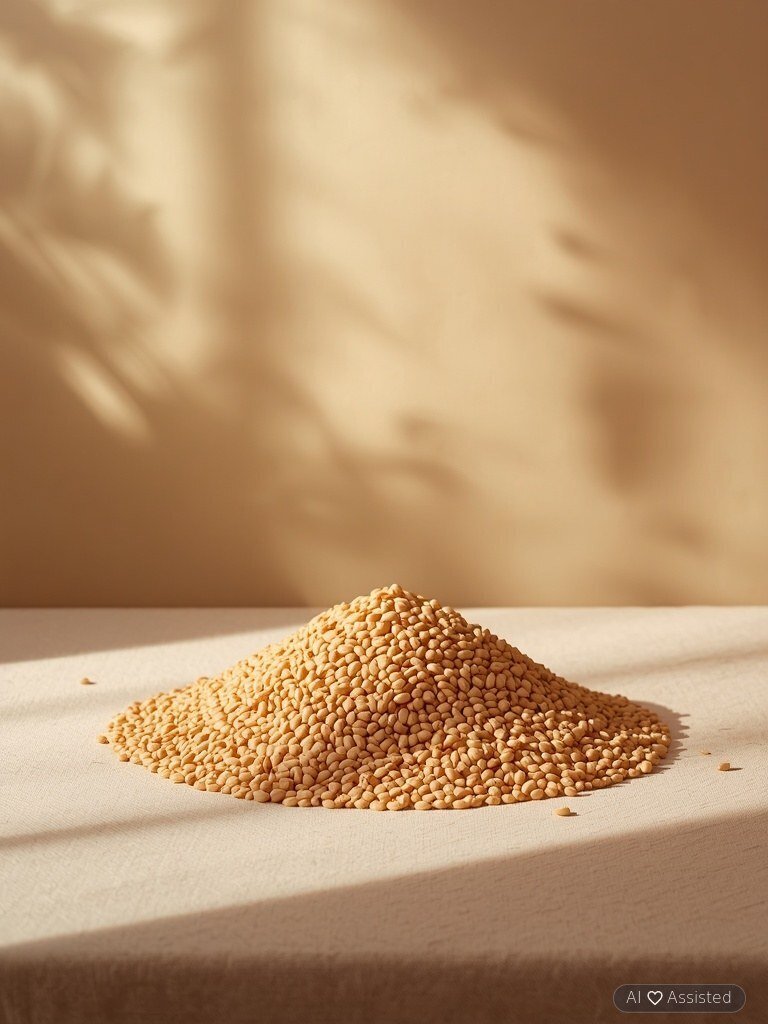
Raw buckwheat groats (unroasted white variety)
In Poland, the production technology of buckwheat groats involves a multi-stage processing method that generates high-fiber byproducts such as bran and husks. Depending on the extent and number of processing steps, the resulting groats exhibit varying nutritional compositions. Buckwheat groats consist of whole or cracked buckwheat kernels from which the outer fruit layer has been removed. The primary classification criterion is thermal treatment, distinguishing between unroasted and roasted (toasted) varieties. The unroasted form features a light cream color and a more delicate, less pronounced flavor compared to its roasted counterpart. Its growing popularity stems from its health benefits, high satiety value, ease of preparation, and culinary versatility—suitable for vegetarian and meat-based dishes, desserts, and as a filling for dumplings or stuffed cabbage rolls.
Roasted buckwheat groats – a dark, nutrient-rich culinary treasure with a distinctive aroma
The roasting process applied to buckwheat groats is specifically designed to enhance its organoleptic properties, significantly intensifying both flavor and aromatic complexity, thereby transforming it into a product with a robust and nuanced sensory profile. As a direct consequence of thermal treatment, the groats develop a distinctive dark brown hue, which serves as a reliable indicator of the roasting intensity—darker shades correspond to higher processing temperatures. While this method inevitably leads to partial degradation of certain nutritional components—including proteins, B-complex vitamins, and antioxidant compounds—such alterations should not justify complete exclusion from one’s diet. Roasted buckwheat remains an exceptional source of essential minerals, particularly magnesium, which exhibits remarkable resistance to heat-induced degradation. Furthermore, it provides a substantial supply of high-quality plant-based protein, unsaturated fatty acids, and bioactive antioxidant agents, all of which underscore its status as an indispensable component of a balanced dietary regimen. Of paramount importance to preserving its nutritional integrity, however, is the method of preparation: Both roasted and unroasted varieties should be cooked using minimal water, ideally following the "fluffy" technique, which ensures optimal absorption of the liquid along with the dissolved vitamins and minerals it contains. Cooking in excessive water volumes with subsequent draining must be avoided, as this practice results in irreversible losses of valuable nutrients, thereby compromising the overall nutritional quality of the final dish [2].
Nutritional profile and health benefits of buckwheat groats as a gluten-free and cardioprotective dietary component
Buckwheat groats, derived from the seeds of common buckwheat (*Fagopyrum esculentum*), exhibit a distinctive nutritional composition that positions them as a valuable component of a balanced, health-promoting diet. Their **gluten-free protein** features a **well-proportioned amino acid profile**, rich in **lysine**, sulfur-containing amino acids (**methionine, cysteine**), and **leucine and phenylalanine**. Notably, a **100-gram serving** fulfills the **entire daily requirement for essential amino acids**—those that the human body cannot synthesize independently. Due to its **absence of gluten**, buckwheat is an **ideal dietary choice** for individuals managing **celiac disease** or **gluten sensitivity**. The primary carbohydrate in buckwheat is **resistant starch**, whose molecular structure resists enzymatic hydrolysis (amylolysis), resulting in a **low glycemic index** and moderate caloric density in buckwheat-based products. Additionally, buckwheat is abundant in **unsaturated fatty acids**, particularly monounsaturated **oleic, palmitoleic, and erucic acids**, alongside polyunsaturated **linoleic acid (ω-6)**, which contribute to **atherosclerosis prevention**. A key nutritional asset is its **dietary fiber content** (3–7% soluble and 2–3% insoluble fractions), which exerts multiple benefits: **lowering LDL cholesterol**, reducing the risk of **coronary artery disease**, stabilizing **postprandial glycemia** (via soluble fiber), and enhancing **intestinal motility** while binding **secondary bile acids** (insoluble fiber). Consuming **100 g of buckwheat daily** covers **20–30% of the recommended daily fiber intake**. Furthermore, buckwheat serves as an excellent source of **B vitamins** (thiamine, riboflavin, niacin, pantothenic acid, folate), **vitamin E**, and **provitamin A (β-carotene)**, as well as **rutin**—a flavonoid with documented effects in **strengthening blood vessel permeability**, **preventing atherosclerosis**, **lowering blood pressure**, and exerting **antioxidant properties [3]**.
Classic Buckwheat Dishes: A Compilation of Time-Tested Culinary Recipes Featuring Whole-Grain Groats
Explore distinctive buckwheat-based recipes that harmoniously blend traditional flavors with contemporary culinary techniques. The collection features: **a hearty lentil-and-buckwheat loaf enriched with dried cranberries**, **tender crepes crafted from freshly milled buckwheat flour and plant-based milk**, and **a savory beef goulash with whole-grain buckwheat groats and root vegetables**. Each recipe provides a meticulous step-by-step preparation guide, a precisely measured ingredient list, and practical thermal processing advice. An ideal solution for enthusiasts of wholesome, satisfying cuisine with a rich flavor profile.
Tags

mgr David Janitzek
✓Diets Premium Expert
Diets Premium team expert. Specializes in nutrition plans, strength sports, and training plans.
View Profile →





