Balkongarten auf der Balustrade – Kräuter, Sprossen und Gemüse für jeden

Lena Bauer
2026-03-23
6 Min. Lesezeit
1 / 1
1 zdjęcie
1935
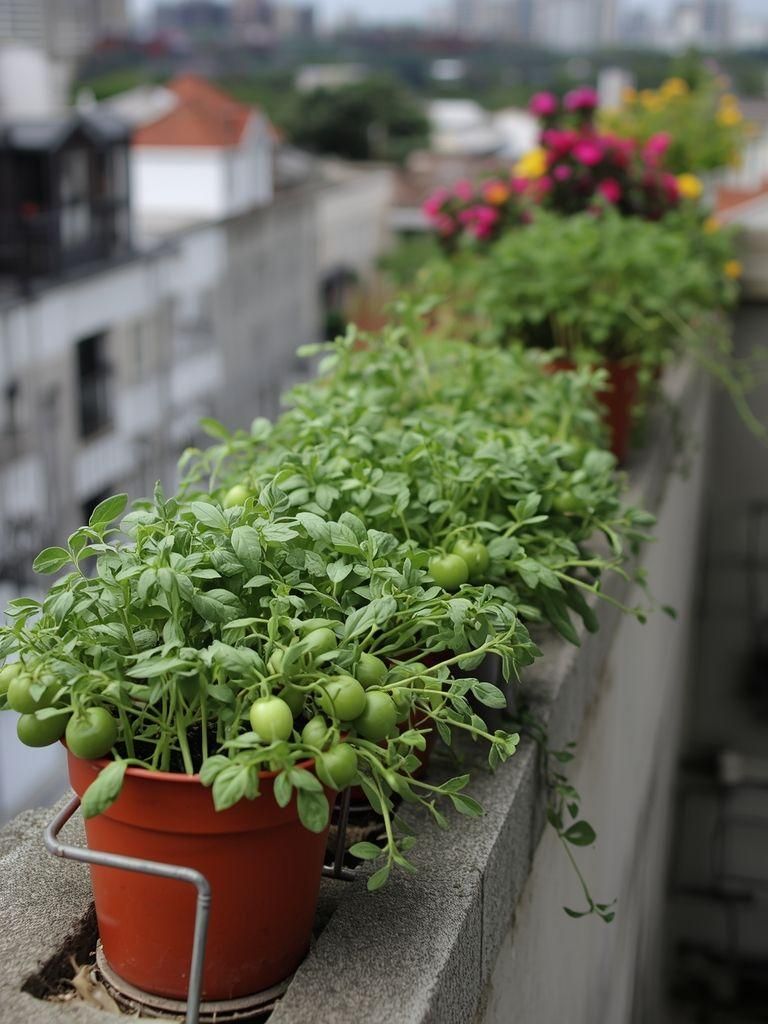
Menschen mit ihrem eigenen Garten können sich an selbst gezogenen frischen Kräutern, Kirschtomaten, Radieschen oder Salaten erfreuen. In diesem Fall reicht es: Platz auf der Balustrade, geeignete Erde, ein paar Töpfe und ein wenig Fantasie und Engagement, um einen kleinen Balkongarten anzulegen. Aber was ist mit den Menschen, die in Wohnblocks leben?
Herb cultivation on a parapet
Cultivating herbs on a parapet is an excellent method of providing yourself with fresh and aromatic kitchen ingredients, even without access to a garden. Herbs such as basil, parsley, chives, mint, thyme, or oregano are easy to grow on a parapet. All you need to do is provide them with the right growing conditions by choosing suitable pots with water drainage holes. These pots do not have to be large - those with a diameter of about 20 cm and a depth of 15 to 20 cm are sufficient. Next, a layer of drainage material, such as gravel, should be laid at the bottom of the pots and filled with a mixture of herb soil. The key to successful herb cultivation on a parapet is regular watering, usually once a day, and even twice a day during hot periods, to ensure soil moisture. It is also important to remove dry leaves and regularly prune the plants to ensure their freshness. Additionally, rotating the plants every few days will provide them with even light exposure from all sides. Although cultivating herbs on a parapet may seem time-consuming, the reward for this work, namely fresh and aromatic herbs ready for use in food preparation, is undoubtedly worth the time and effort (K. Reilly 2021).
Sie haben begonnen, einen PRO-Artikel zu lesen
Sie können das erste Kapitel lesen. Um den gesamten Artikel zu lesen und alle Inhalte freizuschalten, wechseln Sie zum PRO-Konto.