Nutrition
3 min read
Tuna vs Salmon: Which fish is better for your diet?
1 photo
2796
Table of Contents 5
Medical & Editorial Disclaimer (§3 Terms): This article is for informational and educational purposes only, does not constitute medical advice, diagnosis, or treatment, and is used at your own risk. Consult a qualified physician for medical conditions.
Clinical E-Books & Diet Plans:
Explore E-Books & Plans →
Key Takeaways
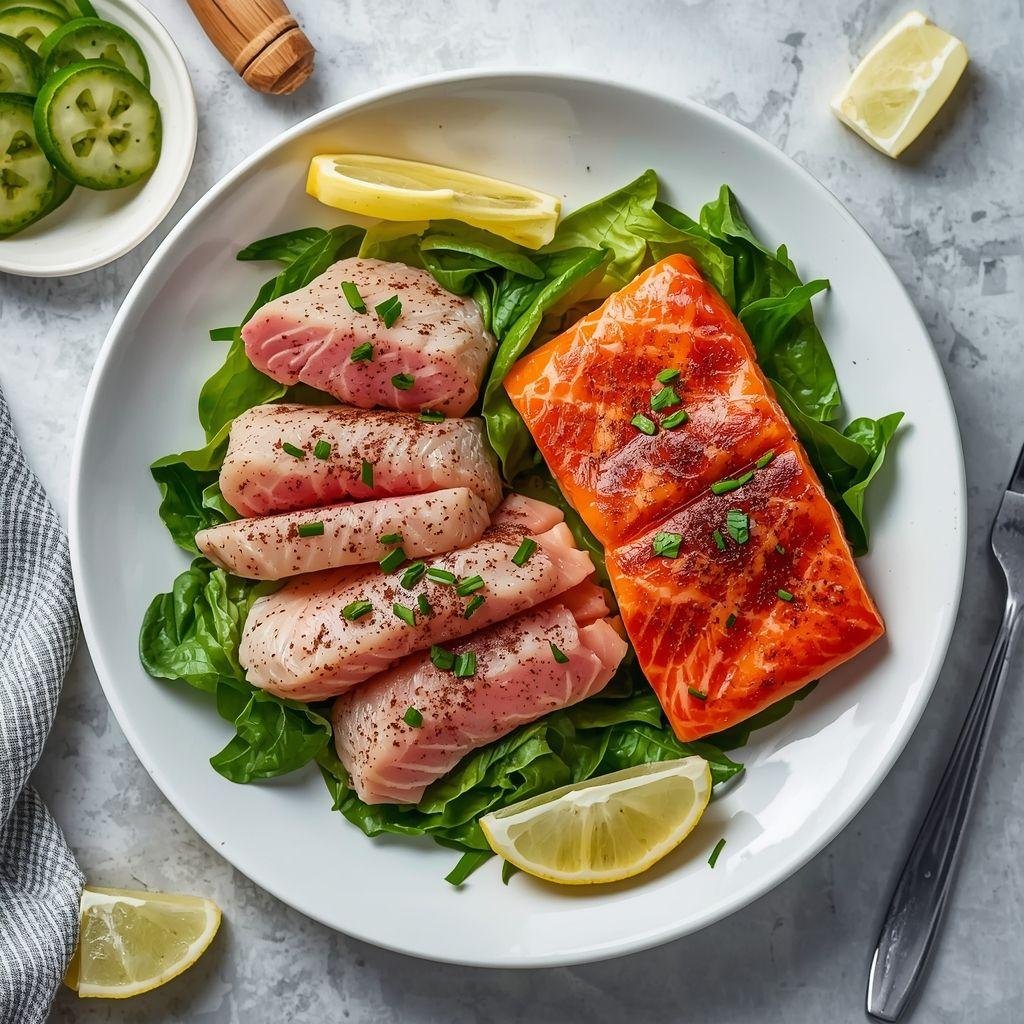
Choosing between tuna and salmon is a fundamental topic in nutritional science, as both marine species provide exceptional high-quality protein containing a complete essential amino acid complex vital for human physiology. Unlike traditional land-based meats, fish proteins offer specialized building blocks that efficiently support cellular functions and overall metabolic balance. Understanding the distinct nutrient profiles of these two popular choices allows individuals to tailor their intake based on specific health and fitness goals.
A closer look at their physiological mechanisms reveals clear functional differences. Tuna excels in delivering a concentrated source of pure protein, making it highly effective for muscular development. Conversely, salmon is particularly rich in omega-three fatty acids, which play a crucial role in reducing systemic inflammation and significantly accelerating post-workout recovery. Additionally, salmon provides essential B-complex vitamins that facilitate energy release from other dietary sources, as well as specific lipids that aid in tissue regeneration. Evaluating potential environmental factors, such as methylmercury in wild tuna or pollutants in farmed salmon, highlights the importance of sourcing high-quality fish to maximize health benefits safely.
In daily nutrition, integrating both fish species offers a balanced approach to wellness. Tuna serves as an excellent option for lean protein intake, whereas salmon is ideal for post-exercise recovery and anti-inflammatory support. Choosing sustainably caught or responsibly farmed options ensures lower toxin exposure while supplying essential fatty acids and micronutrients. Alternating between tuna and salmon creates a well-rounded diet that supports long-term physical performance and metabolic health.
Fish is one of the most exceptional sources of high-quality protein, as fish protein encompasses a complex of essential amino acids vital for the body's appropriate operation, distinguishing it from meat.
01 / 05
Energy intake
None of the sea creatures contain a single gram of carbohydrates, so you can't expect to get any so-called "energy charge" from eating fish. However, tuna contains up to one calorie of energy per gram, and salmon contains 1.4 calories per gram. Consuming approximately 200 grams of salmon provides the body with a daily dose of vitamins B6 and B12, which contribute to the release of energy from other consumed products.
02 / 05
Benefits for muscle mass
Approximately 23.4 grams of protein are present in 100 grams of tuna, whereas salmon contains around 19.8 grams per 100 grams of product. However, muscles necessitate more than just protein. Research by American scientists has shown that men who consumed cholesterol in specific quantities exhibited better muscle mass development than those who attempted to avoid cholesterol. Scientists propose that cholesterol plays a part in muscle regeneration, and salmon contains 55 mg of cholesterol, while tuna contains only 44 mg.
03 / 05
Restoring strength after workout
When it comes to restoring strength after a workout, there is no better choice than salmon. A mere 100 g of this fish contains around 2018 mg of omega-3 fatty acids, while the same quantity of tuna contains only 243 mg. Research findings published in the European Journal of Clinical Nutrition have shown that these fatty acids aid in reducing inflammation, which significantly facilitates and expedites the process of restoring strength after a workout.
04 / 05
Tuna tests
Many species of marine fish have high levels of chemical toxins, including methyl mercury. Individuals who consume fish with high levels of methylmercury often experience nervous disorders - tremor, impaired attention, blindness. Does regular consumption of tuna pose a threat to their health? Scientific studies suggest otherwise. Studies conducted among the inhabitants of Seychelles, where tuna is a main component of their diet, have not shown an increase in cases of neurological diseases. Additionally, the U.S. state inspection conducted special tests for the methylmercury content in canned tuna. The results of these studies showed that cans do contain methylmercury, but significantly below the acceptable limit. Another study found that the health benefits associated with tuna consumption, including the prevention of cardiovascular diseases and the high content of amino acids and omega-3 fatty acids, far outweigh the potential risk of neurological diseases associated with the consumption of methylmercury.
05 / 05
Studies on farmed salmon
According to Norwegian research, consuming farmed salmon can lead to obesity and type II diabetes. The main reason is the high toxin content in fish. The Center for Food in Sweden traditionally recommends eating fish three times a week. The import of Norwegian farmed salmon has tripled in the past 10 years. Although omega-3 fatty acids in salmon are considered healthy, farmed salmon may not be as healthy due to artificial feeding. The results of the studies show that the negative impact of toxins can outweigh the positive impact of omega-3 fatty acids. These toxins accumulate in the fat tissue of the fish and are more common in salmon than in cod. Nevertheless, fish should be eaten due to its health benefits such as memory improvement and heart and circulatory system function improvement.
Meal Plan
Want to apply these guidelines in your daily diet?
Our smart diet generator creates a tailored meal plan in 3 minutes based on the recommendations in this article.

mgr Emilia Szymańska
• 26.11.2026Diets Premium Expert
Diets Premium team expert. Specializes in nutrition plans, strength sports, and training plans.