Olive oil – classification, biochemical profile, and health benefits of the liquid gold of the Mediterranean diet
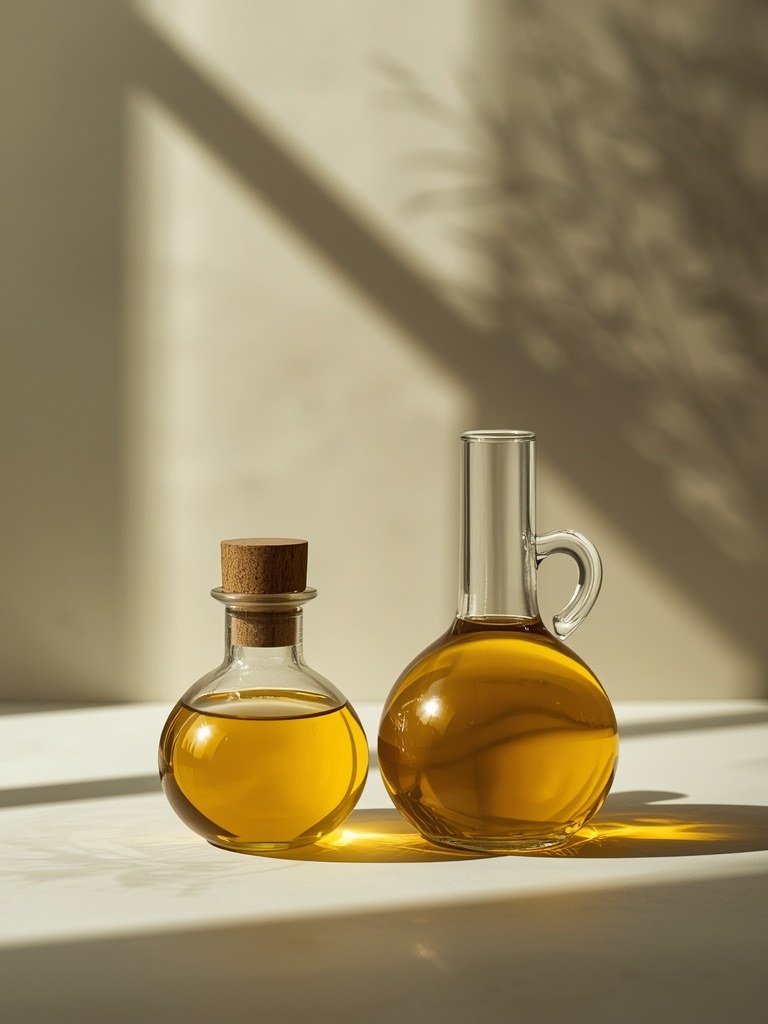
Table of Contents 3
Medical & Editorial Disclaimer (§3 Terms): This article is for informational and educational purposes only, does not constitute medical advice, diagnosis, or treatment, and is used at your own risk. Consult a qualified physician for medical conditions.
The documented cardiometabolic and systemic benefits of olive oil stem from its extraordinary molecular matrix, which includes a favorable fatty acid profile and a rich array of bioactive polyphenols. Its high content of monounsaturated fatty acids, such as oleic acid, contributes to maintaining healthy cholesterol levels. Furthermore, specialized phenolic compounds provide significant antioxidant and anti-inflammatory support. Beyond internal health, extra virgin olive oil also offers dermatological benefits, aiding in the restoration of the skin's lipid barrier and offering protection against environmental stressors.
To maximize the health advantages, it is crucial to select extra virgin olive oil, which is obtained through mechanical means without chemical processing. Pay attention to quality standards and proper storage to preserve its valuable nutrients. Incorporating olive oil regularly into your daily diet, whether in dressings, for cooking vegetables, or as a flavorful dip, is a simple yet powerful way to support your health and embrace the principles of the Mediterranean lifestyle.
The modern dietary market features an extensive spectrum of edible vegetable oils, among which olive oil remains the undisputed cornerstone of the Mediterranean diet. Rooted in ancient agricultural traditions and extensively substantiated by contemporary biomedical research, extra virgin olive oil offers a superior fatty acid profile and a rich array of bioactive polyphenols. Understanding the distinct commercial classifications, processing techniques, and underlying biochemical mechanisms reveals why this nutrient-dense lipid continues to set the benchmark in preventative nutrition.
Classifications and Quality Standards of Olive Oil
The chemical integrity and culinary grade of olive oil are fundamentally determined by cultivar, terroir, harvest timing, and processing methods. In accordance with standards defined by the International Olive Council (IOC), commercial classifications rely predominantly on free fatty acid content (expressed as free oleic acid) and sensory evaluation:
- Extra Virgin Olive Oil (EVOO): The highest regulatory and nutritional tier. Extracted solely through direct mechanical pressing or cold centrifugation (below 27°C) without chemical refinement. Its free acidity must not exceed 0.8% (0.8 g per 100 g). EVOO preserves the full spectrum of fat-soluble vitamins, squalene, and delicate polyphenolic compounds, characterized by pleasant peppery and bitter notes.
- Virgin Olive Oil: Also produced mechanically without chemicals, but permitting minor sensory defects and a maximum free acidity threshold of up to 2.0%.
- Refined Olive Oil: Derived from virgin oils with severe sensory defects or high acidity that undergo neutralization, bleaching, and deodorization. Although stable, refining removes virtually all natural micronutrients and antioxidants. Often blended with minimal virgin oil for retail sale under designations like "Pure Olive Oil".
- Olive Pomace Oil (Sansa / Orujo): Obtained by treating residual solid olive paste with chemical solvents (such as hexane), followed by rigorous refining. It is devoid of primary phytonutrients and serves primarily industrial or high-heat commercial frying purposes.
For evidence-based therapeutic benefits, unrefined Extra Virgin Olive Oil stored in opaque, UV-protective glass containers represents the gold standard.
Biochemical Profile and Clinical Mechanisms of Action
The documented cardiometabolic and systemic benefits of Extra Virgin Olive Oil stem from an extraordinary molecular matrix comprising favorable fatty acids and bioactive micronutrients:
- Monounsaturated Fatty Acids (MUFAs): Oleic acid (an omega-9 monounsaturated fat) constitutes 70% to 80% of its total lipid volume. Oleic acid exerts documented hypolipidemic actions, reducing circulating LDL cholesterol and apoB concentrations while preserving atheroprotective HDL particles.
- Specialized Phenolic Compounds: Key phytochemicals include oleocanthal, oleuropein, and hydroxytyrosol. Oleocanthal demonstrates natural anti-inflammatory activity by suppressing cyclooxygenase enzymes (COX-1 and COX-2) via pathways analogous to non-steroidal anti-inflammatory drugs like ibuprofen.
- Endothelial and Neuroprotective Function: EVOO polyphenols stimulate endothelial nitric oxide (eNOS) production, directly improving vascular compliance, arterial blood pressure, and microvascular perfusion. Concurrently, experimental models highlight hydroxytyrosol's role in attenuating beta-amyloid aggregation and oxidative damage within neuronal tissue.
- Antioxidant Protection: Abundant natural alpha-tocopherol (vitamin E) and squalene synergistically scavenge free radicals, shielding cell membranes from chronic lipid peroxidation.
- Glycemic and Metabolic Regulation: The substitution of saturated fats with oleic acid enhances insulin sensitivity and blunts postprandial glycemic excursions.
Landmark randomized trials, notably the landmark PREDIMED trial, established that consuming 25 to 50 ml of EVOO daily reduces cardiovascular events and stroke incidence by approximately 30%. While EVOO exhibits moderate thermal stability (smoke point roughly 190–210°C), raw consumption is strongly recommended to preserve thermo-labile phenolic compounds.
Dermatological and Cosmetic Applications
Beyond its systemic metabolic benefits, Extra Virgin Olive Oil serves as a potent botanical agent within integrative dermatology and cosmetic science:
- Epidermal Lipid Barrier Restoration: Containing rich concentrations of squalene, phytosterols, and essential fatty acids, olive oil closely mimics human physiological sebum. It actively restores the intercorneocyte lipid matrix, significantly curbing transepidermal water loss (TEWL) and restoring stratum corneum flexibility.
- Photoaging Protection: The lipophilic antioxidants alpha-tocopherol and hydroxytyrosol mitigate UV-induced reactive oxygen species, downregulating matrix metalloproteinases that degrade dermal collagen and elastin fibers.
- Tissue Repair and Conditioning: Oleic acid-mediated emollients promote wound re-epithelialization, improve stretch mark elasticity, and soothe xerotic, hyperkeratotic regions such as cracked elbows and heels.
- Trichological Repair: Olive oil application reinforces the hair shaft cuticle, restoring lipid coatings stripped by heat styling or chemical treatments, thereby minimizing mechanical breakage and sealing split ends.
Clinical Dermatological Caveat: While exceptional for dry, mature, and post-menopausal skin, pure olive oil should be used cautiously on facial regions by individuals with active inflammatory acne vulgaris, oily skin, or impaired lipid balance, as undiluted oleic acid exhibits mild comedogenic potential.
Want to apply these guidelines in your daily diet?
Our smart diet generator creates a tailored meal plan in 3 minutes based on the recommendations in this article.
Tags

Laura Schneider
• 25.11.2026Diets Premium Expert
Diets Premium team expert. Specializes in nutrition plans, strength sports, and training plans.