Dietary Basics for the Winter Period
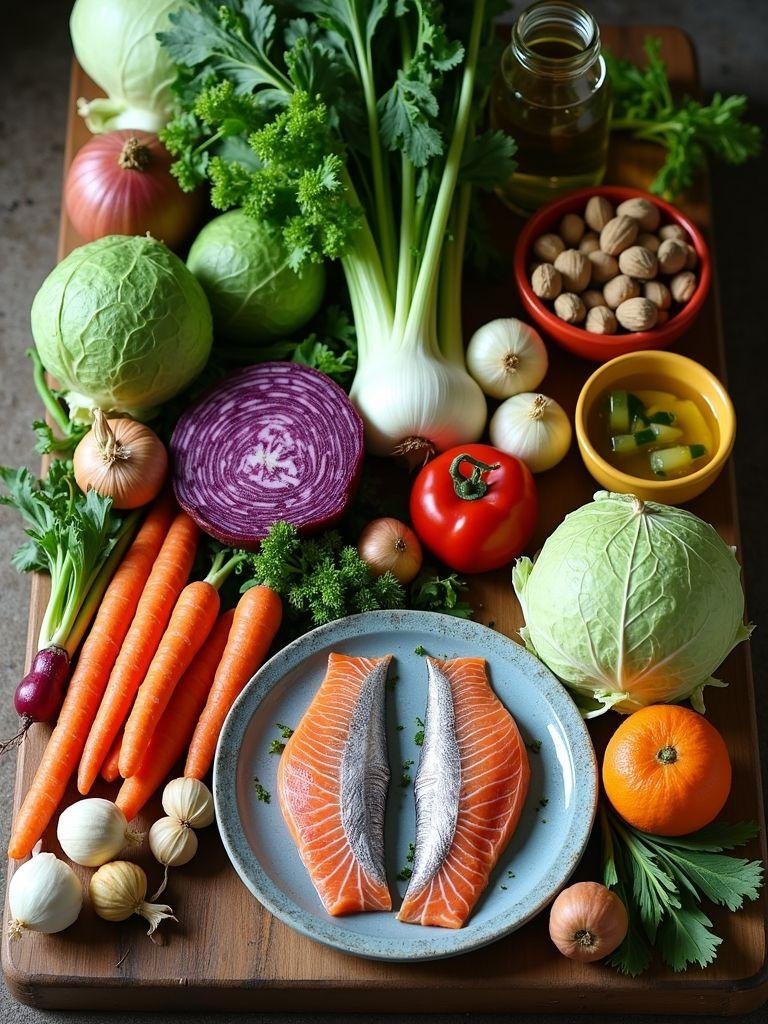
Table of Contents 8
Medical & Editorial Disclaimer (§3 Terms): This article is for informational and educational purposes only, does not constitute medical advice, diagnosis, or treatment, and is used at your own risk. Consult a qualified physician for medical conditions.
Across its chapters, the text examines the physiological roles of essential micronutrients and food preservation methods relevant to winter health. Particular attention is given to vitamin D, which cannot be adequately synthesized by the body at our geographic latitude during winter, yet contributes to bone mineralization and supports the activity of immune cells such as macrophages and monocytes. The article also reviews scientific perspectives on vitamin E, zinc, and vitamin C in relation to immune function, while highlighting how flash-frozen produce retains key nutrients and how fermented vegetables supply beneficial probiotic bacteria.
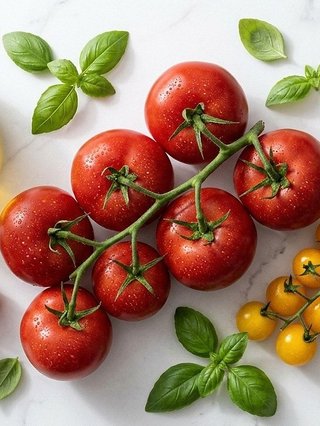
To put these principles into daily practice, readers are encouraged to build meals around seasonal and durable staples such as Brussels sprouts, celery, white and red cabbage, onions, garlic, and dried beans, paired with sun-ripened citrus fruits transported over relatively short distances from regions like Italy and Spain. Incorporating fermented foods such as pickled cucumbers, utilizing frozen summer fruits and vegetables instead of items packed in sweet syrups, choosing whole-grain products for zinc, and including fish or appropriate vitamin D supplementation provide actionable ways to nourish the body throughout winter.
This article is professional premium content (PRO) provided in its entirety.
Seasonal commodities
In the winter, choose citrus fruits
Utilize the freezer
Choose the canned food
Don't forget about vitamin D
Boosting Immunity
Is it worthwhile to take vitamin C supplements during the winter season?
Winter diet rules – how to eat in the coldest months of the year?
Want to apply these guidelines in your daily diet?
Our smart diet generator creates a tailored meal plan in 3 minutes based on the recommendations in this article.

mgr Rozporządzenie Parlamentu Europejskiego i Rady (WE) nr 1333/2008 z dnia 16 grudnia 2008 w sprawie dodatków do żywności, Dz.U. L 354/16 z 31.12.2008. Rozporządzenie Ministra Zdrowia z dnia 8 grudnia 2011 r. w sprawie wykazu towarów, które podlegają granicznej kontroli sanitarnej, Dz.U. L 272/1612. Dimidi E. et al., Fermented Foods: Definitions and Characteristics, Impact on the Gut Microbiota and Effects on Gastrointestinal Health and Disease, „Nutrients” 2019, 11(8), epub. Martineau A.R. et al., Vitamin D supplementation to prevent acute respiratory infections: individual participant data meta-analysis, „Health Technology Assessment” 2019, 23(2), 1–44. Rusińska A. et al., Vitamin D Supplementation Guidelines for General Population and Groups at Risk of Vitamin D Deficiency in Poland – Recommendations of the Polish Society of Pediatric Endocrinology and Diabetes and the Expert Panel With Participation of National Specialist Consultants and Representatives of Scientific Societies – 2018 Update, „Frontiers in Endocrinology” 2018, 9(246), epub. Prietl B. et al., Vitamin D and immune function, „Nutrients” 2013, 5(7), 2502–2521. Chavance M. et al., Vitamin status, immunity and infections in an elderly population, „European Journal of Clinical Nutrition” 1989, 43(12), 827–835. Meydani S.N. et al., Vitamin E and respiratory tract infections in elderly nursing home residents: a randomized controlled trial, „Journal of American Medical Association” 2004, 292(7), 828–836. Yakoob M.Y. et al., Preventive zinc supplementation in developing countries: impact on mortality and morbidity due to diarrhea, pneumonia and malaria, „BMC Public Health” 2011, 11(3), epub. Wu D. et al., Nutritional Modulation of Immune Function: Analysis of Evidence, Mechanisms, and Clinical Relevance, „Frontiers in Immunology” 2019, 9, epub. Hemilä H., Vitamin C and Infections, „Nutrients” 2017, 9(4), 339. Guillemard E. et al., Consumption of a Fermented Dairy Product Containing the Probiotic Lactobacillus Casei DN-114001 Reduces the Duration of Respiratory Infections in the Elderly in a Randomised Controlled Trial, „British Journal of Nutrition” 2010, 103(1), 58–68. Melini F. et al., Health-Promoting Components in Fermented Foods: An Up-to-Date Systematic Review, „Nutrients” 2019, 11(5), epub. Han S.N. et al., Vitamin E supplementation increases T helper 1 cytokine production in old mice infected with influenza virus, „Immunology” 2000, 100(4), 487–493.
Diets Premium Expert
Diets Premium team expert. Specializes in nutrition plans, strength sports, and training plans.