Classic vs. Enhanced Bread: A Comparison for Your Nutrition


1 photo
2879
Table of Contents 3
Medical & Editorial Disclaimer (§3 Terms): This article is for informational and educational purposes only, does not constitute medical advice, diagnosis, or treatment, and is used at your own risk. Consult a qualified physician for medical conditions.
Clinical E-Books & Diet Plans:
Explore E-Books & Plans →
Key Takeaways
The ongoing decline in the overall quality of commercially available baked goods presents a notable challenge for individuals striving to maintain a wholesome diet and select nourishing foods. Unfortunately, consumers frequently encounter products heavily enriched with taste-enhancing agents and shelf-life-extending additives that bear little resemblance to traditional baking methods. Such heavily processed items often fail to meet the nutritional expectations of those dedicated to health-conscious dietary choices.
A comparative analysis reveals that conventional white bread and mass-produced toast options commonly undergo chemical processing, utilizing emulsifiers and texturizers designed to artificially improve consistency and durability. In contrast, traditional whole-grain bread utilizes flour milled without sieving away the outer bran, thus preserving the natural integrity of the grain. This wholesome profile yields substantial amounts of dietary fiber, essential vitamins, minerals, and proteins, while featuring a lower carbohydrate impact that helps prevent sharp fluctuations in blood sugar levels.
For practical daily nutrition, consumers are encouraged to carefully examine ingredient labels and choose rich, dark whole-grain varieties over chemically modified white baked goods. Prioritizing authentic, nutrient-dense breads provides the body with valuable dietary elements and contributes meaningfully to a balanced, health-oriented lifestyle without relying on overly processed food alternatives.
The continuous decrease in the quality of baked goods has been a challenge for some time for those who aspire to a healthy diet. Unfortunately, we often encounter a product that is enriched with taste-enhancing and shelf-life-extending ingredients that have little in common with traditional baked goods.
01 / 03
Improved bread means better?
The additives found in bread are intended to improve the consistency and prolong the durability of bread. The most common additives are guar gum, glucose-fructose syrup, sodium carbonate, or emulsifiers to facilitate the blending of the components of the bread. However, unfortunately, in addition to flour, water, and natural yeast or sometimes yeast additive, the bread's composition often includes oil, emulsifiers, and flour processing agents. Among the chemical additions are also bleachers, whiteners, artificial acids, bleaching agents, caramel preservatives (or dark yeast polymers). This may not cause the flavor and taste to be affected.
02 / 03
Varieties of bread baked using traditional methods
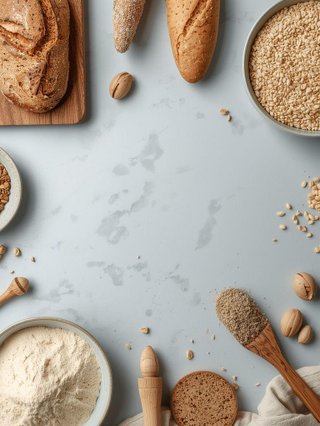
Flour from a single milling without sieving of bran is whole-grain flour, whose composition is closest to that of grain. Bread baked from this flour contains all valuable components present in grains, such as vitamin E, B vitamins, iron, magnesium, copper, zinc. It is rich in proteins, lecithin and, above all, fiber, which is up to 5 times more than in white bread. Whole-grain flour also has less carbohydrates, so it does not cause an increase in blood sugar levels. It is therefore a product that should be always present in our daily diet. When choosing bread, we should also pay attention to additives. Wheat bread with the addition of rye flour is tastier and also richer in vitamin B2, manganese and zinc, which are present in rye flour. Bran is another valuable bread additive. Bran can be wheat, rye, rice, soy, oat. It is a rich source of plant protein, mineral components, B vitamins and vitamin E. To bread are also added sunflower seeds, soybeans, pumpkin seeds, caraway seeds, nigella seeds, sesame, poppy seeds and flax seeds, thereby increasing the fiber content and unsaturated fatty acids. Also, bread with amaranth is worth noting. It is a plant rich in protein, mono- and polyunsaturated fatty acids, fiber, calcium, phosphorus, potassium and magnesium. It is also a good source of iron. Rye bread is also recommended, which is rich in fiber and protein, regulates digestion and strengthens the body.
03 / 03
Which bread should be selected as an option?
When examining the composition of toast or white bread subjected to chemical agents and often anti-caking additives, it becomes apparent which option is the better choice. If you notice a soft, fragrant, crunchy white bread in a bakery and feel a strong desire to purchase it, keep in mind that apart from its delicious taste, it contains few nutrients. A better option is a whole grain dark bread that, in addition to excellent taste, contains a large amount of nutrients. Thanks to these, bread can not only fulfill a nutritional function but also support the prevention of certain civilization diseases.
Meal Plan
Want to apply these guidelines in your daily diet?
Our smart diet generator creates a tailored meal plan in 3 minutes based on the recommendations in this article.

Oliwia Kaczmarek
• 26.11.2026Diets Premium Expert
Diets Premium team expert. Specializes in nutrition plans, strength sports, and training plans.