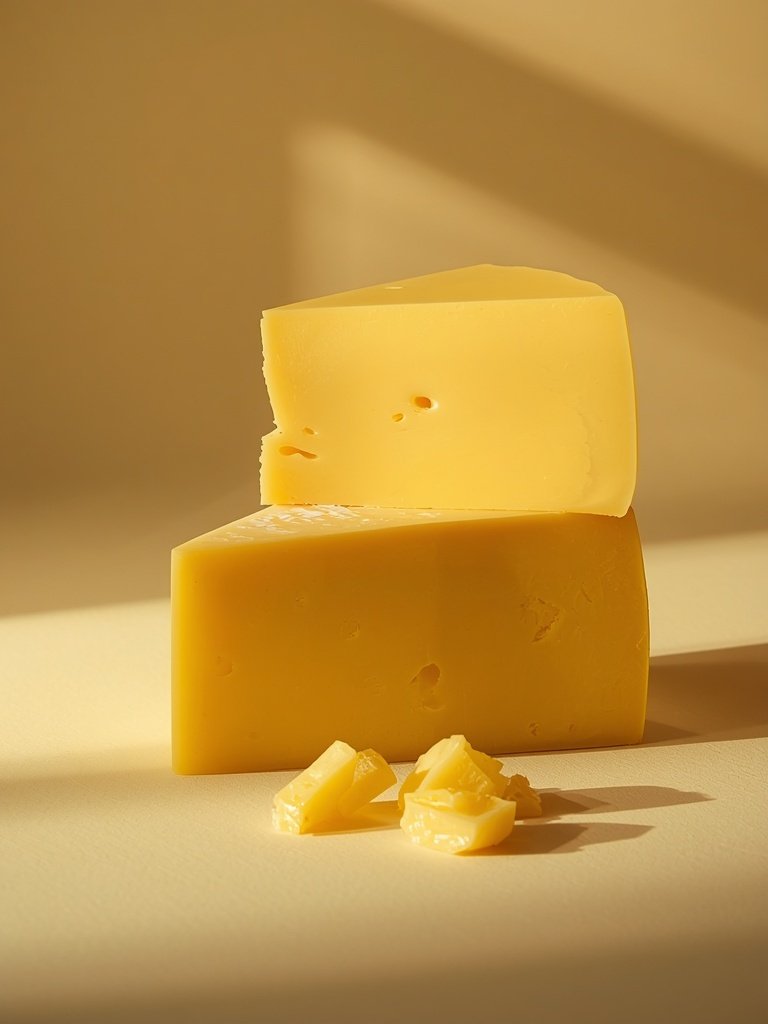
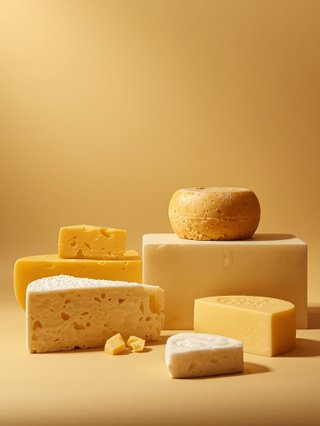
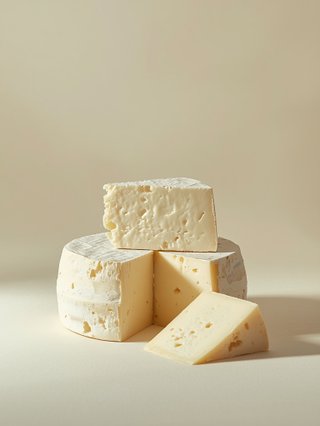
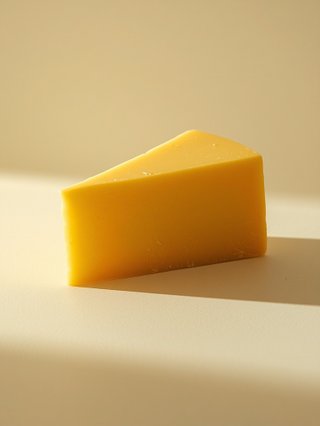
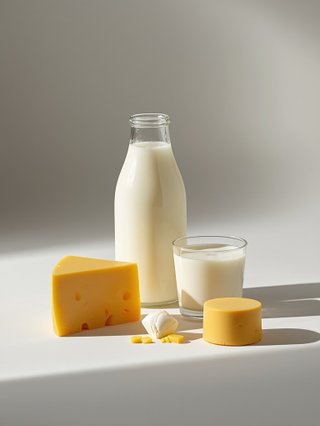
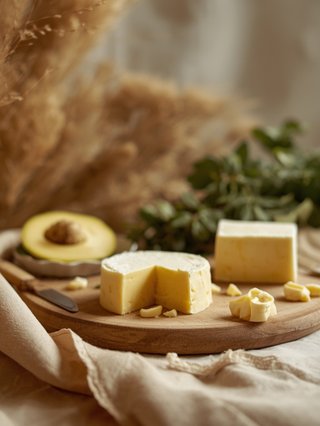
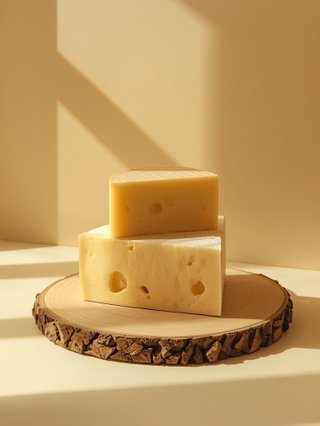
Yellow cheese represents a product that is favored in both Polish households and various communities around the world. Its composition and high nutritional value are not widely recognized, and few individuals realize that they can prepare such cheese at home and surprise their relatives.
02 / 13
Species and species of yellow cheeses
The following guide presents a classification of yellow cheeses based on their fat content, water content, and their main types. Classification based on fat content in the dry matter of the product:
Full-fat cheeses – containing at least 45% fat in dry matter, which gives approx. 25.5% fat overall, Fatty cheeses – consisting of at least 40% fat in dry matter, which is approx. 22% fat overall, Semi-fat cheeses – containing at least 20% fat in dry matter, which is approx. 10% fat overall.. Division by water content:
Very hard cheeses – containing less than 51% water in the fat-free matter, Hard cheeses – consisting of 49–56% water in the fat-free matter, Semi-hard cheeses – containing 54–63% water in the fat-free matter, Semi-soft cheeses – containing 61–69% water in the fat-free matter, Soft cheeses – consisting of over 67% water in the fat-free matter. Main types and varieties of cheese:
Blue cheese
Camembert, brie Characteristics: soft cheeses, maturing for 2–5 weeks, with white mold on the surface, mild taste, slightly mushroomy aroma.. Available in different stages of maturity.. Spreadable cheeses
Example: Limburg cheese, Romadur, Piwny Characteristics: Soft cheeses, maturing 3–4 weeks from the surface to the inside, with the help of strongly proteolytic bacteria, whose action causes a cheese paste to appear on the surface. Due to the protein degradation caused by these bacteria, these cheeses are characterized by a pungent, and sometimes even ammoniacal smell. Mold-ripened cheeses
Examples: rokpol, roquefort, gorgonzola Characteristics: these are semi-soft cheeses with an internal, veined development of blue, blue-green, or dark-blue mold.. After several weeks of aging, they are characterized by a mild and slightly sour taste with a slight mushroom and earthy note.. As the aging progresses, these characteristics fade, resulting in a pungent taste and sharp aroma.. Spreadable cheeses
Bryndza Characteristics: soft cheeses, traditionally made from sheep's milk in the Carpathian region. They are characterized by a distinctive, sharp, and slightly tangy taste and aroma, as well as a paste-like consistency. Brined cheeses
Examples: feta, solan, teleme Characteristics: semi-soft cheeses, originally made from sheep's milk, but currently cow's milk is also used in their production. They are characterized by a uniform, white color and a compact, soft or slightly crumbly paste, as well as a clean and delicate, and salty taste and aroma;
Smoked cheeses
Examples: Gryficki cheese, Zamojski smoked, Ustrzyki roulade Characteristic: these are semi-soft or semi-hard cheeses, produced from skimmed sheep and cow's milk.. At the end of the aging stage, they are smoked;
Dutch-style cheeses
Examples: Edamski, Gouda, Podlaski Characteristics: these are semi-hard or hard cheeses.. They mature for about 2–3 months.. They are characterized by a soft and elastic paste, as well as a mild, clean and slightly nutty, and tangy taste and aroma;
Swiss-Dutch type cheeses
Examples: Tylżycki, Warmiński, Mazurski cheese, salami Characteristics: semi-hard cheeses with a taste and aroma slightly sharper than those of the Dutch type.. Interestingly, the pressing process is omitted in production, and aging lasts about.. 1–2 months.. The paste is characterized by softness and elasticity, and the taste and aroma are slightly spicy and sour.. Swiss-type cheeses
Examples: Emmentaler, Sokół, Radamer, Grojer Characteristics: hard cheeses.. Their aging lasts about 3–6 months, but they only achieve full flavor and aroma after 10–12 months.. They are characterized by a mild, clean, and aromatic taste with a sweet and nutty note.. Additionally, the paste is compact, uniform, and elastic, with visible round or oval, as well as regularly distributed holes of a rather large size;
-style cheeses
Cheddar Characteristics: a hard cheese made from crumbled mass.. They are produced in a slightly different way, as after initial aging, they are ground, salted, and pressed into molds.. Then the aging continues and lasts about.. 2–3 months.. Characteristic of this type of cheese is the absence of eyes.. It is characterized by a clean, tangy, and slightly sour taste and smell.. Italian-style cheeses
Parmesan, Grana Padano, Pecorino Characteristics: hard cheeses intended for grating, whose native region is Lombardy. They are sold under the common name – Parmesan. They usually have a moisture content below 30%, which is why they are very hard. Their taste is pungent, and their color is white-cream;
Cheeses from baked dough
Examples: mozzarella, oscypek Characteristics: produced from cow, sheep, or goat milk.. They are very often smoked.. They are characterized by a firm and uniform, as well as elastic paste, and a slightly salty and spicy taste and aroma.. The aging of these types of cheeses usually takes several weeks.. Melted cheeses
Description: melted cheeses – obtained by grinding, mixing, melting, and emulsifying one or more types of cheese. As a result of this process, taste and odor defects are reduced or completely disappear, which is why they are often used in the production of cheeses with mechanical damage or those that are too mature and not suitable for commercial trade. Cheeses with proper structure, taste, and odor are also used. More about cheeses: Types, nutritional values, production, consumption.
03 / 13
The nutritional value of yellow cheeses
Yellow cheeses are not only delicious but also full of valuable nutrients that can benefit our health:
Lactose-free: Yellow cheeses are naturally lactose-free because lactose is consumed by bacteria during the production process. High energy value: Yellow cheeses have a high energy value and high fat content. Source of animal protein. Vitamins: rich in B vitamins, as well as A, D, E, and K. Minerals: contain calcium, phosphorus, magnesium, iron, zinc, copper, potassium, sodium, chromium. Calories and nutritional values of different yellow cheeses (100g)
Table showing the nutritional values of selected cheeses per serving:
Cheese Energy value Protein (g) Carbohydrates (g) Fat (g) Camembert 1 U.S. DEPARTMENT OF AGRICULTURE Official website of the United States government Go to source 1250 kJ (300 kcal) 19.8 0.46 24.3 Brie 2 U.S. DEPARTMENT OF AGRICULTURE Official website of the United States government Go to source 1400 kJ (334 kcal) 20.8 0.45 27.7 Gorgonzola 3 U.S. DEPARTMENT OF AGRICULTURE Official website of the United States government Go to source 1478 kJ (353 kcal) 21.4 2.34 28.7 Feta 4 U.S. DEPARTMENT OF AGRICULTURE Official website of the United States government Go to source 1110 kJ (265 kcal) 14, 2 3, 88 21, 5 Edamski 5 U. S. DEPARTMENT OF AGRICULTURE Official website of the United States government Go to source 1490 kJ (357 kcal) 25 1, 43 28, 6 Gouda 6 U. S. DEPARTMENT OF AGRICULTURE Official website of the United States government Go to source 1490 kJ (357 kcal) 24, 9 2, 22 27, 4 Radamer (Swiss) 7 U. DEPARTMENT OF AGRICULTURE Official website of the United States government Go to source 1640 kJ (393 kcal) 27 1, 44 31 Cheddar 8 U. S. DEPARTMENT OF AGRICULTURE Official website of the United States government Go to source 1680 kJ (403 kcal) 22, 9 3, 37 33, 3 Parmesan 9 U. S. DEPARTMENT OF AGRICULTURE Official website of the United States government Go to source 1640 kJ (392 kcal) 35, 8 3, 22 25 Grana Padano 10 U. S. DEPARTMENT OF AGRICULTURE Official website of the United States government Go to source 1645 kJ (393 kcal) 32, 1 0 28, 6 Mozzarella (whole milk) 11 U.S. DEPARTMENT OF AGRICULTURE Official website of the United States government Go to source 1250 kJ (299 kcal) 22, 2 2, 4 22, 1 Oscypek 12 Wikipedia Go to source 1546 kJ (369 kcal) 30, 1 2, 3 26, 9 Blue cheese 13 U.S. DEPARTMENT OF AGRICULTURE Official website of the United States government Go to source 1480 kJ (353 kcal) 21, 4 2, 34 28, 7
Micronutrient content of various yellow cheeses (100g):
Calcium (mg) Magnesium (mg) Phosphorus (mg) Potassium (mg) Sodium (mg) Vitamin A (IU) Vitamin D (µg) Camembert 14 U.. S. DEPARTMENT OF AGRICULTURE Official website of the United States government Go to source 388 20 347 187 842 820 0, 4 Brie 15 U.. S. DEPARTMENT OF AGRICULTURE Official website of the United States government Go to source 184 20 188 152 626 592 0, 5 Gorgonzola 16 U.. S. DEPARTMENT OF AGRICULTURE Official website of the United States government Go to source 528 23 387 256 1320 1790 0 Feta 17 U.. S. DEPARTMENT OF AGRICULTURE Official website of the United States government Go to source 493 19 337 62 1140 422 0, 4 Edamski 18 U. S. DEPARTMENT OF AGRICULTURE Official website of the United States government Go to source 731 30 536 188 973 825 0, 5 Gouda 19 U. S. DEPARTMENT OF AGRICULTURE Official website of the United States government Go to source 700 29 546 121 819 563 0, 5 Radamer (Swiss) 20 U. S. DEPARTMENT OF AGRICULTURE Official website of the United States government Go to source 890 33 574 72 187 1050 0 Cheddar 21 U.S. DEPARTMENT OF AGRICULTURE Official website of the United States government Go to source 710 27 455 76 653 1240 0, 6 Parmesan 22 U.S. DEPARTMENT OF AGRICULTURE Official website of the United States government Go to source 1180 44 694 92 1180 781 0, 5 Grana Padano 23 U.S. DEPARTMENT OF AGRICULTURE Official website of the United States government Go to source 1180 63 692 107 607 714 0 Mozzarella (whole milk) 24 U.S. DEPARTMENT OF AGRICULTURE Official website of the United States government Go to source 693 27, 2 533 116 699 676 0, 4 Oscypek 25 Wikipedia Go to source 891 54 635 82 1442 – – Blue cheese 26 U.S. DEPARTMENT OF AGRICULTURE Official website of the United States government Go to source 528 23 387 256 1150 721 0, 5
When taking care of your health, it is worth consciously choosing yellow cheeses, paying attention to their composition and the presence of individual additives.