Use of camphor oil in alleviating ear pain and other ailments – characteristics and definition of camphor
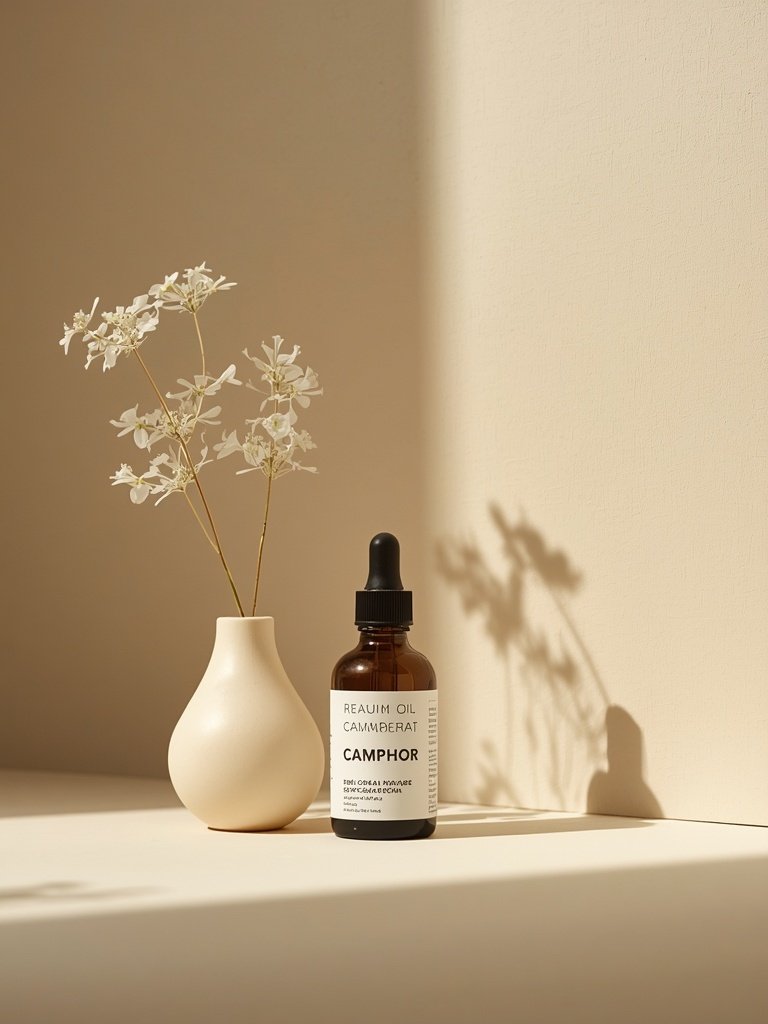
Table of Contents 4
Medical & Editorial Disclaimer (§3 Terms): This article is for informational and educational purposes only, does not constitute medical advice, diagnosis, or treatment, and is used at your own risk. Consult a qualified physician for medical conditions.
Physiologically, camphor interacts with cutaneous nerve endings to produce an initial cooling sensation followed by localized tissue warmth. This counter-irritant effect enhances regional blood flow, helping to ease muscular stiffness and joint discomfort. When inhaled, its volatile aromatic vapor supports the clearing of mucus from congested upper respiratory passages. For ear discomfort, safe practice dictates that the oil must never be instilled directly into the ear canal to protect the eardrum, but rather massaged gently onto the skin behind the external ear.
Because camphor readily crosses biological membranes, strict safety protocols must be observed. The oil is contraindicated for pregnant or breastfeeding women, as well as infants and young children, in whom chest or facial application can trigger reflex laryngospasm and severe respiratory distress. For adult care, employing camphor oil purely externally and in proper dilution ensures that its warming, soothing, and circulatory benefits are realized without risk of adverse reactions.
Camphor oil represents a versatile natural preparation widely utilized in both therapeutic practices and cosmetic manufacturing. It is a common ingredient in various body ointments, aromatherapy formulations, and numerous plant-based skincare products. Nevertheless, how many individuals are fully aware of what this oil precisely entails—its constituent compounds, and the medicinal as well as cosmetic properties attributed to it in both traditional and contemporary applications?
Camphor – botanical origin and chemical characteristics
Camphor is a natural bicyclic monoterpene ketone originally isolated from the wood of the camphor laurel (Cinnamomum camphora), an evergreen tree native to East Asia, and can also be produced synthetically from oil of turpentine. It exists as a white, crystalline, waxy substance characterized by an intense, penetrating, and cooling aroma. In pharmaceutical formulations, camphor stimulates cutaneous nerve endings, producing an initial sensation of coolness followed by localized warmth, mild analgesia, and vasodilation of peripheral capillaries. However, because pure camphor penetrates the dermal barrier readily, it may trigger contact dermatitis or localized erythema in sensitized individuals.
Camphor oil – physiological and warming therapeutic effects
Camphor oil (typically formulated as an oily solution of 10% camphor dissolved in vegetable oil) is widely used as a traditional warming rub and counter-irritant. When massaged over congested joints or sore muscles, it promotes localized blood flow, eases muscular stiffness, and accelerates metabolic clearance of inflammatory byproducts. Furthermore, inhaled camphor vapors stimulate respiratory bronchial cilia, facilitating the clearance of mucus in upper respiratory tract catarrh and sinus congestion. It also exhibits mild antiseptic and antipruritic actions, providing quick symptomatic relief from insect bites and rheumatic aches.
Camphor oil in pregnancy and pediatrics: strict safety guidelines
Because camphor crosses both the placental barrier and the blood-brain barrier with ease, camphor oil is strictly contraindicated for pregnant and breastfeeding women, as well as infants and young children under 6 years of age. In infants, the application of camphor-containing preparations to the chest, neck, or nasal area can provoke reflex laryngospasm, acute respiratory distress, severe bronchospasm, and neurotoxic convulsions. Any use in pediatric care must be avoided unless explicitly sanctioned and monitored by a qualified pediatrician.
Camphor oil for earache: proper and safe application
A common traditional use of camphor oil is relieving pain associated with acute otitis media or external earache. However, an essential safety rule must be observed: camphor oil must NEVER be poured directly into the ear canal, as contact with a ruptured tympanic membrane can cause severe inflammation and permanent ototoxicity. The correct and safe method involves warming a small amount of oil between the hands and gently massaging the retroauricular area (behind the earlobe and along the mastoid bone). Alternatively, a lightly moistened cotton ball can be placed at the outer concha, allowing soothing warmth to relieve ear discomfort safely.
Want to apply these guidelines in your daily diet?
Our smart diet generator creates a tailored meal plan in 3 minutes based on the recommendations in this article.
Tags

Lena Bauer
• 25.11.2026Diets Premium Expert
Diets Premium team expert. Specializes in nutrition plans, strength sports, and training plans.