Spotted Ostropest – characteristics, dosing scheme, therapeutic indications, and usage limitations
Table of Contents 4
Medical & Editorial Disclaimer (§3 Terms): This article is for informational and educational purposes only, does not constitute medical advice, diagnosis, or treatment, and is used at your own risk. Consult a qualified physician for medical conditions.
The therapeutic efficacy of milk thistle is primarily driven by its ability to stabilize hepatocyte membranes, which acts as a protective barrier against the entry of various toxins. The active complex, known as silymarin, serves as a potent antioxidant that scavenges free radicals and mitigates inflammatory responses within the hepatic tissue. These physiological mechanisms are fundamental to supporting the regeneration of liver parenchyma and maintaining overall organ health in the face of environmental or metabolic challenges.
For practical daily use, freshly ground seeds can be conveniently added to a variety of foods, such as smoothies, cereals, or salads, ensuring a simple integration into one's diet. Standardized extracts are also available for those seeking a more concentrated form of support. It is recommended to maintain a consistent approach and to consult with a healthcare professional before beginning any new regimen, especially if there are existing health conditions, to ensure that the chosen method is appropriate and safe for individual needs.
Milk thistle (Silybum marianum) demonstrates remarkably beneficial health-promoting properties within the human body. Its consistent consumption facilitates effective systemic detoxification by eliminating harmful metabolic byproducts while concurrently aiding in lipid profile optimization. Furthermore, extracts derived from this plant play a pivotal role in supporting hepatic parenchyma regeneration during inflammatory conditions and toxic injury scenarios. The active constituents represent a rich reservoir of silymarin and other well-documented antioxidant agents that scavenge free radicals and protect cellular integrity.
Botanical Profile and History of Milk Thistle (Silybum marianum)
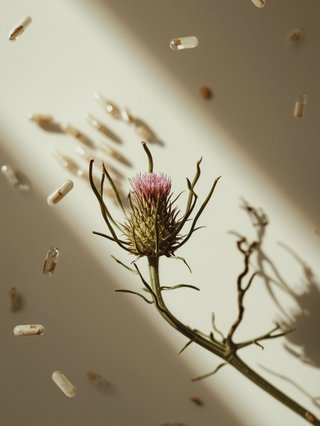
Milk thistle (Silybum marianum L. Gaertn.) is a striking annual or biennial herbaceous plant belonging to the Asteraceae family, capable of reaching heights of 150 to 200 cm. It is easily recognized by its large, glossy dark-green leaves with spiny margins and distinctive milky-white marbling along the veins, crowned by vibrant purple-red tubular flower heads that bloom from July through August.
Native to the Mediterranean basin, Southern Europe, North Africa, and the Middle East, milk thistle is now cultivated globally as a premier medicinal crop. Its hepatoprotective virtues were documented nearly two millennia ago by the Greek physician Dioscorides and the Roman naturalist Pliny the Elder, later championed by medieval herbalists such as Hildegard of Bingen, and ultimately validated in modern pharmacology following the isolation of its active flavonolignan complex, silymarin.
Phytochemical Constituents: The Silymarin Complex and Essential Fatty Acids
The medicinal raw material consists of the mature, pappus-free achenes (Silybi mariani fructus), commonly referred to as milk thistle seeds. Their outer pericarp contains 1.5% to 3% silymarin, a specialized complex of flavonolignans dominated by silibinin (silybin A and B), alongside isosilibinin, silychristin, silydianin, and the dihydroflavonol taxifolin.
Beyond silymarin, the seeds harbor 20–30% fixed oil rich in polyunsaturated linoleic acid (omega-6, approx. 50–60%) and monounsaturated oleic acid (omega-9, approx. 20–30%). This lipid matrix is accompanied by abundant natural vitamin E (tocopherols), plant sterols (beta-sitosterol, campesterol), mucilage, bitter principles, high-biological-value plant protein (approx. 20–25%), and dietary fiber.
Hepatoprotective Mechanisms of Action and Clinical Indications
The hepatoprotective and regenerative efficacy of silymarin is mediated through four distinct, clinically established molecular pathways:
- Hepatocyte Membrane Stabilization: Silymarin alters the outer phospholipid bilayer of liver cells and blocks membrane transport systems, preventing hepatotoxins—including alcohol metabolites, pharmaceutical drugs, heavy metals, and deadly phalloidin and alpha-amanitin toxins from the death cap mushroom (Amanita phalloides)—from penetrating the hepatocyte.
- Stimulation of Ribosomal Protein Synthesis: Silibinin activates nuclear DNA-dependent RNA polymerase I, accelerating ribosomal RNA transcription and structural protein synthesis to regenerate damaged hepatic parenchyma.
- Antioxidant Defense and Glutathione Preservation: It scavenges reactive oxygen species, inhibits lipid peroxidation, and elevates hepatic glutathione (GSH) reserves by up to 35%.
- Anti-inflammatory and Antifibrotic Action: By downregulating NF-κB signaling and leukotriene synthesis, silymarin inhibits the activation of hepatic stellate cells into collagen-depositing myofibroblasts, slowing liver fibrosis progression.
Dosage, Administration Forms, and Drug Interactions in Clinical Practice
Selecting the appropriate administration form is crucial for clinical efficacy, as the flavonolignans of the silymarin complex are poorly soluble in water:
- Freshly Ground Milk Thistle Seeds: Consuming 1 to 2 teaspoons (approx. 5–10 g) daily—ground just before use in a coffee grinder and mixed into yogurt, oatmeal, smoothies, or salads—delivers both silymarin and insoluble fiber that binds bile acids in the gut.
- Standardized Dry Extracts (Capsules/Tablets): For targeted hepatic support (such as in MASLD/fatty liver disease or elevated ALT/AST transaminases), standardized extracts providing 200 to 420 mg of silymarin daily in 2–3 divided doses for at least 8 to 12 weeks are clinically recommended.
- Cold-Pressed Milk Thistle Oil: 1 to 2 teaspoons daily used strictly raw in salads to supply essential omega-6 fatty acids and vitamin E.
Safety note: Because silymarin can mildly modulate hepatic cytochrome P450 isoenzymes (such as CYP2C9 and CYP3A4), individuals taking medications with a narrow therapeutic index (e.g., warfarin, immunosuppressants, or specific antiarrhythmics) should consult their physician prior to high-dose supplementation.
Want to apply these guidelines in your daily diet?
Our smart diet generator creates a tailored meal plan in 3 minutes based on the recommendations in this article.

Wojciech Wiśniewski
• 25.11.2026Diets Premium Expert
Diets Premium team expert. Specializes in nutrition plans, strength sports, and training plans.