Sesame richness
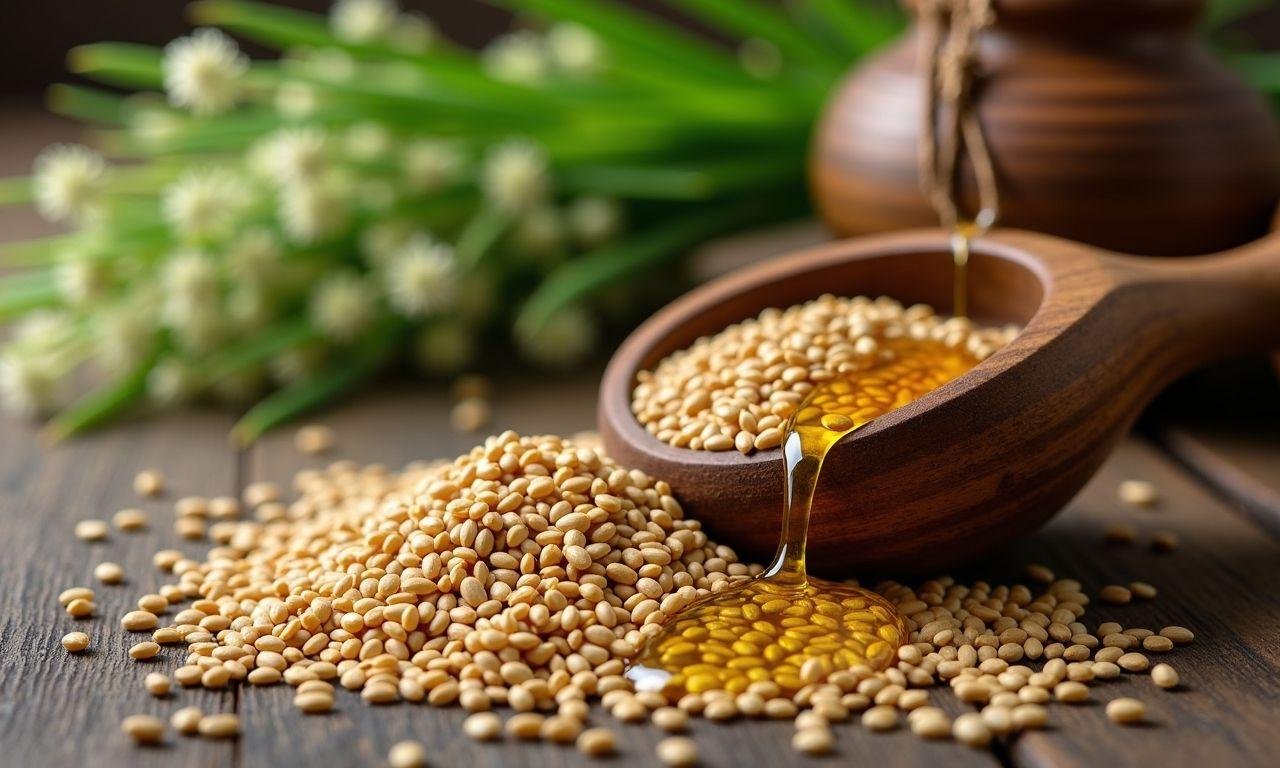
Table of Contents 3
Medical & Editorial Disclaimer (§3 Terms): This article is for informational and educational purposes only, does not constitute medical advice, diagnosis, or treatment, and is used at your own risk. Consult a qualified physician for medical conditions.
Cultivated primarily in regions such as India, China, Mexico, Guatemala, and Sudan, sesame is valued not only for cold-pressed culinary oils but also for applications in perfumery and traditional herbal practices. From a clinical nutrition standpoint, the seeds serve as a rich plant-based source of calcium, a fundamental structural element that supports bone integrity as well as normal muscular and cardiovascular function. Furthermore, sesame seeds provide sesamin, making them one of the most abundant dietary sources of beneficial lignans.
Integrating sesame into everyday meals is best approached through consistent and moderate consumption as part of a varied diet. Although sesame possesses high nutritional value and relatively few dietary restrictions, individual health considerations remain essential. Individuals with known sesame allergies, a predisposition to diarrhea, or a history of kidney stones should avoid consuming these seeds to support their digestive and metabolic comfort.
Extraordinary grains
Sesame in food - Why is it worth incorporating it into your diet?
How to incorporate sesame into daily diet?
Want to apply these guidelines in your daily diet?
Our smart diet generator creates a tailored meal plan in 3 minutes based on the recommendations in this article.

Julia Wójcik
• 25.11.2026Diets Premium Expert
Diets Premium team expert. Specializes in nutrition plans, strength sports, and training plans.