Crispbread – types (baked vs. extruded), ingredients, calories, and role in weight loss
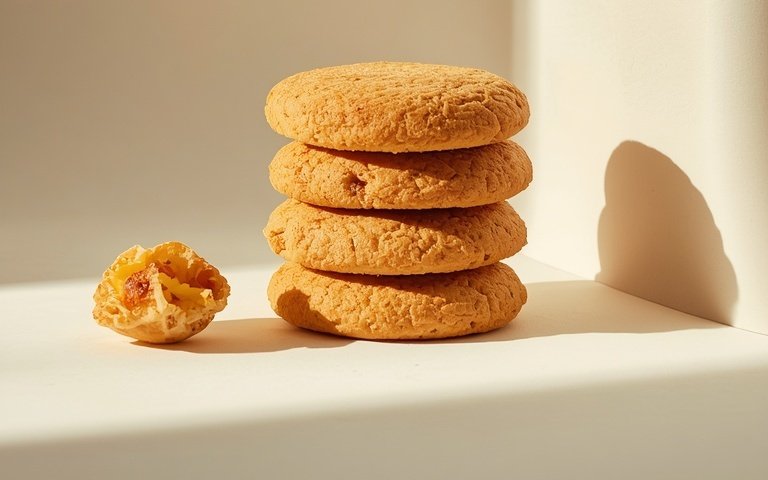
Table of Contents 4
Medical & Editorial Disclaimer (§3 Terms): This article is for informational and educational purposes only, does not constitute medical advice, diagnosis, or treatment, and is used at your own risk. Consult a qualified physician for medical conditions.
The physiological impact of crispbread varies significantly based on its processing. Traditional whole-grain rye crispbread, prepared with sourdough, retains essential dietary fibers, B-complex vitamins, and minerals like zinc and iron, which contribute to prolonged satiety and steady glycemic responses. In contrast, ultra-processed extruded varieties undergo high-heat treatments that alter starch structures, often leading to faster digestion and less appetite control. The presence of viscous fibers in whole-grain versions plays a crucial role in gastric distension and metabolic health.
Practical dietary guidance emphasizes selecting products with minimal ingredient lists, ideally featuring whole-grain rye flour and natural seeds like flax or sesame. Consumers should remain vigilant against additives such as barley malt extract or added sugars often found in lighter, processed wafers. To optimize health benefits, crispbread should be paired with hydrating accompaniments like fresh vegetables to compensate for its low water content. Integrating nutrient-dense varieties into a balanced diet supports overall well-being and energy management without replacing the need for professional medical guidance.
Crispbread is widely perceived by consumers as a low-calorie staple for weight loss diets and a light substitute for traditional loaf bread. Because an individual slice weighs very little, it creates the impression of a diet-friendly food that can be eaten almost without restriction.
From the standpoint of food technology and clinical dietetics, however, the category of crispbread encompasses two fundamentally different products: traditional oven-baked whole-grain rye crispbread (Scandinavian-style knäckebröd) and ultra-processed extruded light crispbread. How do they compare in terms of caloric density per 100 g, glycemic index, and satiety value?
Crispbread – traditional baked rye crispbread vs. extruded light bread
Retail shelves offer two technologically distinct products marketed under the umbrella of crispbread:
- Traditional oven-baked whole-grain crispbread: prepared from a dough of whole-grain rye flour, water, sourdough starter or yeast, and a pinch of salt, rolled thin, baked briefly at high heat, and dried. It retains substantial dietary fiber (15–20 g/100 g), B-complex vitamins, arabinoxylans, and essential minerals (magnesium, zinc, iron).
- Extruded light crispbread: manufactured via high-temperature, short-time (HTST) extrusion cooking. A moistened slurry of refined cereal grits (wheat, corn, or rice flour) is subjected to intense pressure and temperatures up to 180–200°C before being forced through a narrow extruder die. The sudden pressure drop flashes off moisture and gelatinizes starch into a puffed, porous wafer with high starch availability and lower micronutrient retention.
Crispbread ingredients – label reading and acrylamide considerations
Careful label inspection quickly separates nutrient-dense whole-grain crispbread from ultra-processed starch wafers:
- Ideal ingredient list: 100% whole-grain rye flour, water, sourdough culture or yeast, modest salt (at most 1.0–1.2 g/100 g), and optional whole seeds such as flaxseed, sesame, nigella, or pumpkin seeds.
- Additives to avoid in extruded products: refined wheat flour and corn grits as primary ingredients, added sucrose or glucose-fructose syrup, barley malt extract used to artificially darken the slice (mimicking whole grain), palm oil, skimmed milk powder, and artificial flavorings.
- Acrylamide awareness: because crispbread is baked to very low moisture at high temperatures, free asparagine in cereal grains can react with reducing sugars via the Maillard reaction to form acrylamide. Choose evenly baked golden-brown crispbreads rather than heavily charred or dark-brown slices.
Crispbread – calories per slice vs. per 100 g and glycemic index
The belief that crispbread is inherently low in calories stems from portion size illusion. Because crispbread has had nearly all moisture removed (containing less than 7–10% water compared to 40–45% water in fresh loaf bread), a single light slice weighs only 6–10 g and provides roughly 22–35 kcal.
When evaluated on an equal weight basis (per 100 g), however, the caloric density comparison reverses:
- 100 g of traditional whole-grain sourdough rye bread: provides approximately 210–230 kcal.
- 100 g of crispbread (baked or extruded): provides 340–385 kcal—roughly 50–60% more calories per 100 g due to dehydration.
- Glycemic index (GI): puffed extruded crispbreads made from refined corn, rice, or wheat grits exhibit a high glycemic index (GI = 75–85), triggering rapid postprandial glucose and insulin spikes followed by reactive hunger. Conversely, traditional high-fiber whole-grain rye crispbread maintains a moderate glycemic index (GI = 50–60).
Crispbread and weight loss – should it replace traditional whole-grain bread?
During weight reduction, long-term adherence to a caloric deficit depends heavily on the satiety index of meals, which is governed by food weight, volume, water content, protein, and viscous dietary fiber.
From a clinical nutrition perspective:
- Advantage of sourdough whole-grain loaf bread: two slices of dense whole-grain sourdough rye bread provide greater gastric distension, longer mastication time, and steadier glycemic control than lightweight extruded wafers, which are easily overconsumed like crackers.
- How to use crispbread smartly: traditional oven-baked 100% whole-grain rye crispbread is an excellent shelf-stable pantry option when fresh sourdough bread is unavailable. To maximize satiety and lower the meal’s glycemic load, always top whole-grain crispbread with protein (cottage cheese, eggs, fish, hummus), healthy fats (avocado, seeds), abundant raw vegetables, and a glass of water so the rye fiber can hydrate properly in the stomach.
Want to apply these guidelines in your daily diet?
Our smart diet generator creates a tailored meal plan in 3 minutes based on the recommendations in this article.
Tags

mgr Tomasz Jankowski
• 25.11.2026Diets Premium Expert
Diets Premium team expert. Specializes in nutrition plans, strength sports, and training plans.