5 min read
Corn on the Cob – Varieties, Features, Digestion. How Long to Cook Corn?
1 photo
830
Smart Voice
AI
0:00
0:00
Listen to the article content live
Table of Contents 8
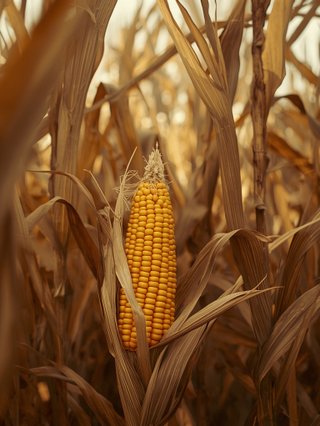
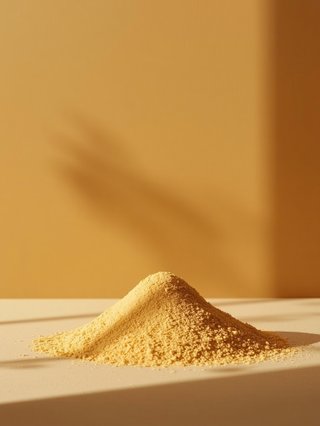
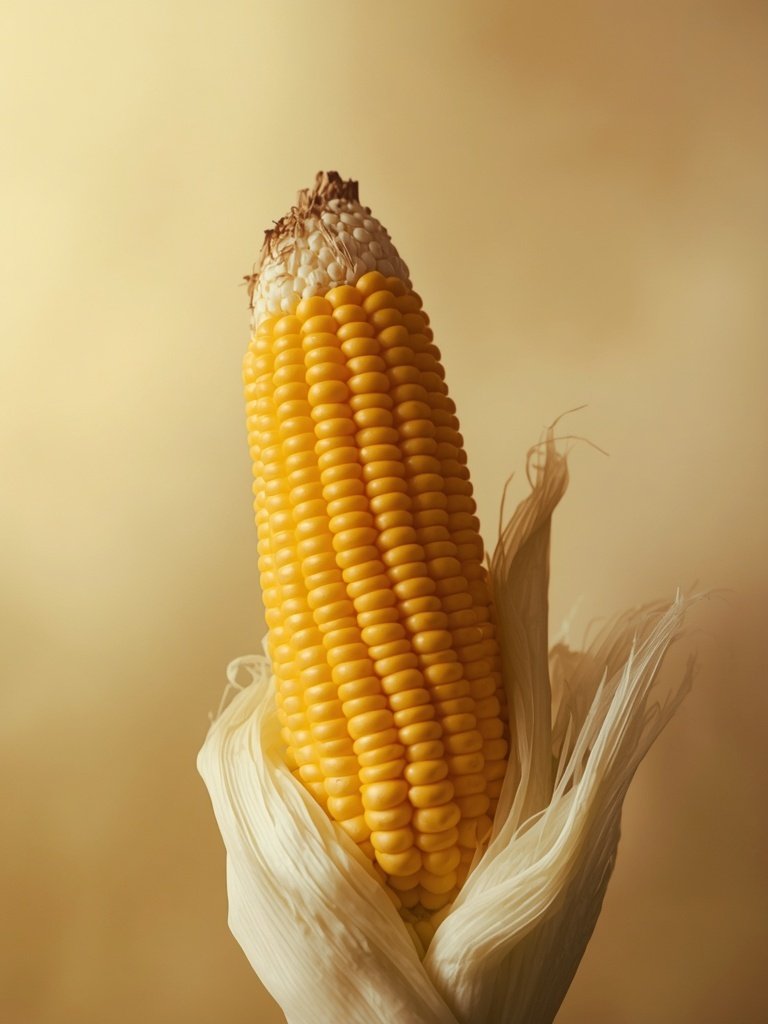
The golden and shapely corn cob is recognized and extensively cultivated in various regions throughout the globe... This plant does not have particular soil requirements, yet it yields a high crop production... In terms of the size of crops globally, corn holds the third place... The majority of the harvest is designated for animal feed, yet a significant portion is also consumed by humans... Corn kernels can be transformed into flour or grits, but many of us prefer to opt for the cooked corn cob.
01 / 08
Maize kernels – the origin and domestication of Mexico’s cultivated staple
The maize we recognize today as one of the world’s most vital cultivated crops traces its origins to the territories of present-day Mexico, where it has served as a dietary cornerstone for local communities for millennia. However, its modern form—plump, golden cobs brimming with succulent kernels—is the product of thousands of years of selective breeding. Its wild ancestor, a grass known as *teosinte*, bore little resemblance to contemporary maize: its sparse, hard, and minuscule grains were encased in tough husks, and the plant itself more closely resembled a common weed than the future pillar of global agriculture. It was roughly 10,000 years ago that Mexican farmers first began cultivating and crossbreeding the most promising specimens of this unassuming plant, a process that ultimately yielded the maize we know today—high in starch, easy to cultivate, and remarkably versatile in both culinary and industrial applications.
02 / 08
Genetically and agronomically diverse maize cultivars: traits, classification, and the evolutionary progression of cultivated varieties in modern agricultural systems
Contemporary agriculture employs a vast array of maize cultivars, encompassing both conventionally bred varieties and those derived from genetic engineering—necessitating their systematic cataloging and the development of cultivation guidelines. These distinct cultivars exhibit variability in agronomic traits, including yield potential, resilience to biotic and abiotic stressors, and specific edaphic and climatic requirements. There is a discernible trend toward the gradual replacement of traditional, lower-yielding varieties with modern hybrids that demonstrate superior productivity and enhanced adaptability to evolving environmental conditions. The classification of maize cultivars further incorporates the criterion of maturation period, thereby distinguishing between very early, early, mid-early, mid-late, and late-maturing types. Notably, maize, as a domesticated crop, lacks the capacity for autonomous survival in wild conditions, as its developmental cycle is intrinsically dependent on anthropogenic agronomic interventions such as planting, fertilization, and protection against pests and diseases.
03 / 08
Nutritional characteristics and biochemical composition of maize
Maize is characterized by a relatively low content of proteins and fats, yet it serves as a valuable source of readily digestible carbohydrates and contains substantial amounts of dietary fiber—approximately 3. 3 grams per 100 grams of the product. In terms of mineral composition, it is not among the most nutrient-dense cereals: a 100-gram serving of kernels on the cob contains merely 6 milligrams of calcium and 0. 8 milligrams of iron. Nevertheless, maize is far from being a nutritionally void food. It exhibits a low sodium content while providing high levels of potassium, along with magnesium, vitamin C, and a spectrum of B vitamins, thereby offering a well-balanced micronutrient profile.
04 / 08
Corn: Nutritional energy content, blood glucose impact, and comprehensive glycemic index analysis
A 100-gram serving of corn—which roughly corresponds to just over half of a standard ear—provides approximately 120 kilocalories of energy. This caloric content is derived predominantly from carbohydrates, which constitute over 70% of the kernel composition, with these figures applying exclusively to plain corn without added fats such as butter or vegetable oil. When cooked, corn exhibits a glycemic index of around 53, technically classifying it among low-glycemic foods. However, considering that the conventional threshold for a low glycemic index begins at 55, corn occupies a borderline position in this categorization. Individuals diagnosed with type 2 diabetes or insulin resistance are not required to eliminate corn from their diet entirely but should consume it in moderation. An optimal dietary strategy involves pairing corn with fiber-rich and protein-dense foods, alongside a measured inclusion of healthy fats like unrefined plant oils or natural butter. This synergistic approach decelerates carbohydrate digestion, thereby promoting greater stability in postprandial blood glucose levels.
05 / 08
The relationship between corn and gluten content in food products
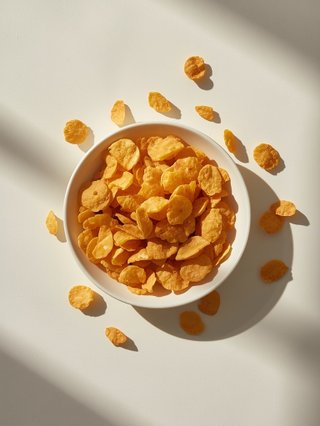
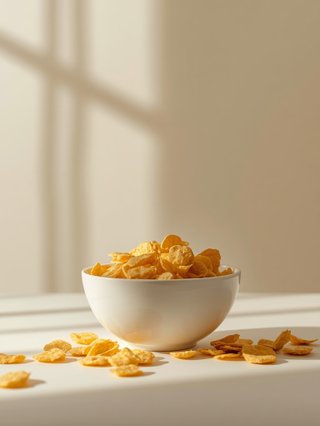
Corn is inherently one of the gluten-free cereals, making it a safe dietary choice for individuals diagnosed with celiac disease or gluten sensitivity. As such, products derived from corn—such as cornmeal, corn grits, or corn flakes—can be confidently incorporated into daily meals, provided they adhere to strict gluten-free certification standards. However, exercising caution when selecting these food items remains paramount; meticulously examining product labels for the presence of the official crossed-grain symbol is essential, as this certification mark guarantees the absence of gluten contamination. Contamination risks arise at multiple stages of processing, particularly when corn and gluten-containing grains—such as wheat, rye, or barley—are handled within the same manufacturing facility. Inadequate segregation of production lines or insufficient equipment sanitization protocols significantly elevate the likelihood of cross-contamination. Furthermore, certain corn-based products may include gluten-derived additives, such as barley malt, which automatically renders them unsuitable for a gluten-free diet. Consequently, individuals adhering to gluten-free nutritional guidelines must consistently verify that their chosen products bear the necessary certifications and are devoid of any concealed gluten sources.
06 / 08
The gastrointestinal processing of maize kernels in humans: underlying mechanisms and practical dietary guidance
A common observation among consumers is that maize kernels often appear to transit the digestive system largely unaltered, prompting concerns about either the adequacy of one’s enzymatic digestion or the fundamental suitability of maize as a human food source. This phenomenon, however, stems not from enzymatic deficiencies or pathological conditions but rather from the unique chemical composition of the kernel’s outer layer—comprising cellulose, a fibrous compound that human digestive enzymes cannot break down. While the internal starch content is fully metabolized as a primary energy substrate, the external hull remains intact, a feature particularly noticeable due to its distinctive color and texture. Although this occurs with all cereal grains, maize’s visibility makes it more apparent. A practical solution involves thorough mastication, which enhances enzymatic access to the starch and reduces the volume of undigested remnants.
07 / 08
The ideal cooking duration for corn on the cob – a comprehensive step-by-step guide
Preparing corn on the cob is an exceptionally straightforward process that does not demand advanced culinary expertise. The initial step involves carefully peeling back the husks and removing all silky threads from the ears, followed by a thorough rinse under running water to eliminate any residual debris. The cleaned cobs are then submerged in a pot of vigorously boiling, unsalted water—a critical detail, as pre-salting the liquid can result in toughened kernels. To enhance the inherent sweetness of the corn, a modest addition of sugar or honey may be incorporated instead. The cooking duration typically ranges from 10 to 15 minutes, contingent upon the size of the cobs and the desired texture: a shorter boil preserves a crisp bite, whereas an extended cooking time yields tender, juicier kernels. For optimal enjoyment, the corn should be served immediately upon removal from the water, generously brushed with premium melted butter and lightly dusted with flaky sea salt—or, for a more adventurous flavor profile, seasoned with spices such as cayenne pepper, smoked paprika, or freshly ground black pepper.
08 / 08
What nutritional properties does corn possess, and is it worth incorporating into your daily diet?
Much like numerous other food products, corn represents just one component within a balanced dietary framework. There are no scientifically substantiated reasons to eliminate it entirely from one’s menu, yet consuming it in excessive quantities does not confer any remarkable health advantages either. The kernels of this cereal crop are characterized by a relatively low caloric density, serve as a valuable source of easily digestible starch, and are distinguished by their pleasantly sweet flavor profile. It is important to note, however, that in terms of vitamin and mineral content—particularly iron and calcium—corn demonstrates a rather modest nutritional profile. The most prudent approach, therefore, involves adhering to the principle of dietary diversity by integrating this foodstuff with other nutrient-dense grains and vegetables that offer a broader spectrum of essential nutrients. Such a comprehensive dietary strategy ensures that the body receives a well-rounded supply of vital nutritional components while concurrently mitigating the potential risks associated with the excessive intake of specific chemical compounds.
Meal Plan
Want to apply these guidelines in your daily diet?
Our smart diet generator creates a tailored meal plan in 3 minutes based on the recommendations in this article.

Scientifically reviewed by a clinical dietitian
• 23.10.2026
Literatura: https://www.livestrong.com/article/477602-why-does-the-human-body-not-digest-corn/ Kuchanowicz H., Nadolna I., Iwanow K., Przygoda B., „ Wartość odżywcza wybranych produktów i typowych potraw” , Wydawnictwo Lekarskie PZWL, 2012, s. https://www.agropolska.pl/uprawa/kukurydza/teosinte-starszy-krewniak-czy-grozny-chwast-w-kukurydzy,42.html http://www.ihar.edu.pl/odmiany_kukurydzy.php https://www.glukoza.pl/index.php/indeks-glikemiczny-tabele
Diets Premium Expert
Diets Premium team expert. Specializes in nutrition plans, strength sports, and training plans.
USDA FoodData Central
EFSA
PubMed Clinical Guidelines