3 min read
Avocado – properties and health benefits. How to recognize a ripe fruit? Ways to speed up ripening


1 photo
902
Smart Voice
AI
0:00
0:00
Listen to the article content live
Table of Contents 3
Medical & Editorial Disclaimer (§3 Terms): This article is for informational and educational purposes only, does not constitute medical advice, diagnosis, or treatment, and is used at your own risk. Consult a qualified physician for medical conditions.
Clinical E-Books & Diet Plans:
Explore E-Books & Plans →
Key Takeaways
The avocado, botanically classified as Persea americana and native to the southern regions of Mexico, is widely recognized in clinical nutrition as an exceptionally nutrient-dense fruit. Its consistent, velvety texture makes it a highly versatile culinary staple, though understanding how to accurately assess and manage its ripeness is essential for maximizing both its palatability and its nutritional contribution to a balanced diet.
From a physiological perspective, the fruit is distinguished by a rich profile of monounsaturated fatty acids, predominantly oleic acid, alongside essential minerals such as potassium that help support overall dietary wellness. The article examines the distinct visual and tactile markers of popular market cultivars—most notably the Hass variety, which develops a deep dark-brown to nearly black rind when mature, compared to green-skinned varieties—while also explaining the biochemical mechanism by which ethylene gas acts as a natural plant hormone to catalyze tissue softening.
In daily dietary practice, consumers can apply these sensory indicators to select ready-to-eat avocados that blend seamlessly into wholesome sandwiches, vibrant salads, and creamy desserts. When faced with an underripe, firm fruit at home, placing it inside a sealed paper bag alongside a ripe apple or banana peel provides an effective, natural method to concentrate ambient ethylene and expedite the maturation process until the flesh reaches an optimal consistency.
Persea americana, also referred to as the alligator pear, is regarded as one of the most valuable fruits globally due to its abundance of valuable nutrients, including monounsaturated fatty acids. It is recommended for sandwiches, salads, and desserts due to its consistent, velvety texture. In this article, I will elucidate how to select a fully ripe avocado and what to do if it is not yet fully ripe.
01 / 03
Nutritional and therapeutic benefits of avocado fruit – a comprehensive examination of its composition and medicinal properties
The avocado, scientifically classified as *Persea americana* (commonly referred to as the "alligator pear"), originates from the southern regions of Mexico, with archaeological evidence tracing its cultivation back to approximately 5000 BCE. This distinctive fruit is renowned for its **exceptionally dense nutritional profile**, which includes: **monounsaturated fatty acids** (approximately 11 g per 100 g of pulp, primarily oleic acid from the MUFA group), **macronutrients** such as potassium (critical for blood pressure regulation), magnesium (supporting neuromuscular function), and iron (essential for oxygen transport), **micronutrients** in the form of copper (vital for hemoglobin synthesis) and manganese (an activator of metabolic enzymes), as well as a **comprehensive vitamin complex** comprising provitamin A (beta-carotene), vitamin C (a potent antioxidant), vitamin E (protective of cellular membranes), and B vitamins—thiamine (B1), riboflavin (B2), niacin (B3), and pyridoxine (B6)—which play pivotal roles in energy metabolism. Additionally, avocados contain **bioflavonoids** with protective benefits for ocular health (lutein, zeaxanthin) and **14 exogenous amino acids**, including all essential ones. The **folates** present in the fruit are converted in the small intestine into the active form of folic acid, which is crucial for cellular division processes. **The nutritional value of 100 g of avocado** is as follows: **caloric content** – 160 kcal, **protein** – 2 g, **fat** – 15.3 g (predominantly unsaturated), **carbohydrates** – 7.4 g (of which dietary fiber – 6.7 g, promoting intestinal peristalsis). Owing to this unique composition, avocado pulp exhibits **multiple health-promoting properties**, including: **antioxidant activity** (neutralization of free radicals via vitamins A, C, and E), **hypolipidemic effects** (reduction of LDL cholesterol and triglycerides, beneficial in **arterial hypertension** and atherosclerosis), **hypoglycemic properties** (regulation of blood glucose levels, significant in **type 2 diabetes mellitus**), and **anti-inflammatory and regenerative effects**—used adjunctively in **degenerative joint diseases**, **hepatitis C**, **cataracts**, and **prostate cancer prevention**. The **avocado skin** has historically been employed as an **anthelmintic agent** (primarily against intestinal nematodes), while **crushed seeds** have served as an **analgesic** (alleviating toothaches) and a **dermatological remedy** (treating **scabies**, **dandruff**, **suppurating wounds**, and **skin ulcers**). **Oil extracted from the seeds** possesses **astringent properties** (utilized in cosmetics for oily skin care), and **avocado leaves** have been used as an **expectorant** (for productive coughs) and an **anti-ulcer agent** (aiding the healing of **gastric and duodenal ulcers** when ingested orally). External applications of the leaves alleviated **neuromuscular discomfort**, such as spasms or tremors. Avocado also serves as a **healthier substitute for butter** (as a spread) and a **nutritious snack**—for instance, in the form of **avocado toast** with olive oil, garlic, and herbs. In culinary applications, it excels as an ingredient in **salads**, **creams**, and **vegetable or fruit pastes**; however, due to the rapid **oxidation** of the pulp (browning upon exposure to air), the addition of **lemon juice** is recommended as a natural antioxidant. **Medical precautions**: Avocados may trigger **cross-allergic reactions** in individuals allergic to **latex** (latex-fruit syndrome). Furthermore, **drug interactions** occur with **MAO inhibitors** (phenelzine, tranylcypromine, moclobemide) used in **depressive disorders**, as well as with **furazolidone** (an antibacterial agent) and **isoniazid** (in **pulmonary tuberculosis treatment**), potentially leading to **hypertension**. Additionally, in patients infected with **Salmonella** or **Giardia**, avocado consumption may exacerbate **gastrointestinal symptoms**.
02 / 03
What definitive indicators should be assessed to accurately determine the peak ripeness of an avocado prior to purchase and consumption?
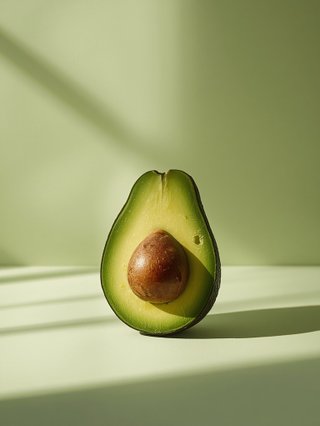
Within Polish retail outlets and open-air markets, consumers encounter a diverse array of avocado cultivars, each exhibiting distinct visual and textural attributes. Foremost among these is the Hass variety, which, upon reaching full maturity, develops a deep, dark brown—nearly black—exterior rind alongside a palpably soft, creamy flesh texture that unambiguously signals its immediate readiness for consumption. In contrast, the conventional Persea americana variety, sometimes referred to as the Mexican avocado, manifests as an elongated fruit featuring a sizable central seed and a smooth, vivid green peel. Its ripeness may be ascertained through the emergence of subtle, brownish speckles distributed across the peel’s surface, coupled with a gently yielding flesh consistency upon tactile examination—both of which serve as reliable markers of having attained the ideal stage of culinary ripeness, colloquially termed the "alligator pear" in some regions.
03 / 03
Effective techniques for expediting the maturation process of avocados at home
One of the most reliable and frequently recommended techniques for accelerating the ripening of avocados involves placing the fruit inside a sealed paper bag alongside a ripe apple. This approach leverages the fact that apples naturally emit ethylene gas—a plant hormone that serves as a catalyst for the maturation process. Similarly, banana peels exhibit comparable properties, as they also release this chemical compound. After approximately twelve hours of co-storage in a confined environment, noticeable changes in the avocado’s texture and appearance become evident: the flesh softens significantly, while the skin develops a deeper, more characteristic green or brown hue indicative of a fully ripened fruit.
Meal Plan
Want to apply these guidelines in your daily diet?
Our smart diet generator creates a tailored meal plan in 3 minutes based on the recommendations in this article.

Kacper Nowak
• 25.11.2026Diets Premium Expert
Diets Premium team expert. Specializes in nutrition plans, strength sports, and training plans.