3 min read
Ankle Joint Damage
1 photo
679
Smart Voice
AI
0:00
0:00
Listen to the article content live
Table of Contents 3
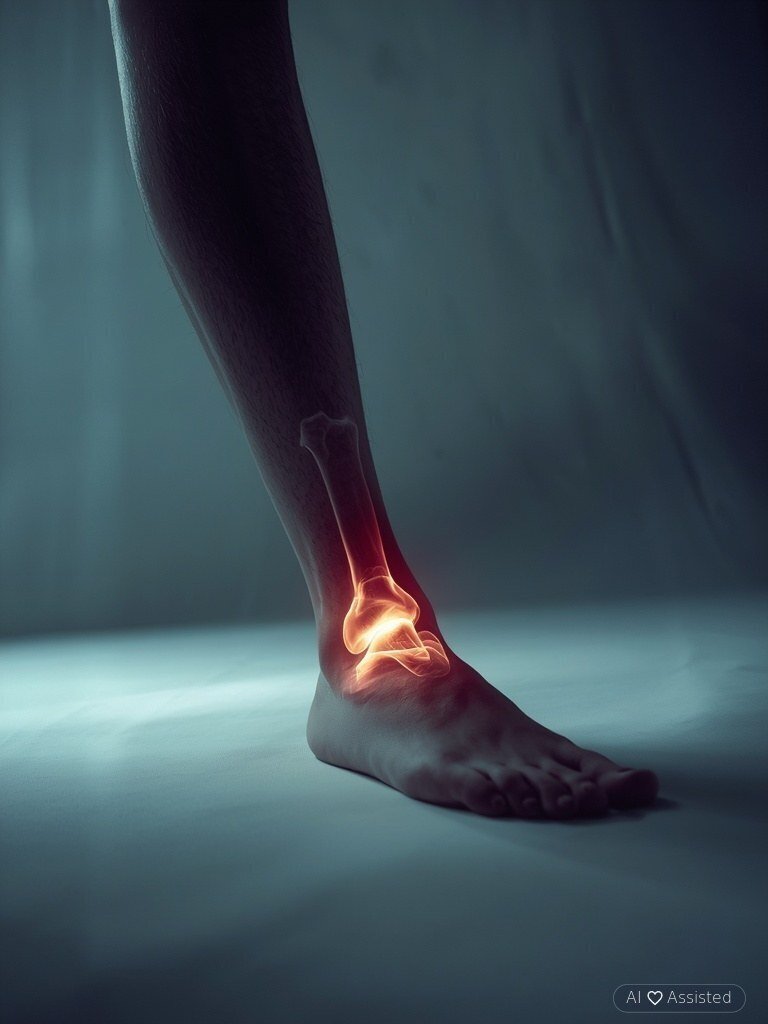
Damage to the ankle joint constitutes a part of innumerable injuries related to sports and daily activities. The most frequent injuries occur during the practice of sports such as volleyball, basketball, soccer, running on uneven terrain, or dancing. In numerous circumstances, a return to full physical fitness is feasible, however, it is approximated that around 20-40% of individuals encounter chronic symptoms such as pain or instability.
01 / 03
Ankle joint sprains: injury mechanisms, severity grading, and hallmark clinical manifestations
The most prevalent mechanisms underlying ankle joint injuries involve plantarflexion combined with inversion and foot adduction. In the majority of cases, this results in damage to—or, in some instances, complete rupture of—the anterior talofibular ligament (ATFL), a direct consequence of the described traumatic mechanism. These injuries are categorized into three severity grades. **Grade I** is characterized by ligamentous strain without disruption of structural continuity, manifesting as localized mild swelling and tenderness upon palpation. Joint functionality typically remains intact, with no signs of mechanical instability. **Grade II** involves a partial ligament tear, accompanied by moderate swelling, more pronounced palpatory tenderness, slight restriction in joint mobility, and subtle indications of instability. **Grade III**, representing the most severe injury form, entails complete rupture of both the calcaneofibular ligament (CFL) and the anterior talofibular ligament (ATFL). This is associated with extensive swelling, subcutaneous ecchymosis (petechiae), and marked tenderness on palpation. In such cases, overt joint instability is present, and the patient is unable to bear weight on the affected limb.
02 / 03
Diagnostic assessment of ankle joint instability and associated anatomical structure injuries
The diagnostic procedure involves a comprehensive clinical evaluation of joint instability severity through specialized manual assessments, including the anterior drawer test and the talar tilt test. Additionally, a thorough visual inspection is conducted to detect potential soft tissue swelling and to assess tenderness upon palpation of specific anatomical landmarks, such as the lateral and medial ligaments. Within imaging diagnostics, ultrasonography serves as a pivotal tool for visualizing inflammatory conditions, ligamentous injuries, or the presence of intra-articular fluid. In clinically justified scenarios, particularly when concomitant bony injuries are suspected, radiographic examination is recommended to rule out fractures of the ankle-forming bones—such as the talus, medial and lateral malleoli—as well as the fifth metatarsal, thereby enabling a holistic assessment of structural integrity.
03 / 03
Functional rehabilitation and preventive strategies for ankle joint injuries: from acute phase to full recovery of functional capacity
First and foremost, the contemporary therapeutic approach to ankle joint injuries is founded upon active functional rehabilitation, which replaces the conventional method of gypsum immobilization. This strategy facilitates a more expedient return to occupational duties and physical activity for patients while concurrently diminishing the risk of adverse complications, including chronic joint instability, persistent pain, restricted mobility, or muscular atrophy. Another critical component involves the immediate implementation of the P.R.I.C.E. protocol (protection, rest, ice, compression, elevation) directly following the onset of injury during the acute phase. The primary objectives of these interventions are to mitigate intratissue bleeding, reduce swelling, suppress inflammatory responses, and alleviate pain symptoms. During the subacute phase, as acute symptoms subside, the focus shifts toward further reduction of edema, management of inflammation, and the gradual introduction of controlled movements, strengthening exercises, and weight-bearing activities. Particular caution must be exercised during this period, as excessive stretching of damaged ligaments may result in aberrant healing in an elongated position, thereby compromising long-term joint stability. In the main phase of rehabilitation, the introduction of a comprehensive exercise regimen aimed at enhancing muscular strength, endurance, balance, and proprioception becomes paramount. This phase, commencing approximately three weeks post-injury, promotes the progressive stretching of periarticular tissues and the performance of active movements, which collectively contribute to the restoration of elasticity and resilience in the injured structures. The integration of preventive measures to safeguard the injured area against recurrent damage is equally essential. The stability of the ankle joint is primarily maintained by the fibularis muscles (longus and brevis), the tibialis posterior, the flexor digitorum longus, and the flexor hallucis longus. Systematic strengthening and conditioning of these muscles significantly enhance joint stability, particularly when ligamentous structures have been compromised. In all cases of injury, consultation with a specialist is indispensable to expedite recovery and preclude the development of chronic symptoms that may persist for years.
Meal Plan
Want to apply these guidelines in your daily diet?
Our smart diet generator creates a tailored meal plan in 3 minutes based on the recommendations in this article.

Scientifically reviewed by a clinical dietitian
• 25.09.2026
Olivia Davis
Diets Premium Expert
Diets Premium team expert. Specializes in nutrition plans, strength sports, and training plans.
USDA FoodData Central
EFSA
PubMed Clinical Guidelines