Key Takeaways
Maple sap and the syrup derived from it, frequently referred to as Canadian liquid gold, represent a traditional natural sweetener originating primarily from Canada and the United States. While less common in parts of Europe, it is steadily gaining recognition among health-conscious consumers seeking unrefined culinary ingredients. Understanding its nutritional profile matters because pure maple syrup contains no artificial flavorings, preservatives, or dyes, offering a complex composition that goes beyond simple sweetness.
From a physiological perspective, authentic syrup harvested from species such as sugar, black, red, and silver maple provides vitamins, minerals, and a variety of antioxidant polyphenols. Unlike white table sugar or high-fructose corn syrup, which supply only empty calories, maple syrup delivers bioactive compounds that preliminary scientific studies associate with potential anti-inflammatory, antibacterial, and metabolic-supporting properties. Nevertheless, because its composition consists predominantly of sucrose, nutritional prudence dictates treating it as an occasional enhancer rather than a staple food.
In everyday meal preparation, selecting the appropriate variety enhances both sweet and savory dishes. Lighter, more delicate grades dissolve easily in liquids and pair well with oatmeal and pancakes, whereas darker grades feature a robust caramel aroma suited for marinades, baked goods, or roasted apples filled with nuts, raisins, and cinnamon. Storing the bottle in a cool environment preserves its freshness over an extended period, allowing individuals to incorporate small, mindful amounts into a balanced dietary routine.
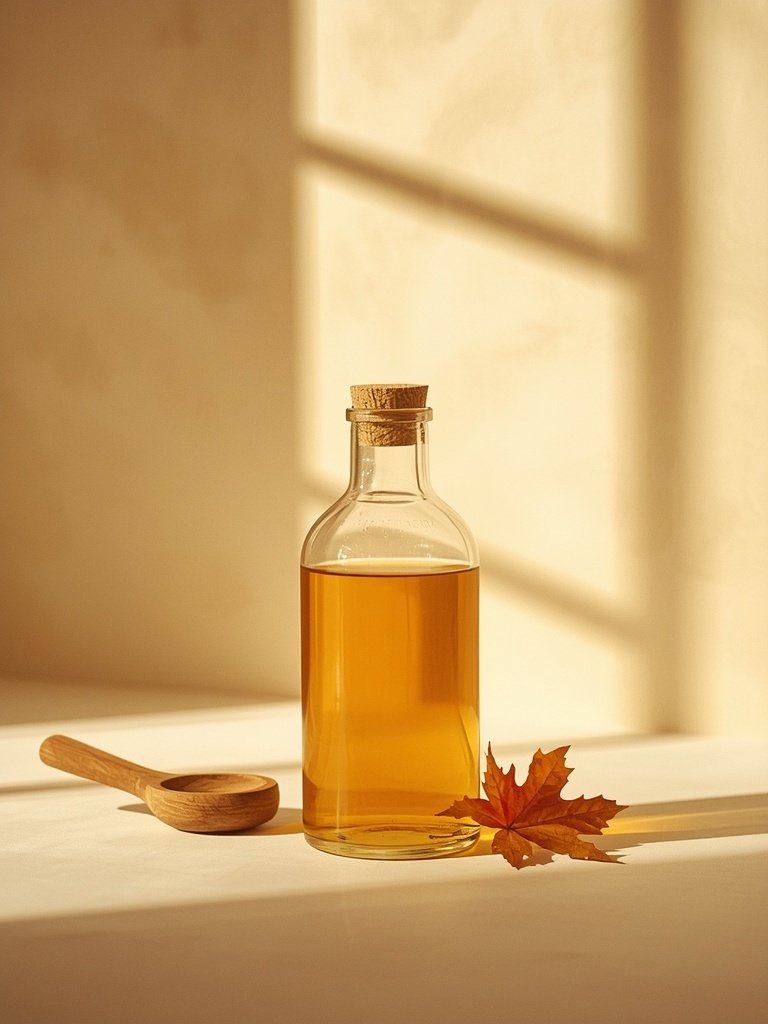
Maple sap, often referred to as Canadian liquid gold, is less common in Poland than in its countries of origin: Canada and the United States, yet it is attracting an increasing number of advocates due to its rich natural composition, which offers more than just sugar!
02 / 05
The properties of clone syrup
Maple syrup made from maple sap consists of 97% water, with the remainder being mineral components and organic acids[3]. Maple syrup produced from the sap is a source of certain minerals such as calcium, potassium, manganese, magnesium, phosphorus, iron; B vitamins (riboflavin, niacin, pantothenic acid, pyridoxine, folic acid) and antioxidants. Manganese is a component of the enzyme crucial for the body – superoxide dismutase, which participates in neutralizing free radicals. Zinc is essential in the body's growth processes and immune system development. Magnesium is responsible for proper bone development, proper nervous system function, and brain development. A serving of ¼ cup (approx. 80 grams) of maple syrup contains a comparable amount of antioxidants as one serving of broccoli, apples, or bananas[4]. Unlike other sweeteners, it also has fewer calories. In 100 grams of sugar, we find approx. 400 kcal, while in 100 g of maple syrup, only 270. 80 grams of maple syrup covers the daily requirement for manganese by 94.6%; vitamin B2 by 42%, zinc by 5.8%, potassium by 8.3%, and magnesium by 4.4%. Table 1. Comparison of nutritional values of selected sweeteners
Maple syrup (¼ cup /80 g) %RDA mg High-fructose corn syrup (¼ cup /78 g) %RDA mg Honey (¼ cup /85g) %RDA mg Brown sugar (¼ cup /55g) %RDA mg White sugar (¼ cup 51g) %RDA mg Riboflavin 42% 0.59 0.7% 0.01 2.1% 0.03 0% 0. 00 0, 7% 0, 01 Thiamine 0, 9% 0, 01 0% 0, 0 0% 0, 00 0% 0, 00 0% 0, 00 Zinc 5, 8% 0, 58 0, 2% 0, 02 1, 9% 19, 0 0, 2% 0, 02 0% 0, 00 Selenium 0, 7% 0, 4 µg 1% 0, 55 µg 1, 2% 0, 66 µg 1, 1% 0, 65 µg 0, 5% 0, 3 µg Potassium 8, 3% 167 0% 0, 00 2, 2% 44, 0 3, 6% 73, 3 0, 04% 0, 96 Manganese 94, 5% 1, 89 3, 5% 0, 07 3, 5% 0, 07 2% 0, 04 0% 0, 00 Calcium 7, 2% 58 0% 0, 00 0, 6% 5, 00 6, 7% 45, 8 0, 06% 0, 48 Magnesium 4, 4% 16, 5 0% 0, 00 0, 4% 1, 75 1, 3% 5, 0 0% 0, 00 Iron 0, 6% 0, 09 0, 01% 0, 02 2, 5% 0, 36 2, 7% 0, 39 0, 2% 0, 03 Energy[kcal 196
Developed in-house based on USDA National Nutrient Database. RDA (Recommended Daily Value) was calculated based on the Minister of Health's Regulation of January 18, 2010 [5]. Maple syrup contains phenolic compounds (which affect the color and aroma of the plant) that exhibit potential antioxidant and antymutagenic activity, helping to inhibit the development of cancer cells [6]. In vitro studies have shown that maple syrup has an inhibitory effect on the growth of cancer cells in the case of prostate and lung cancer[7]. Syrup also inhibits the action of nitric oxide, an inflammatory factor. Studies have shown that abscisic acid (ABA) contained in maple syrup stimulates insulin release from the pancreas and increases the sensitivity of fat cells. Preliminary studies suggest that substances in maple syrup may affect the inhibition of enzymes involved in the development of type 2 diabetes. Maple syrup has been found to contain over 50 antioxidant substances that have a positive effect on human health. Some of them exhibit anti-cancer, antibacterial, and anti-diabetic effects. Further research is necessary in this regard, as the action of these compounds is promising, but has not been sufficiently proven[8].
Want to apply these guidelines in your daily diet?
Our smart diet generator creates a tailored meal plan in 3 minutes based on the recommendations in this article.