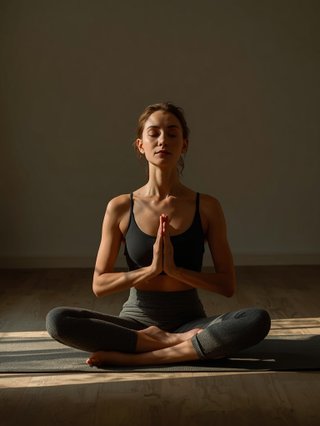
Is modern yoga really harmful?


Table of Contents 4
Medical & Editorial Disclaimer (§3 Terms): This article is for informational and educational purposes only, does not constitute medical advice, diagnosis, or treatment, and is used at your own risk. Consult a qualified physician for medical conditions.
From a physiological and biomechanical standpoint, engaging in yoga postures, known as asanas, helps cultivate proper postural habits, enhances joint range of motion, and alleviates muscular tension. Targeted muscle activation supports spinal flexibility and decompression, which helps unload the intervertebral discs during movement. Furthermore, positions involving torso rotation and supine exercises strengthen the abdominal musculature and promote overall spinal mobility. Beyond physical conditioning, scientific literature highlights that integrating movement with pranayama and dhyana contributes to stress reduction, mood enhancement, and greater emotional resilience.
To safely incorporate yoga into a daily wellness routine, individuals should select a style that aligns with their personal fitness level and health goals. Contemporary yoga practice is not inherently detrimental, provided that exercises are tailored to individual capabilities, performed with proper biomechanical technique, and practiced with full awareness of any personal medical contraindications. Seeking guidance from qualified professionals and respecting the body's anatomical limits ensures that regular practice remains a safe, sustainable tool for supporting long-term physical vitality and mental balance.
Is this truly yoga - what it is and what are its fundamental principles?
Why it's worthwhile to engage in yoga
Yoga in the context of scientific research
Summary
Want to apply these guidelines in your daily diet?
Our smart diet generator creates a tailored meal plan in 3 minutes based on the recommendations in this article.
Tags

Cullos-Reed S.N. et al., A pilot study of yoga for breast cancer survivors: physical and psychological benefits, „Psycho-oncology” 2006, 10, 891–897. de Manincor M. et al., Establishing key components of yoga interventions for reducing depression and anxiety, and improving well-being: a Delphi method study, „BMC Complementary and Alternative Medicine” 2015, 15, 85. Gatantino M.L. et al., The impact of modified Hatha yoga on chronic low back pain: a pilot study, „Alternative Therapies in Health & Medicine” 2004, 10(2), 56–59. Grabara M., Juszczyk E., Szopa J., Ćwiczenia hatha jogi w profilaktyce i korekcji wad postawy ciała u dzieci w wieku szkolnym, 5th International Conference Movement and Heath. Opole University of Technology, Opole 2006. Grabara M., Juszczyk E., Szopa J., Hatha-Yoga exercises in prevention and correction of body posture defects at children in school age, Movement and Health, 5th International Conference, Głuchołazy 2006, 418–427. Grabara M., Szopa J., Pozycja tadasana (góra) w świetle kryteriów postawy prawidłowej w płaszczyźnie strzałkowej, Psychomotoryka. Ruch Pełen Znaczeń, pod red. Sekułowicz M., Kruk-Lasockiej J., Kulmatyckiego L., Wrocław 2008, 248–256. Hagins M. et al., A randomized controlled trial comparing the effects of yoga with an active control on ambulatory blood pressure in individuals with prehypertension and stage 1 hypertension, „The Journal of Clinical Hypertension” 2014, 16(1), 54–62. Joga dla zdrowia, pod red. Szopy J., Częstochowa 2004. Murugesan R., Govindarajulu N., Bera T.K., Effect of selected yogic practices on the management of hypertension, „Indian Journal of Physiology and Pharmacology” 2000, 44(2), 207–210. Padmini T. et al., Effect of Short-Term Intensive Yoga Program on Pain, Functional Disability and Spinal Flexibility in Chronic Low Back Pain: A Randomized Control Study, „Journal of Alternative & Complementary Medicine” 2008, 14(6), 637–644. Smith C. et al., A randomized comparative trial of yoga and relaxation to reduce stress and anxiety, „Complementary Therapies in Medicine” 2007, 15, 77–83. Żok A., Zapała J., Baum E., Ćwiczenia oparte o techniki jogi w leczeniu psychiatrycznym w Polsce w aspekcie historycznym, „Psychiatria Polska” 2021, 207, 1–12.
Diets Premium Expert
Diets Premium team expert. Specializes in nutrition plans, strength sports, and training plans.