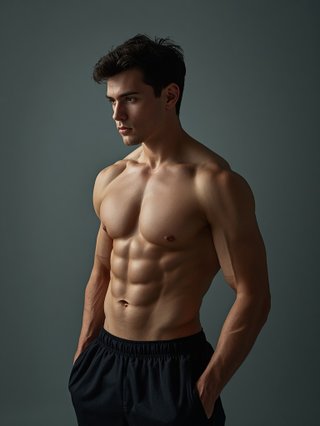
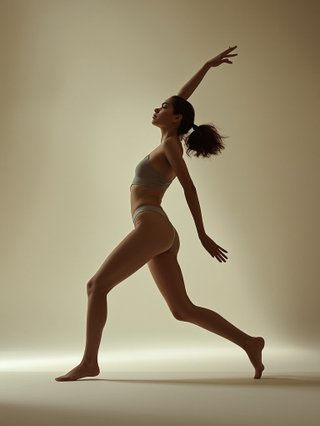
Calisthenics and bodyweight training – how to build strength, muscle mass, and fitness without equipment


Table of Contents 7
Medical & Editorial Disclaimer (§3 Terms): This article is for informational and educational purposes only, does not constitute medical advice, diagnosis, or treatment, and is used at your own risk. Consult a qualified physician for medical conditions.
At the cellular level, skeletal muscle fibers respond strictly to mechanical tension and motor unit recruitment, making no physiological distinction between an iron plate and human skeletal mass. By systematically manipulating leverage, moment arms, and unilateral loading patterns, trainees can continuously challenge their neuromuscular system to adapt and grow. This approach triggers myofibrillar adaptations while simultaneously enhancing functional joint stability, core integration, and overall athletic coordination.
To translate these physiological principles into daily success, practitioners should focus on progressive biomechanical variations and controlled movement tempos rather than endless repetition counts. Implementing a structured full-body routine across non-consecutive days ensures an optimal balance between mechanical overload and connective tissue recovery. Ultimately, consistent equipment-free training fosters lifelong strength, resilience, and superior body control without requiring a traditional gym environment.
In a commercial fitness industry dominated by selectorized weight stacks, specialized cable towers, and costly gym memberships, a widespread misconception persists: that building substantial skeletal muscle mass and elite maximal strength is impossible without barbells and machines. Individuals who train at home, travel frequently, or prefer outdoor parks often assume they must settle for basic endurance conditioning. Yet a single glance at the physiques of competitive gymnasts and advanced calisthenics practitioners immediately proves otherwise.
Calisthenics—derived from the ancient Greek words kalos (beauty) and sthenos (strength)—is the biomechanical art and science of mastering one's own body weight against gravity. At the cellular level, skeletal muscle fibers possess no awareness of whether external resistance comes from calibrated iron plates or the mass of the human frame; mechanoreceptors respond strictly to mechanical tension, motor unit recruitment, and metabolic stress. By systematically manipulating leverage, moment arms, base of support, and unilateral loading, any trainee can turn their own body into a lifelong, infinitely scalable gym. This comprehensive guide details the physiology, biomechanics, and programming of equipment-free strength training.
Physiology of Resistance in Calisthenics: Why Muscles Respond to Mechanical Tension Regardless of External Load Type
Understanding why bodyweight resistance builds muscle just as effectively as free weights begins with the cellular phenomenon of mechanotransduction. Embedded within the sarcolemma and costameres of skeletal muscle fibers are specialized mechanosensors, including integrins and focal adhesion kinase complexes. When a muscle contracts against significant resistance and its sarcomeres experience high active tension alongside slowing contraction velocity, these sensors convert physical force into biochemical cascades—most notably activating the mTORC1 pathway to stimulate muscle protein synthesis (MPS).
Governed by Henneman's Size Principle, the central nervous system recruits high-threshold, growth-prone Type II motor units whenever mechanical demand approaches maximal voluntary effort—either through heavy loads or by taking moderate-rep sets close to muscular failure:
- Mechanical Tension as the Universal Stimulus – At the myofibrillar level, the pectoralis major and triceps cannot distinguish between the tension produced by a heavy barbell bench press and that produced by an archer push-up or deep ring dip.
- Closed Kinetic Chain (CKC) Biomechanics – Because the hands or feet remain anchored to a surface while the torso moves through space, calisthenics movements demand superior intermuscular coordination, scapular control, and core co-contraction compared to open-chain machine isolation.
- Relative Strength and Proprioceptive Mastery – Mastering bodyweight progressions maximizes strength-to-mass ratio and refines neuromuscular spatial awareness.
Biomechanics of Equipment-Free Progression: Manipulating Leverage, Moment Arms, Base of Support, and Unilateral Loading
In traditional barbell training, progressive overload is straightforward: you simply slide another pair of plates onto the bar. In bodyweight training, however, trainees often make the mistake of endlessly adding repetitions to basic movements—turning 20 push-ups into 100 push-ups. Once repetitions exceed roughly 30 to 35 per set, the stimulus shifts predominantly toward local muscular endurance rather than myofibrillar hypertrophy or maximal strength. To increase mechanical resistance without external weights, calisthenics applies classical physics and rotational mechanics (Torque = Force × Moment Arm).
Four primary biomechanical variables allow practitioners to scale any bodyweight exercise from beginner to elite difficulty:
- Altering Body Inclination Relative to Gravity – Elevating the hands on a bench during push-ups loads roughly 40–45% of body mass; standard floor push-ups load ~65–70%; elevating the feet (decline push-ups) increases load to ~75–80%, and vertical handstand push-ups load nearly 95–100% of body weight.
- Lengthening the Moment Arm (Leverage Manipulation) – Leaning the shoulders forward past the wrists (as in Pseudo Planche Push-ups) or extending the hips from a tuck to a full layout (as in Front Lever or Dragon Flag progressions) dramatically increases rotational torque at the shoulder joint.
- Asymmetrical and Unilateral Loading – Shifting the center of mass toward one limb (Archer variations, uneven pull-ups, Bulgarian and Pistol squats) progressively doubles the mechanical load borne by the working muscles.
Foundations of Pushing (Push): From Standard and Diamond Push-Ups to Archer, One-Arm, and Handstand Push-Ups (HSPU)
Upper-body pushing patterns develop the pectoralis major and minor, the anterior and lateral deltoids, all three heads of the triceps brachii, and the vital serratus anterior, which anchors and protracts the scapula against the ribcage. Unlike the barbell bench press—where the shoulder blades remain pinned statically against an upholstered pad—calisthenics pushing movements allow natural scapulohumeral rhythm, moving seamlessly from scapular retraction at the bottom of the rep to full protraction at lock-out.
A logical pushing progression develops both horizontal and vertical pressing power across clear biomechanical stages:
- Foundational & Triceps Focus: Standard Push-Ups, Diamond Push-Ups, and Parallel Bar Dips – Executing push-ups with a rigid plank torso (posterior pelvic tilt) and elbows tucked at roughly a 45-degree angle safeguards the rotator cuff. Narrow-grip diamond push-ups and deep parallel bar dips shift intense mechanical tension onto the triceps and sternal pectoralis fibers.
- Horizontal Strength Mastery: Archer Push-Ups & Pseudo Planche Push-Ups – Archer push-ups load one pressing arm while the opposite arm remains straight for lateral balance, serving as the direct bridge to the strict one-arm push-up.
- Vertical Overhead Mastery: Pike Push-Ups to Wall Handstand Push-Ups (HSPU) – Piking the hips into an inverted V-position and elevating the feet onto a box progressively shifts the force vector overhead, culminating in full wall-assisted or freestanding handstand push-ups.
Foundations of Pulling (Pull): Pull-Ups, Chin-Ups, Australian Inverted Rows, and Progressions Toward the Muscle-Up and Front Lever
Maintaining optimal glenohumeral joint centration, upright spinal posture, and a wide, V-tapered torso requires matching every pushing movement with an equally robust pulling volume. Calisthenics pulling exercises heavily recruit the latissimus dorsi, middle and lower trapezius, rhomboids, teres major, posterior deltoids, elbow flexors, and forearm flexors responsible for crushing grip strength.
Whether using a doorway pull-up bar, gymnastics rings, or an outdoor park structure—or even a sturdy dining table for horizontal rows—pulling progressions scale seamlessly across all ability levels:
- Horizontal Pulling: Australian Pull-Ups (Inverted Bodyweight Rows) – Hanging beneath a low bar, suspension straps, or a sturdy table edge with a rigid body line and pulling the chest to the support targets the mid-back (rhomboids and mid-traps). Adjusting foot elevation precisely modulates mechanical resistance.
- Vertical Pulling: Pronated Pull-Ups, Neutral-Grip Pull-Ups, and Supinated Chin-Ups – The gold standard for upper-body pulling hypertrophy. Every repetition should initiate with active scapular depression and retraction from a dead hang before flexing the elbows, driving the elbows down toward the hips.
- Elite Pulling Progressions: Chest-to-Bar Pull-Ups, Archer Pull-Ups, Front Lever, and the Muscle-Up – Developing explosive pulling acceleration from the dead hang to the lower sternum unlocks the bar or ring Muscle-Up, while straight-arm isometric progressions (Tuck to Advanced Tuck to Full Front Lever) build extraordinary latissimus and core strength.
Lower Body Training Without a Barbell: Bulgarian Split Squats, Pistol Squats, Nordic Hamstring Curls, and Plyometrics
A common critique of bodyweight training is the claim that the lower-body musculature—quadriceps, hamstrings, glutes, and calves—is already accustomed to carrying total body mass during daily ambulation and therefore cannot hypertrophy without a heavy barbell. While this holds true for high-repetition bilateral air squats, transitioning to deep unilateral (single-leg) biomechanics and disadvantageous leverage immediately exposes the lower extremities to formidable mechanical tension while demanding intense frontal-plane pelvic stabilization from the gluteus medius.
A comprehensive equipment-free leg routine systematically targets both the anterior and posterior kinetic chains:
- Knee-Dominant Unilateral Progressions: Bulgarian Split Squats, Sissy Squats, Shrimp Squats, and Pistol Squats – Performing deep single-leg squats loads one quadriceps and gluteal complex with nearly 100% of body mass through maximum knee flexion, while bodyweight Sissy Squats place extreme stretch-mediated tension on the biarticular rectus femoris.
- Posterior Chain Mastery: Single-Leg Glute Bridges, Sliding Leg Curls, and Nordic Hamstring Curls – Anchoring the heels under a heavy couch or partner and lowering the torso under strict eccentric control in the Nordic Hamstring Curl produces supramaximal tension in the hamstrings, building dense posterior thigh mass and safeguarding the knee joint.
- Plyometrics and Calf Development: Squat Jumps, Broad Jumps, and Single-Leg Deficit Calf Raises – Explosive jump training recruits high-threshold Type IIx fibers, while slow single-leg calf raises on a stair step fully load the gastrocnemius and soleus.
Utilizing Movement Tempo, Isometric Pauses, and Short Rest Intervals to Stimulate Home Hypertrophy
In calisthenics, jumping directly from one biomechanical progression to the next—such as moving from standard push-ups to one-arm push-ups, or from two-arm pull-ups to archer pull-ups—often involves a substantial leap in relative load. To bridge these progression gaps smoothly and extract maximum hypertrophy from any mastered movement variation, lifters can manipulate internal training variables that amplify Time Under Tension (TUT) and eliminate elastic rebound.
Controlling repetition cadence and inter-set recovery transforms familiar bodyweight movements into potent hypertrophy stimuli:
- Controlled Eccentric Tempo (e.g., 4-2-1-0 Cadence) – Lowering the body over a strict 4-second count eliminates momentum and maximizes cross-bridge attachment duration across the working sarcomeres.
- Isometric Bottom Pauses and 1.5-Repetition Schemes – Holding a 2-to-3-second isometric pause at the point of greatest stretch (such as hovering the chest one inch off the floor in a push-up or pausing at the bottom of a Bulgarian split squat) dissipates stored elastic energy in the tendons (the stretch-shortening cycle), forcing pure muscular contraction out of the hole.
- Density Training and Rest-Pause Clusters – Utilizing condensed rest intervals (45–60 seconds) or cluster sets on moderate-load variations accelerates metabolic accumulation, ensuring early recruitment of high-threshold motor units.
Comprehensive 4-Week Full-Body Calisthenics Training Program for Every Fitness Level
Achieving consistent hypertrophy and strength gains without equipment requires replacing random high-repetition circuits with structured periodization. For the vast majority of trainees, a Full-Body Calisthenics Routine performed 3 to 4 non-consecutive days per week (e.g., Monday, Wednesday, Friday) provides the ideal balance between high-frequency motor learning, muscle protein synthesis stimulation, and connective tissue recovery. Over a 4-week mesocycle, progression is driven systematically: Week 1 establishes baseline clean repetitions (2 RIR), Week 2 adds 1–2 reps per set, Week 3 introduces a 2-second isometric pause or slower eccentric, and Week 4 tests peak capacity or transitions to the next leverage progression.
Each session is organized into three synergistic movement blocks covering the entire body:
- Block A – Vertical Pull & Vertical/Incline Push (3–4 Sets, 6–12 Reps, 90s Rest) – A1: Pull-Up Progression (Beginner: Eccentric or Band-Assisted Pull-Ups; Intermediate/Advanced: Strict Chest-to-Bar or Archer Pull-Ups) paired with A2: Pike Push-Ups or Wall Handstand Push-Ups.
- Block B – Unilateral Knee-Dominant & Posterior Chain Lower Body (3–4 Sets, 8–15 Reps, 60–90s Rest) – B1: Bulgarian Split Squats or Pistol Squat Progressions paired with B2: Nordic Hamstring Curls or Paused Single-Leg Glute Bridges.
- Block C – Horizontal Push, Horizontal Pull & Core Stabilization (3 Sets to 1 RIR) – C1: Push-Up Progression (Standard / Diamond / Pseudo Planche) or Parallel Bar Dips, C2: Inverted Bodyweight Rows with a 2-second scapular squeeze, and C3: Hollow Body Holds, L-Sits, or Hanging Straight-Leg Raises.
Want to apply these guidelines in your daily diet?
Our smart diet generator creates a tailored meal plan in 3 minutes based on the recommendations in this article.
Tags

Lena Bauer
• 25.11.2026Diets Premium Expert
Diets Premium team expert. Specializes in nutrition plans, strength sports, and training plans.