
Search
Language
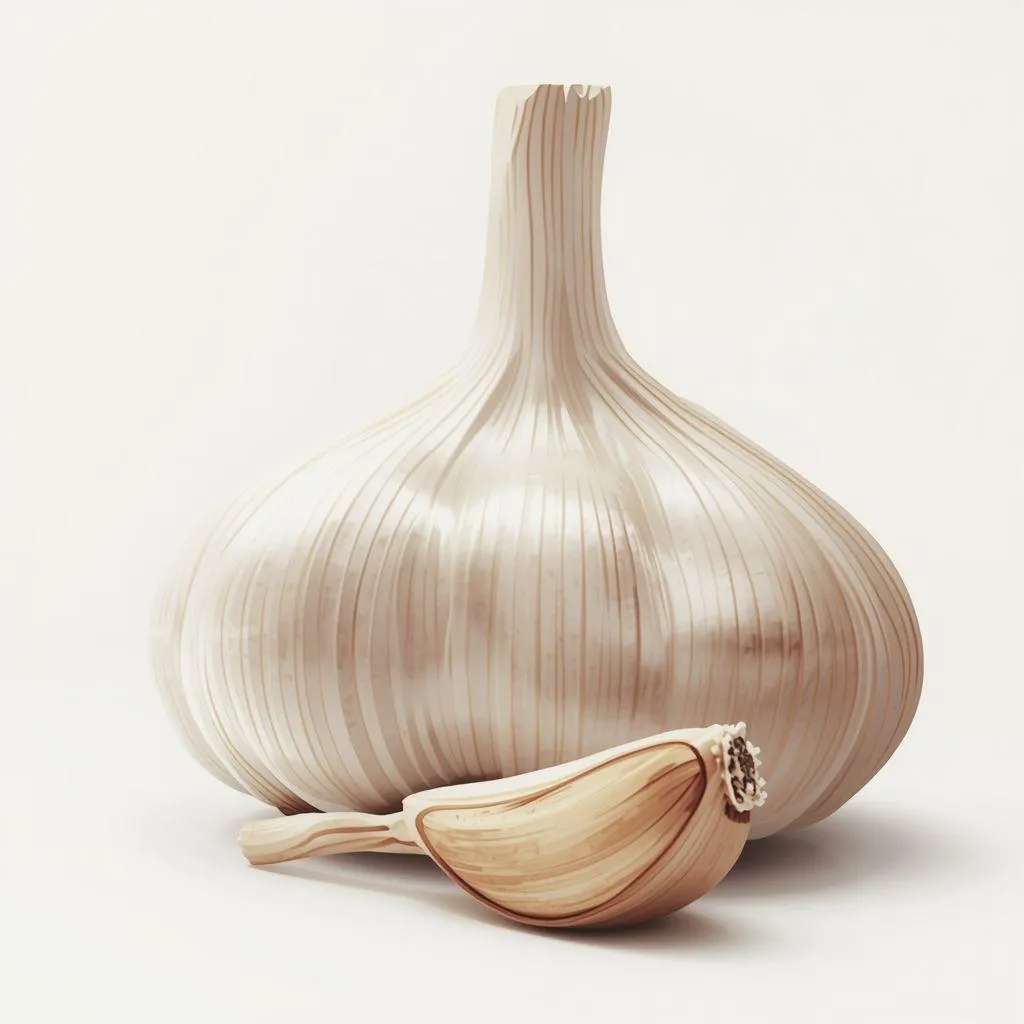
Garlic as protection against ailments
Table of Contents
1. History of using garlic as a dietary supplement
Garlic, which is sometimes referred to as the stinking rose due to its potent odor, is a popular vegetable that possesses antiviral, antimicrobial, and antifungal properties. Its use for health purposes was recorded as early as 6,000 years ago. Historical records suggest that it was employed in the territories of present-day India and China over 3,000 years ago, as well as in ancient Egypt around 1550 BC, where garlic was an essential component of the diets of slaves and workers, enabling them to perform heavier and longer labor. Nowadays, garlic is primarily added to dishes due to its flavorful qualities, although it has also piqued the interest of scientists in recent years who have investigated its composition and effects on the human body.2. Presence of active components
The intricate chemical transformations occurring in garlic are likely the result of a self-defense mechanism of this plant. In untouched garlic, we find numerous compounds containing sulfur atoms, including alline. However, when garlic undergoes mechanical transformation, such as being cut or crushed, the enzyme allinase is activated, resulting in the creation of allicin. This sudden activation of the allinase enzyme during garlic processing is also responsible for the release of a characteristic odor associated with sulfur. Until garlic is subjected to mechanical transformation, it does not emit an intense odor, as there is no sudden activation of the allinase enzyme. After mechanical processing, the active conversion to allicin is limited, and the intense odor also subsides. It is estimated that approximately 4.38-4.65 milligrams of allicin can be obtained from one gram of fresh garlic, meaning that an average 4-gram clove of garlic should contain around 17.52-18.60 milligrams of allicin.3. Effects on the Immune System
It is currently believed that allicin is the compound that makes garlic health-promoting. Single-cell studies show that this substance exhibits antimicrobial and antiviral properties. In recent years, a number of studies have been conducted in people checking the effectiveness of this vegetable's intake. A good example of this is a study published in 2001 by Peter Josling in the UK, which involved 146 individuals divided into two groups. The experimental group received one capsule of garlic extract daily, which was a rich source of the active component allicin, while the control group received one placebo capsule daily. The study lasted for 3 months and during that time the frequency and severity of disease symptoms were monitored in both groups. After 90 days, only 24 colds were recorded in the garlic group and 65 colds in the control group! Moreover, garlic helped those who had already fallen ill to recover faster. Those who took garlic extract needed an average of 4.63 days to recover, while those in the placebo group needed 5.63 days. This is not the only study that confirms the health-promoting effects of garlic. Another research team found in 2012 that supplementation for 45 days caused the proliferation of immune cells such as T-gamma-delta lymphocytes and NK cells, leading to a significant reduction in the number of diseases, shortening the duration of the disease and weakening the severity of symptoms.4. Advocated Consumption
In order to amplify the force of the immune response, it is recommended to ingest one clove of garlic daily, with the option of also taking an extract of this plant. However, it should be noted that continuous consumption of garlic may sometimes result in unpleasant breath. Some individuals may also have an allergy to garlic and should therefore refrain from its consumption.